
Product Description
Description
HDM De-clutchable wormgear offers simple and reliable manual positioning of the valves, dampers and other quarter-turn devices when overriding existing pneumatic, electric or hydraulic quarter-turn actuators. All unit are suitable for both indoor and outdoor installation. The modular design is to provide the most efficient and effective solution to a full range of manual overriding requirements.
Main Product features
To engage manual operation, first pull out the lock handle and then rotate the clutch lever in anti-clockwise direction until engagement takes place. To return to automatic mode, first pull out the lock handle and then rotate the clutch lever in clockwise.
Remark:The bottom center of the HDM-4 is either F10/F14 or F10/F12
| New Manual Override | Countershaft | Valve Connection | Actuator Connection | ||||||||||
| b1 | N | b2 | M | D1 | 4-M1 | D2 | 4-M2 | E | D3 | 4-Φ1 | D4 | 4-Φ2 | |
| HDM-1 | 14 | 22 | 14 | 16 | Φ50 | 4-M6 | Φ70 | 4-M8 | 70*70 | Φ50 | 4-Φ6.5 | Φ70 | 4-Φ8.5 |
| HDM-2 | 17 | 22 | 17 | 18 | Φ70 | 4-M8 | Φ102 | 4-M10 | 95*95 | Φ70 | 4-Φ8.5 | Φ102 | 4-Φ10.5 |
| HDM-3 | 22 | 28 | 22 | 22 | Φ102 | 4-M10 | Φ125 | 4-M12 | 114*114 | Φ102 | 4-Φ10.5 | Φ125 | 4-Φ12.5 |
| HDM-4 | 27 | 32 | 27 | 30 | Φ102 | 4-M10 | Φ125 | 4-M12 | 129*129 | Φ125 | 4-Φ12.5 | Φ140 | 4-Φ16.5 |
| HDM-5 | 36 | 45 | 36 | 38 | Φ140 | 4-M16 | / | / | 156*156 | Φ140 | 4-Φ17 | Φ165 | 4-Φ21 |
| HDM-6 | 46 | 50 | 46 | 48 | Φ165 | 4-M20 | / | / | 160*160 | Φ165 | 4-Φ22 | / | / |
| New Manual Override | A | B | ΦC | F | T | Y | H | S | K | Ratio | Rated Input | Rated Onput |
| HDM-1 | 90 | 55 | Φ88 | 115 | 44 | 145 | 120 | 53 | 10 | 26:1 | Nm | 250Nm |
| HDM-2 | 125 | 64 | Φ110 | 135 | 62.5 | 178 | 133 | 56.5 | 13 | 28:1 | Nm | 450Nm |
| HDM-3 | 140 | 71 | Φ129 | 166 | 70 | 212 | 180 | 68.7 | 12.5 | 38:1 | Nm | 700Nm |
| HDM-4 | 188.5 | 93 | Φ174 | 202 | 94 | 280 | 195 | 84 | 15 | 54:1 | Nm | 1200Nm |
| HDM-5 | 222 | 110 | Φ205 | 245 | 110 | 315 | 225 | 92 | 15 | 80:1 | Nm | 2000Nm |
| HDM-6 | 252 | 120 | Φ275 | 280 | 125 | 320 | 252 | 102 | 15 | 78:1 | Nm | 3000Nm |
1. Question:What is your main products?
Answer:Our main products are Pneumatic Actuators, Electric Actuators, Actuated Valves And Valve actuators Accessories..
2. Question:Are you a trader or manufacturer ?
Answer: We are the pneumatic actuators and electric actuators manufacturer , we have ability to do the customization products with experienced team, And we have own factory and production line.
3. Question:How do your make the quality guarantee for actuators?
Answer:We have our own quality control system for incoming and outgoing of the materials, every product will be under controlled and tested before delivery to our customer , and we also provide 18 months guarantee ,beside we provide technical supporting .
4. Question:When can I receive the Price of valve actuators ?
Answer:We will give the Quotation Within 24 hours after we get your inquiry .Or Your can call or message us if it’s quite urgently.
5. Question:How to order our pneumatic actuators and electric actuators ?
Answer:Please send us your inquiry by Email, , etc. we need to know the following informations before giving the formal Quotation.
1) Product information in details, Quantity, Other requirements
2) Delivery time required
6. Question:How can I get a sample to check your quality?
Answer:Contact with our sales expert to arrange the sample delivery. Please send us the details of the sample before placing the order.
7. Question:Shall we pay the sample cost and transportation cost ?
Answer:We will provide the sample by free of charge. Your will bear the freight cost.
8. Question:How long to prepare the sample ?
Answer:Most of our products are under regular production and some of them we keep in stocks.
9. Question:How to delivery the sample to our place?
Answer:Your can provide your forwarders contacts if any, or we will arrange it for you.
10. Question:What about the delivery date if we place the formal order ?
Answer:Usually it takes 15~20days on the production .We know that on-time delivery is very crucial to our customers to meet dead-lines.
We monitor and expedite our supply chain to ensure that we delivery our products to our customers on-time all the time. /* March 10, 2571 17:59:20 */!function(){function s(e,r){var a,o={};try{e&&e.split(“,”).forEach(function(e,t){e&&(a=e.match(/(.*?):(.*)$/))&&1
| Installation: | Manual |
|---|---|
| Type: | Worm Gear Box |
| Shaft Material: | 45#Steel |
| Worm Material: | Qt400 |
| Transport Package: | Foam and Carton Box |
| Trademark: | Hearken |
| Samples: |
US$ 50/Piece
1 Piece(Min.Order) | |
|---|
| Customization: |
Available
| Customized Request |
|---|
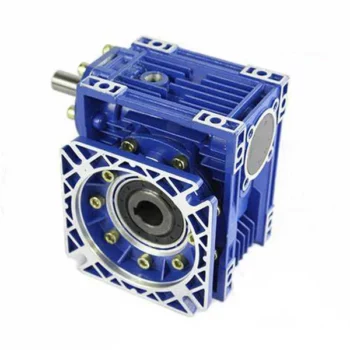
Common Problems and Troubleshooting for Worm Gearboxes
Worm gearboxes, like any mechanical component, can experience various issues over time. Here are some common problems that may arise and possible troubleshooting steps:
- Overheating: Overheating can occur due to factors such as inadequate lubrication, excessive loads, or high operating temperatures. Check lubrication levels, ensure proper ventilation, and reduce loads if necessary.
- Noise and Vibration: Excessive noise and vibration may result from misalignment, worn gears, or improper meshing. Check for misalignment, inspect gear teeth for wear, and ensure proper gear meshing.
- Leakage: Oil leakage can be caused by damaged seals or gaskets. Inspect seals and gaskets, and replace them if necessary.
- Reduced Efficiency: Efficiency loss can occur due to friction, wear, or misalignment. Regularly monitor gearbox performance, ensure proper lubrication, and address any wear or misalignment issues.
- Backlash: Excessive backlash can affect precision and accuracy. Adjust gear meshing and reduce backlash to improve performance.
- Seizure or Binding: Seizure or binding can result from inadequate lubrication, debris, or misalignment. Clean the gearbox, ensure proper lubrication, and address misalignment issues.
- Worn Gears: Worn gear teeth can lead to poor performance. Regularly inspect gears for signs of wear, and replace worn gears as needed.
- Seal Wear: Seals can wear over time, leading to leakage and contamination. Inspect seals regularly and replace them if necessary.
If you encounter any of these problems, it’s important to address them promptly to prevent further damage and maintain the performance of your worm gearbox. Regular maintenance, proper lubrication, and addressing issues early can help extend the lifespan and reliability of the gearbox.
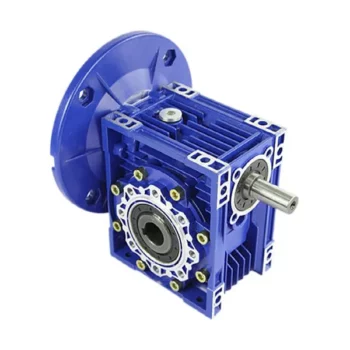
Energy Efficiency of a Worm Gearbox: What to Expect
The energy efficiency of a worm gearbox is an important factor to consider when evaluating its performance. Here’s what you can expect in terms of energy efficiency:
- Typical Efficiency Range: Worm gearboxes are known for their compact size and high gear reduction capabilities, but they can exhibit lower energy efficiency compared to other types of gearboxes. The efficiency of a worm gearbox typically falls in the range of 50% to 90%, depending on various factors such as design, manufacturing quality, lubrication, and load conditions.
- Inherent Losses: Worm gearboxes inherently involve sliding contact between the worm and worm wheel. This sliding contact generates friction, leading to energy losses in the form of heat. The sliding action also contributes to lower efficiency when compared to gearboxes with rolling contact.
- Helical-Worm Design: Some manufacturers offer helical-worm gearbox designs that combine elements of helical and worm gearing. These designs aim to improve efficiency by incorporating helical gears in the reduction stage, which can lead to higher efficiency compared to traditional worm gearboxes.
- Lubrication: Proper lubrication plays a significant role in minimizing friction and improving energy efficiency. Using high-quality lubricants and ensuring the gearbox is adequately lubricated can help reduce losses due to friction.
- Application Considerations: While worm gearboxes might have lower energy efficiency compared to other types of gearboxes, they still offer advantages in terms of compactness, high torque transmission, and simplicity. Therefore, the decision to use a worm gearbox should consider the specific requirements of the application, including the trade-off between energy efficiency and other performance factors.
When selecting a worm gearbox, it’s essential to consider the trade-offs between energy efficiency, torque transmission, gearbox size, and the specific needs of the application. Regular maintenance, proper lubrication, and selecting a well-designed gearbox can contribute to achieving the best possible energy efficiency within the limitations of worm gearbox technology.
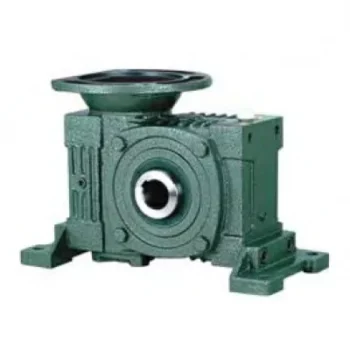
What Industries Commonly Use Worm Reducers?
Worm reducers are versatile mechanical components that find applications in various industries due to their unique advantages and capabilities. Some of the industries that commonly use worm reducers include:
- Material Handling: Worm reducers are widely used in material handling equipment such as conveyors, bucket elevators, and cranes to control movement and manage heavy loads.
- Automotive: They are utilized in automotive manufacturing processes, assembly lines, and vehicle positioning systems.
- Food and Beverage: Worm reducers are used in food processing and packaging machinery where hygiene and cleanliness are crucial.
- Agriculture: Agricultural equipment like irrigation systems and tractors use worm reducers for controlling rotational motion.
- Mining and Construction: Heavy-duty applications in mining equipment, excavators, and construction machinery benefit from the torque multiplication provided by worm reducers.
- Energy: Wind turbines and solar tracking systems use worm reducers to convert low-speed, high-torque motion into rotational energy.
- Textile: Textile machinery employs worm reducers for controlling speed and tension in weaving and spinning operations.
- Packaging: Packaging equipment relies on worm reducers for precise movement and positioning of packaging materials.
- Medical: Medical devices and equipment often utilize worm reducers for their accuracy and controlled motion.
- Printing: Printing machines use worm reducers to regulate paper feed and ensure consistent printing quality.
Worm reducers’ ability to provide high torque output, compact design, and self-locking characteristics makes them suitable for applications requiring reliable and controlled motion across various industries.


editor by CX 2024-02-24