Feed Mixer & Crusher Drive Systems · Agricultural Machinery Gearbox Engineering · Australia
Technical Application Reference
Feed mixers and crushers are the mechanical workhorses of the Australian livestock and poultry industries — processing millions of tonnes of grain, hay, silage, and mineral supplements annually into nutritionally balanced rations for beef cattle, dairy cows, sheep, pigs, and poultry. The drive gearboxes in these machines face conditions that would be considered severe duty in most industrial applications: sustained shock loading as the mixer auger or crusher roll engages dense hay bales; seasonal operation in outdoor environments from frosty winter mornings to 45°C summer afternoons; minimal maintenance by farm operators rather than trained technicians; and abrasive dust from grain and straw that permeates every gap. This guide covers the gearbox selection, service factor methodology, and maintenance requirements for feed mixer and crusher applications across Australian agricultural operations.
TMR Mixers, Horizontal Blenders & Hammer Mills
PTO & Electric Drive Compatibility
Beef, Dairy, Poultry & Pig Farming

Technical Specifications
Key parameters for gearboxes used in feed mixer and crusher applications, from compact trailer-mounted TMR mixers to large fixed-installation feed processing lines at intensive livestock operations.
| Parameter |
Typical Range |
Notes |
| Auger / Rotor Speed |
10 – 200 RPM (mixer); 500–3,000 RPM (crusher) |
PTO-driven units at standard tractor PTO speeds |
| Output Torque |
500 – 80,000 N·m |
Large TMR horizontal mixers at upper end |
| Service Factor |
2.5 – 3.5 |
Hay bale engagement and crusher jam loads demand highest SF |
| Drive Source |
PTO (540 / 1,000 RPM) or electric motor |
PTO-driven trailer mixers dominant in Australia |
| Operating Temperature |
−5°C to +45°C |
Australian climate extremes; synthetic oil required |
| IP Rating |
IP55 minimum; IP65 for washdown bays |
Grain and dust ingress at shaft seals is critical concern |
Feed Mixer Types: Drive Demands and Shock Loading
Feed mixers in the Australian livestock industry divide into three main types, each with a characteristic shock load profile that determines the service factor and gearbox type required.
Vertical Auger TMR Mixers
Vertical auger total mixed ration (TMR) mixers are the dominant type in Australian dairy and feedlot operations. A central vertical screw auger (or twin screws) rotates in a conical or cylindrical tub, continuously lifting and tumbling the feed ingredients — hay, silage, grain, and mineral supplements — until uniformly mixed. The gearbox connects the PTO input (540 or 1,000 RPM) to the auger through a bevel gear stage that redirects the horizontal PTO torque to the vertical auger shaft, plus an in-line reduction stage to achieve the 10–40 RPM auger operating speed.
The critical loading event for a vertical TMR mixer gearbox is the engagement of a large, dense hay bale that has just been dropped into the tub. A round bale of meadow hay at 500–600 kg drops onto the rotating auger and must be broken up as the auger engages it from below. The torque spike at this moment — as the auger flighting first contacts the compacted bale — can reach 4–6× the normal running torque. This shock repeats several times per batch (once for each bale loaded) and is the dominant fatigue loading event for the gearbox teeth and bearings. Service factor 3.0–3.5 for TMR mixer bevel/reduction gearboxes accounts for this repetitive shock loading.
PTO-driven TMR mixers use a bevel gearbox at the PTO connection point to redirect the shaft drive from horizontal (tractor PTO) to vertical (auger axis). This bevel gearbox is the highest-loaded component in the drive train and the most common failure point. The bevel mesh must be rated for both the running torque and the shock torque from bale engagement, combined with the substantial axial thrust from the auger lifting force and the bevel gear helix angle. Providing complete bevel gear load specifications — torque, axial thrust, radial load — to the supplier when ordering a replacement or upgrade bevel gearbox for a TMR mixer is essential for correct mesh rating.
Horizontal Tub Mixers
Horizontal tub mixers use two horizontal counter-rotating paddle shafts to mix ingredients in a rectangular trough. The paddle shafts are driven by worm or helical gearboxes at either end of the trough, connected by a chain drive to ensure synchronised counter-rotation. The mixer is loaded by conveyor or front-end loader, allowing large quantities of ingredients to be loaded in bulk without the shock of individual bale engagement — but the startup torque from a fully loaded, compacted ingredient charge against stationary paddles still requires SF 2.5–3.0. Horizontal paddle mixers are common in Australian feed mill and poultry feed processing operations where the consistent mixing quality and large batch capacity suit the high-throughput production requirements.
Hammer Mills and Roller Crushers
Feed grain crushers — hammer mills and roller mills — reduce whole grain to the particle size appropriate for the livestock species. Hammer mills use a high-speed rotor with swinging hammers; roller mills use contra-rotating corrugated rolls. Both generate high peak loads when large, hard grain kernels are fractured. The hammer mill gearbox (where present — many hammer mills couple directly to the motor) must absorb the vibration and impact loads from the hammer assembly at speeds of 1,500–3,000 RPM. Roller mill gearboxes drive the rolls at 100–500 RPM with a consistent roll speed ratio that determines the milling action. Service factor 2.5–3.0 for roller mill drives, accounting for the sudden load peaks from hard grain and the abrasive dust environment that attacks shaft seals.
PTO Drive Interface: Matching Tractor and Gearbox
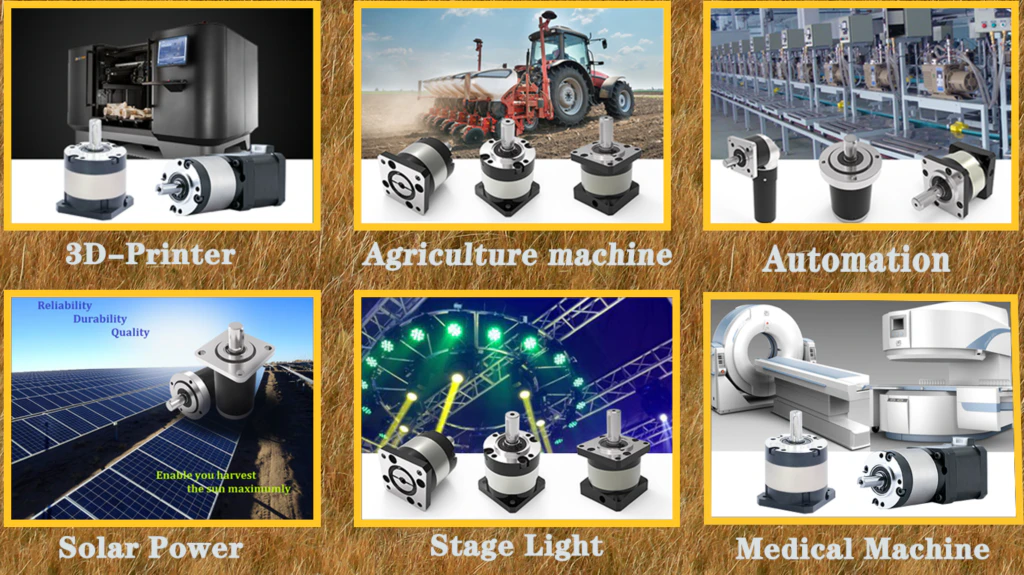
Most Australian farm-operated feed mixer and crusher equipment is PTO-driven from a tractor. The gearbox input must be compatible with the tractor’s PTO standard — 540 RPM (6-spline 35 mm) or 1,000 RPM (21-spline or 20-spline depending on the standard). Australian farm machinery operates under both 540 RPM and 1,000 RPM PTO standards, with the higher speed standard becoming more common on newer large tractors.
The gearbox must be rated for the maximum PTO torque that the tractor can deliver, not just the nominal operating torque. A modern 250 hp (186 kW) tractor can deliver up to 3,500 N·m of PTO torque during a shock loading event — far exceeding the feed mixer’s rated capacity. The overload protection (shear bolt, friction clutch, or torque limiter) in the PTO driveline must be set to protect the gearbox from the tractor’s maximum deliverable torque. This overload protection device is as important as the gearbox specification in preventing catastrophic gearbox failure from tractor overpower events.
For electric-driven fixed feed processing installations at large feedlots and poultry facilities, the motor and gearbox are specified together using the same service factor methodology as industrial applications. The key difference from standard industrial practice is the higher service factor required for the shock loads from bale engagement and crusher impacts — a SF of 2.5–3.0, well above the standard industrial conveyor SF of 1.25–1.5.
Compatible Equipment and Australian Agricultural Applications
Dairy Farms (TMR Feeding)
Australian dairy farms in Victoria, SA, and WA using TMR mixer wagons (Trioliet, Kuhn Knight, Peecon, RMH Lachish, or Faresin brands) feed 500–2,000 cows daily with 2–4 mixer loads. The mixer gearbox must sustain this daily shock loading cycle across the 20–year operational life of the mixer wagon. Replacement bevel gearboxes and reduction gearboxes for these machines are the most common gearbox procurement requirement across the Australian dairy sector. Confirming the correct PTO speed standard (540 or 1,000 RPM) and the model-specific shaft dimensions before ordering prevents the fit problems that delay replacement on a busy dairy farm.
Feedlots (Beef Cattle)
Large feedlots in Queensland, NSW, and WA (some holding 20,000–50,000 head) operate fixed electric-drive TMR mixing stations or large PTO-driven mixer wagons feeding cattle 2–3 times daily. Fixed station mixer gearboxes in feedlots operate at higher cycle rates than farm operations and benefit from electric VFD drive control that allows slow-start ramp-up when engaging dense hay bales. Gearbox selection for feedlot mixers follows industrial rather than agricultural standards given the continuous commercial operating schedule.
Poultry & Pig Feed Milling
Poultry and pig feed mill operations at integrated producers (Baiada, Inghams, Rivalea) use fixed horizontal paddle mixers, hammer mills, and roller mills in continuous or high-cycle batch operations. Electric-driven systems with helical-bevel gear motors; VFD control for variable-speed adjustment during different feed formulations; service factors 2.5–3.0 for hammer mill and roller mill drives. Dusty environments with grain chaff and mineral supplement dust require IP65 sealing and annual seal inspection for all gear motors in the milling area.
Sheep & Goat Farming
Smaller-scale sheep and goat farms across the Australian wheat belt and pastoral zones use compact vertical TMR mixers or simple horizontal paddle mixers for supplement feeding during drought or finishing programs. PTO-driven units from Siloking, Böck, or local manufacturers are common. These machines operate seasonally and are stored during non-feeding periods — the gear oil must not degrade during extended storage, making synthetic oil with good oxidation stability important for agricultural applications with irregular use patterns.
Agricultural Environment: Key Gearbox Durability Factors
01
Grain and Chaff Dust: The Seal Enemy
Grain dust contains silica particles harder than bearing steel. Once inside a seal, these particles become a grinding compound that rapidly wears the seal lip and enters the oil. IP65 sealing with double-lip output shaft seals is the minimum for any gearbox in a grain handling or feed milling environment. Annual seal replacement — not just inspection — as a preventive measure extends gearbox life by an order of magnitude compared to waiting for visible oil weeping.
02
Seasonal Storage: Oil Oxidation and Cold-Start Protection
Farm mixer gearboxes stored idle for 3–6 months during non-feeding seasons are subject to oil oxidation and moisture condensation inside the housing as temperatures cycle. Full-synthetic gear oil with good oxidation stability and low pour point protects against both conditions. Before returning to service after extended storage, check oil level, look for water emulsification (milky appearance), and run the machine without load for 5 minutes to allow oil to circulate and warm before the first full-load bale engagement.
03
Simplified Maintenance: Designed for Farm Use
Farm gearboxes are serviced by farm staff, not trained technicians. The oil fill point, drain point, and level sight glass must all be accessible without removing the gearbox from the machine or using special tools. Specify a gearbox with a clearly marked oil level indicator, accessible drain plug with a captive washer, and a fill point that can be reached with a standard oil can — these features cost nothing at specification stage and dramatically improve maintenance compliance across a fleet of farm machines.
Sourcing Feed Mixer and Crusher Gearboxes in Australia
Feed mixer and crusher gearbox specifications must include: output torque at the shock-loading service factor (SF 2.5–3.5); PTO input speed standard (540 or 1,000 RPM) or motor speed for electric drives; bevel gear stage specifications for TMR mixer right-angle PTO connections; IP rating (IP65 minimum); ambient temperature range including cold-morning startup; oil type confirmation as synthetic for Australian temperature extremes; and dimensional drawings confirming compatibility with the specific machine model for replacement procurement. Technical worm gear and bevel gear reducer specifications applicable to agricultural drive gearboxes are available at our gear reducer technical resource. We supply bevel gearboxes, worm gear motors, and helical-bevel reducers for feed mixer and crusher applications across Australia. Browse on our agricultural machinery drive solutions page, or contact our engineering team with your machine brand, model, PTO standard, and operating conditions for a matched replacement or upgrade specification within one business day.
Frequently Asked Questions
Common questions from farm managers, feedlot operators, and agricultural machinery dealers about feed mixer and crusher gearbox selection and replacement.
1. Why does my TMR mixer bevel gearbox fail every 2–3 seasons?
+
Repeated 2–3 season failure of a TMR mixer bevel gearbox has two common causes. First, the OEM replacement gearbox may be specified to the minimum service factor for the nominal loading — not for the actual shock loading from large dense hay bale engagement. If the bales loaded are significantly heavier or denser than the original machine design assumption, the gearbox is being overloaded at every bale engagement. Verify the bale weight and density against the machine’s rated capacity and consider specifying the next larger OEM bevel gearbox grade if the machine is being consistently used above its original rating. Second, the oil change interval is being missed — many farm gearboxes operate on 5-year oil change intervals but the seasonal dust and moisture contamination in Australian farm environments degrades the oil to ineffective condition within 18–24 months. Changing the oil annually, and checking for water contamination at the start of each feeding season, is the single maintenance action most likely to double the gearbox service life.
2. What is the correct PTO speed — 540 or 1,000 RPM — for my mixer?
+
The correct PTO speed is specified on the mixer’s nameplate and in the operator manual. Operating a 540 RPM mixer at 1,000 RPM overdrives the auger by 85% — producing faster mixing (which may seem beneficial) but dramatically increasing gear mesh forces, bearing loads, and heat generation, typically causing gearbox failure within a season. The spline count on the PTO shaft identifies the standard: a 6-spline shaft is 540 RPM; a 21-spline (or 20-spline) shaft is 1,000 RPM. A mismatch between the tractor PTO standard and the mixer input yoke standard will be immediately apparent at coupling — they will not connect. Never use a cross-bored adapter to force a mismatched PTO speed connection; always confirm the tractor’s PTO standard and the mixer’s input requirement are the same before operating.
3. What oil should I use in a feed mixer gearbox in Australia?
+
Full-synthetic EP (extreme pressure) gear oil, ISO VG 220 grade, is the recommended specification for Australian feed mixer gearboxes. Synthetic oil provides: adequate fluidity at cold-morning startup temperatures in southern Australia (pour point typically −40°C vs −15°C for mineral oil); thermal stability at the 45°C+ ambient temperatures of summer in Queensland and WA; and oxidation resistance during the extended storage periods typical of seasonal agricultural use. Use oil specifically marked GL-4 or GL-5 — GL-5 contains sulphur-based extreme pressure additives that protect gear tooth flanks under high-shock loading from bale engagement. Do not substitute hydraulic oil or engine oil, which lack the EP additives required for gear tooth protection under shock loading. The oil capacity marked on the gearbox nameplate should be filled to the sight glass centre mark — overfilling causes excessive churning and heat generation that accelerates oil degradation.
4. Can I use a replacement gearbox from a different brand on my Trioliet or Kuhn Knight mixer?
+
A cross-brand replacement gearbox is feasible provided three dimensional compatibility conditions are met: the input PTO shaft diameter, spline count, and yoke attachment match the original; the output shaft diameter, keyway, and flange bolt pattern match the auger shaft connection; and the gearbox mounting bolt pattern matches the mixer frame. If all three are confirmed, a replacement gearbox with equivalent or higher torque rating and service factor can be used. Supply the original gearbox’s nameplate data (manufacturer, model, ratio, input/output shaft dimensions) and a dimensional drawing of the mounting interface to the replacement gearbox supplier — this is sufficient for a cross-reference specification in most cases. An aftermarket replacement that meets these dimensional requirements at a higher service factor than the OEM unit often provides better service life in machines that are being used above their original design capacity.
5. What is the minimum maintenance programme for a farm TMR mixer gearbox?
+
The minimum practical maintenance programme for a farm TMR mixer gearbox: at the start of each feeding season — check oil level and appearance (milky = water contamination, dark = oxidation, both require immediate change); check that the oil is the correct type (GL-4 or GL-5 EP synthetic or semi-synthetic); confirm all grease points are greased (cross-shaft bearings, PTO yoke bearings); check PTO driveshaft and shear bolt condition. During the feeding season — monthly visual check of the gearbox housing for oil leaks at seals; listen for unusual noises (grinding or whining indicates bearing wear beginning). Annual — change the oil regardless of condition or operating hours; replace any seals showing weeping; inspect and replace the PTO shear bolt if it shows corrosion or the shear groove is worn. End of season — store the machine with fresh oil and a cover over the PTO input yoke to prevent moisture and dust ingress during the idle period. This programme requires approximately one hour per year per gearbox and will typically double the service life between major overhauls.
Get Feed Mixer and Crusher Gearboxes Correctly Specified for Your Machine
Share your mixer brand and model, PTO speed standard, bale type and weight, and any history of gearbox failures — our engineers will return a specification with correct service factor and a cross-reference to the original gearbox dimensions within one business day.
Request a Free Feed Mixer Gearbox Specification →
