
Irrigation & Grain Handling Drive Systems · Agricultural Gearbox Engineering · Australia
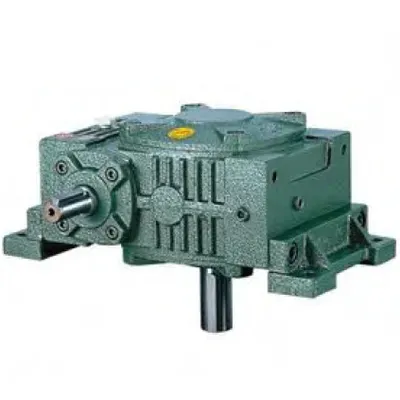
Technical Specifications
Key parameters for gearboxes in irrigation pump drives and grain handling systems, from compact portable pump drives to large fixed-installation grain handling equipment at commercial receival points.
| Parameter | Typical Range | Notes |
|---|---|---|
| Output Speed | 30 – 1,500 RPM | Pump drives vary; auger elevators lower |
| Output Torque | 100 – 20,000 N·m | Large centre-pivot pump drives at upper end |
| Service Factor | 1.5 – 2.5 | Higher for abrasive grain and startup against pressure |
| Operating Hours | 1,000 – 8,000 h/yr | Irrigation pumps at upper end during summer season |
| IP Rating | IP55 – IP65 | Outdoor; grain dust; washdown at grain receival |
| Ambient Temp | −5°C to +50°C | Synthetic oil essential for Australian extremes |
Irrigation Pump Drives: Continuous Duty in Extreme Conditions
Irrigation pump gearboxes operate under demanding conditions that combine continuous duty with wide ambient temperature swings, outdoor exposure, and the consequences of failure that are disproportionately severe — a pump drive failure during peak irrigation demand means crop stress or loss in the days it takes to source and install a replacement in a remote Australian location.
Right-Angle Pump Drive Gearboxes
Irrigation pump drives most commonly require a right-angle bevel or worm gearbox to redirect the motor shaft (typically horizontal, from an electric motor or diesel engine) to the pump shaft (vertical on submersible or vertical-turbine pumps, or at various angles on horizontal end-suction and self-priming pumps). For vertical turbine pumps used in deep bore and river pumping stations across the Murray-Darling basin, a right-angle bevel gearbox at the top of the pump column reduces the horizontal motor speed to the pump impeller’s design RPM and redirects the drive through 90° into the vertical pump column. These are often custom-engineered units with the pump and gearbox designed as a matched pair by the pump manufacturer (Grundfos, Xylem, KSB, Sulzer).
For horizontal centrifugal pumps driven directly by electric motors, the motor speed usually requires no gearbox when using 2-pole motors (2,900 RPM) directly coupled to the pump. However, where VFD speed control is not used and a specific lower pump speed is required — for system pressure control, for multi-speed operation, or to match an older pump’s design point — a standard helical-bevel or worm gear motor provides the required speed reduction with the efficiency and thermal capacity appropriate for continuous outdoor duty. Service factor 1.5–2.0 for standard clean-water irrigation pump drives; higher for pumps handling sandy or turbid water where the pump impeller creates higher load variation.
Centre-Pivot and Lateral-Move Irrigation Drive Gearboxes
Centre-pivot irrigation systems drive the pivot tower wheels across the paddock at a very slow creep speed — typically 1–5 m/min at the outer tower — using a gear motor with a very high reduction ratio. The outer tower travels the greatest distance per revolution and must be driven faster than the inner towers to maintain the pivot arm alignment. Drive management systems automatically adjust each tower’s motor speed to achieve this alignment. The gear motor for each pivot tower must provide: very high reduction ratio (often 100:1–500:1 in a two-stage worm configuration) to achieve the slow creep speed from a standard motor; self-locking to hold the tower in position during wind loading when the motor stops; weather-resistant IP55 minimum sealing; and compatibility with the control system’s voltage and switching protocol. Lindsay, Valley (Valmont), Reinke, and T-L Irrigation centre-pivot tower drives use purpose-designed worm gear motors that are available as replacement units through the manufacturer’s dealer network in Australia.
Grain Handling Equipment: Augers, Conveyors, and Elevators
Grain handling at Australian receival points and on-farm storage uses a combination of portable and fixed augers, belt conveyors, and bucket elevators to move grain from harvest trucks through receival pits, drying systems, and into storage bins. Each equipment type places distinct demands on its drive gearbox.
Grain Auger Elevators
Portable and fixed grain augers use a worm or helical gear motor to drive the auger screw at 400–900 RPM, with the auger tube inclined to elevate grain from a ground-level receiving hopper to a bin inlet. The gearbox must handle the startup torque when the auger is stationary and filled with compacted grain — this is the highest load condition and governs the service factor. The abrasive silica in grain dust (from soil contamination during harvest) is the primary seal enemy: it enters the output shaft seal gap, acts as a grinding compound, and rapidly wears the seal lip. IP65 sealing with a labyrinth dust shield at the output shaft extends seal life by 3–5× compared to a standard single-lip seal in a grain handling environment.
Inclined and vertical auger systems require a backstop on the gearbox output shaft to prevent grain running back when the motor stops. Without a backstop, the grain column above the auger falls back through the inlet when the auger stops, spilling grain and potentially striking workers nearby. A sprag backstop rated for the full reverse gravity torque from the grain column is the correct specification for all inclined grain augers above 20° of inclination.
Bucket Elevators and Belt Conveyors
Bucket elevators at commercial grain receival points use a continuous chain or belt with attached buckets to lift grain vertically from the receival pit to the top of the storage silo structure — heights of 20–50 metres in large country elevator facilities. The drive gear motor is mounted at the top (head) of the elevator and must handle the full static and dynamic load of the loaded bucket chain. Starting a fully loaded bucket elevator — where all buckets on the ascending side are loaded with grain — produces a startup torque substantially higher than the running torque. Service factor 2.0 from the full-load startup condition is standard for bucket elevator drives. For belt conveyors moving grain horizontally between receival, drying, and storage areas, the drive service factor is lower (1.5–1.75) because the belt start load is more predictable and the shock loading from grain dumping into the conveyor is distributed over a longer belt section.
Key Selection Factors for Outdoor Agricultural Gearboxes
The temperature range from −5°C winter mornings in southern irrigation areas to +50°C ambient in North Queensland summer demands synthetic gear oil. Mineral ISO VG 220 gear oil becomes excessively viscous at cold temperatures (preventing adequate film formation on cold start) and degrades rapidly at high ambient temperatures. Full-synthetic PAO-based ISO VG 220 maintains adequate fluidity from −30°C to +90°C oil temperature, covering the full Australian climate range without seasonal oil changes.
Grain handling environments combine high humidity (from irrigation and grain moisture) with fine silica dust from soil contamination in the harvested grain. IP65 with double-lip shaft seals and an external labyrinth guard is the correct specification for grain handling gearboxes. Irrigation pump gearboxes need IP55 minimum for outdoor rain and spray exposure, with IP65 recommended for pump stations that are regularly hose-cleaned. Confirm the IP rating was tested on the complete assembled unit, not just the housing casting.
Irrigation and grain handling equipment in remote locations cannot wait days for a replacement gearbox to arrive from a capital city distributor. Standardising on a small number of gearbox models across the operation — ideally the same frame size for all conveyor drives of similar duty — allows one or two hot-spare units to cover all drives. The cost premium of a spare unit on-site is recovered by the first failure it prevents from becoming a multi-day equipment outage during peak harvest or irrigation season.
Applications Across Australian Agricultural Industries
Sourcing Irrigation and Grain Handling Gearboxes in Australia
Irrigation and grain handling gearbox specifications should include: output torque at the startup service factor; gear ratio; backstop specification for inclined auger systems; IP rating with dust sealing confirmation; ambient temperature range for oil selection; operating hours per year for L10 bearing life verification; and for centre-pivot tower drives, the exact replacement model reference including shaft and mounting dimensions. For pump drives incorporating bevel gear stages to redirect motor drive to pump shaft orientation, providing accurate bevel gear load and dimensional specifications to the supplier ensures the mesh is correctly rated for the continuous pump torque and the axial thrust from the pump column. We supply worm gear motors, helical-bevel gear motors, and bevel gearboxes for irrigation and grain handling applications across Australia. Browse on our irrigation and grain handling drive solutions page, or contact our engineering team for a specification within one business day.
Frequently Asked Questions
Common questions from irrigators, grain handlers, and farm managers about gearbox selection and maintenance for irrigation and grain handling equipment.