Screw Pump Drive Systems · Industrial Gearbox Engineering · Australia
Technical Application Reference
Screw pumps are the preferred technology for high-viscosity fluid transport across Australian food, oil and gas, mining, and chemical processing industries. A single-screw (progressive cavity) pump transferring 50,000 cP polymer solution, a twin-screw pump handling crude oil with entrained gas, or a three-screw pump circulating hydraulic oil — each uses a gearbox to reduce motor speed to the rotor speed required for the correct flow rate, and each demands a gearbox that can absorb the high startup torque of a pump beginning to rotate against a fully charged, viscous fluid column without damage. This guide covers screw pump drive gearbox selection, sizing methodology, and the application conditions that determine the correct drive type across Australian pump installations.
Progressive Cavity, Twin-Screw & Three-Screw Pumps
High-Viscosity Fluid & Startup Torque Sizing
Oil & Gas, Mining, Chemical & Food Industries

Technical Specifications
Key parameters for gearboxes used in screw pump drive applications, from compact progressive cavity pumps for food processing to large twin-screw crude oil transfer pumps at Australian port and refinery facilities.
| Parameter |
Typical Range |
Notes |
| Rotor Speed |
50 – 500 RPM |
PC pump at low end; three-screw higher |
| Output Torque |
50 – 50,000 N·m |
Varies with differential pressure and rotor geometry |
| Service Factor |
1.5 – 2.5 |
Higher for abrasive slurry and startup against pressure |
| Viscosity Range |
1 – 1,000,000 cP |
PC pumps suited to highly viscous and abrasive fluids |
| Torque Limiter |
Strongly recommended |
Protects stator from dry-running destruction |
| IP / ATEX |
IP55 – IP65; ATEX where required |
Oil and gas, chemical locations often Zone 2 |
Screw Pump Types and Their Gearbox Requirements
Screw pump gearbox requirements differ significantly between pump types. Understanding the fundamental operating principle of each type determines whether a standard catalogue selection or a purpose-engineered solution is required.
Progressive Cavity (PC) Pumps: The High-Torque Single-Screw Type
Progressive cavity pumps use a single helical rotor rotating eccentrically inside a double-helical elastomeric stator. As the rotor turns, sealed cavities form at the inlet and progress toward the outlet, transporting the fluid. The rotor speed directly determines the flow rate — PC pumps are metering pumps, making their speed stability a process parameter. The gearbox ratio is selected to produce the required rotor speed from the motor speed; for a 145 RPM rotor with a 1,450 RPM motor, the gear ratio = 1,450 / 145 = 10:1.
The startup torque for a PC pump is substantially higher than the running torque for two reasons: the elastomeric stator has an interference fit with the rotor when dry or cold, creating high friction at the start of rotation; and the fluid column in the discharge pipe creates a back-pressure that the rotor must overcome from zero speed. Service factor 2.0–2.5 for the startup condition is standard for PC pump drives. A torque-limiting coupling between the gearbox output and the pump rotor shaft is strongly recommended — if the pump runs dry (no fluid at inlet), the rotor-stator friction increases dramatically and can destroy the elastomeric stator in seconds. A torque limiter set at 1.5× rated running torque disconnects the drive before the stator temperature exceeds the elastomer’s damage threshold.
VFD control is near-universal on modern PC pump installations in Australian food, beverage, and chemical manufacturing. The VFD provides: flow rate adjustment without changing gear ratios or pump elements; soft starting that limits the startup current and torque spike; and protection against over-speed if the pump cavitates and the load suddenly drops. For the gearbox, VFD operation requires confirmation that the minimum operating frequency does not reduce input speed below the minimum for adequate lubrication — typically 300–400 RPM input for worm gearboxes.
Twin-Screw Pumps: Synchronised Contra-Rotating Rotors
Twin-screw pumps use two intermeshing screws on parallel shafts that rotate in opposite directions, trapping and advancing the fluid between the screw flights. The timing gears that synchronise the two rotors are integrated into the pump housing rather than the drive gearbox — the gearbox drives only one of the two rotor shafts, and the pump’s internal timing gears transmit the drive to the second shaft. The gearbox for a twin-screw pump is therefore sized for the combined power of both rotors, transmitted through one gearbox output shaft. Twin-screw pumps are used in Australian oil and gas applications for crude oil transfer with entrained gas fractions, in dairy for viscous cream and ice cream mix handling, and in chemical processing for polymer solutions that would degrade in the shear environment of a centrifugal pump.
Three-Screw Pumps: High-Speed Hydraulic Fluid Applications
Three-screw pumps use three parallel screws — one driven and two idlers — for clean, non-abrasive hydraulic fluid circulation and lube oil supply. They run at higher speeds (300–3,000 RPM rotor speed) and lower torques than progressive cavity or twin-screw pumps, and may be directly coupled to the motor without a gearbox for high-speed applications. Where a gearbox is required for speed reduction, a compact helical inline unit is preferred over a worm gearbox for the lower thermal losses at the higher operating speeds.
Sizing the Gearbox for a Progressive Cavity Pump Drive
The torque required to drive a PC pump is determined by the differential pressure across the pump — the pressure at the discharge minus the pressure at the inlet — and the pump’s geometry-derived displacement. The manufacturer’s performance curve gives power at rated conditions; divide by rotor RPM to obtain the running torque. The gearbox must then be sized for the startup torque (typically 3× the running torque for elastomeric stator PC pumps starting against system pressure) multiplied by the service factor (1.5–2.5 depending on fluid abrasivity and startup frequency).
Example: A PC pump rated at 7.5 kW at 150 RPM rotor speed against 8 bar differential. Running torque = 7,500 / (150 × 2π/60) = 477 N·m. Startup torque estimate = 477 × 3 = 1,431 N·m. With service factor 2.0: gearbox design torque = 1,431 × 2.0 = 2,862 N·m. Gear ratio = 1,450 / 150 = 9.7:1 — select 10:1. A helical-bevel gear motor rated for 2,862 N·m at 10:1 covers this application; confirm the overhung load rating for the flexible coupling to rotor shaft connection.
Applications Across Australian Industries
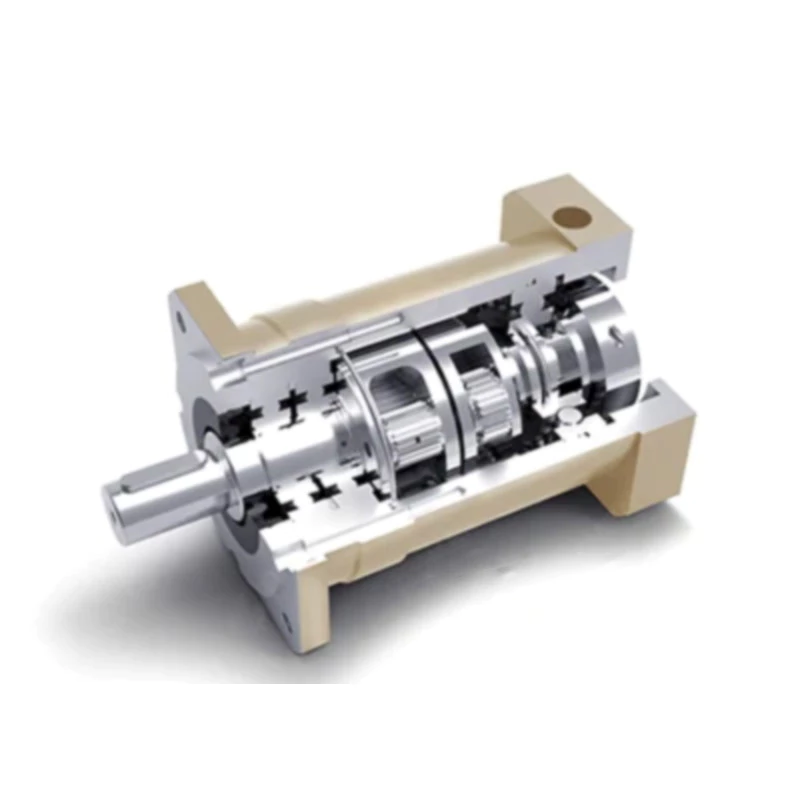
Oil & Gas
PC and twin-screw pumps at Australian onshore and offshore oil and gas facilities handle crude oil, produced water, drilling muds, and completion fluids. ATEX Zone 2 motor requirements, corrosion-resistant stainless housing, and continuous 24/7 duty with infrequent maintenance access are the specification drivers. VFD control for wellhead pressure management and flow rate optimisation. Service factor 2.5 minimum for startup against maximum wellhead pressure.
Mining & Mineral Processing
PC pumps handle tailings slurries, paste fills, and process reagent solutions at Australian mines. Abrasive solids in the slurry accelerate elastomeric stator wear — and the gearbox service factor must account for the higher torque that occurs as the stator wears and the rotor-stator interference increases. Helical-bevel gear motors with service factor 2.5 and a torque limiter are standard for abrasive slurry PC pump drives.
Food & Dairy
PC pumps transfer highly viscous food products — tomato paste, fruit pulp, cheese, meat emulsions — with the gentle shear action that preserves product texture. NSF H1 food-grade gearbox lubricants, IP65 stainless construction, and CIP-compatible sealing are mandatory. VFD flow rate control matches pump output to upstream and downstream process equipment speed without manual adjustment.
Wastewater & Environmental
PC pumps at Australian municipal and industrial wastewater treatment plants handle sludge, screenings, and concentrated biosolids. Grit and fibrous solids in wastewater sludge are highly abrasive to rotor-stator elements and impose shock loads on the gearbox from solids impacting the rotor. SF 2.0–2.5 with a torque-limiting coupling and a dry-run protection sensor are the standard specification for wastewater sludge pump drives.
Sourcing Screw Pump Gearboxes in Australia
Screw pump gearbox specifications must state: rated output torque at the startup service factor; gear ratio; confirmation of minimum VFD input speed for adequate lubrication; torque limiter integration provision at the output shaft; IP rating and any ATEX zone classification; ambient temperature range; and any food-grade or pharmaceutical lubricant requirement. For PC pump drive shafts where the flexible coupling to rotor shaft must match the pump manufacturer’s stub shaft dimensions, providing accurate drive shaft dimensional and coupling tolerance data prevents misalignment that accelerates rotor seal wear and gearbox output bearing failure. We supply helical-bevel gear motors and worm gear motors for screw pump applications across Australia. Browse on our screw pump drive solutions page, or contact our engineering team with your pump type, rated flow, differential pressure, and fluid viscosity for a specification within one business day.
Frequently Asked Questions
Common questions from pump engineers, process designers, and plant managers about screw pump gearbox selection and maintenance.
1. Why does my PC pump gearbox trip on overcurrent at startup even though the motor is correctly sized?
+
VFD overcurrent at PC pump startup occurs because the startup torque required by the stator-rotor interference and the discharge system back-pressure substantially exceeds the motor’s continuous rated torque. Standard VFD overcurrent limits — typically set at 150% of motor rated current for 60 seconds — may not be adequate for a PC pump that requires 300–400% of running torque for the first 2–5 seconds of startup. Solutions: increase the VFD current limit trip setting to 200–250% for the startup period, with a time delay that allows the pump to reach full speed before the standard current limit re-applies; use a VFD with a specific pump startup algorithm that allows extended overcurrent during the acceleration phase; or install a soft-starter instead of a VFD for fixed-speed applications, which inherently allows higher startup current for longer durations. If the startup issue is principally driven by discharge pressure, installing a bypass valve that opens during startup reduces the back-pressure and therefore the startup torque demand.
2. What is a torque-limiting coupling and why is it important for PC pumps?
+
A torque-limiting coupling (also called a shear coupling or torque limiter) is a mechanical device installed between the gearbox output shaft and the PC pump rotor shaft that transmits drive torque below a set threshold and disconnects when torque exceeds the threshold. For PC pumps, this protects the elastomeric stator from dry-run destruction — the most expensive single failure mode in a PC pump. When the pump runs dry, the rotor-stator friction torque rises rapidly and can reach 5–10× the rated running torque within seconds, destroying the stator by friction heat. A torque limiter set at 1.5–2.0× rated running torque disconnects the drive before the stator temperature reaches the damage threshold, preventing a £500–5,000 stator replacement cost. The coupling must be reset or replaced after each slip event; it is a sacrificial protection element, not a permanent mechanical fuse. A dry-run sensor (flow detector, inlet pressure switch, or current monitoring relay) should be the primary protection, with the torque limiter as a backup for the rare case where the sensor fails to stop the pump.
3. How does fluid viscosity affect the gearbox selection for a PC pump?
+
Higher viscosity means more power required to push the fluid through the rotor-stator cavity — but the relationship is not linear. PC pump power increases with viscosity at constant flow rate due to internal recirculation losses, and the startup torque increases more steeply than the running torque. For fluids above 10,000 cP, the startup torque for a fully charged pump can reach 4–6× the rated running torque. The gearbox must be sized for this startup condition, which means the gearbox will be substantially larger than a drive sized for the running torque alone. Additionally, VFD operation at reduced minimum speed for very viscous fluids must be confirmed against the gearbox lubrication threshold — a worm gearbox running below 300 RPM input with high output torque from a viscous fluid load may not develop adequate oil film at the worm mesh. Helical-bevel gear motors have no minimum speed lubrication constraint and are preferred for high-viscosity PC pump applications with wide speed range requirements.
4. What documentation should a screw pump gearbox supplier provide?
+
Standard documentation: rated output torque and gear ratio; service factor basis (confirm it is stated for startup torque, not running torque); minimum input speed for adequate lubrication at minimum VFD frequency; torque limiter interface dimensions at the output shaft; IP rating certificate; lubricant specification with NSF H1 registration if food-grade required; IOM manual with oil change schedule; and bearing L10 life at rated load. For ATEX applications, additionally: maximum external surface temperature at rated power; confirmation of no exposed ignition-risk components; and compatibility with the ATEX motor certificate conditions. For oil and gas applications, additionally: material traceability certificates for wetted components; corrosion allowance confirmation; and NACE MR0175 material compatibility confirmation if H₂S service is possible.
Get Screw Pump Gearboxes Sized for Your Startup Torque and Fluid
Share your pump type, rated flow, differential pressure, fluid viscosity, and startup conditions — our engineers will return a specification with startup torque calculation and torque limiter recommendation within one business day.
Request a Free Screw Pump Drive Specification →
