Airport Baggage Handling Drive Systems · Industrial Gearbox Engineering · Australia
Technical Application Reference
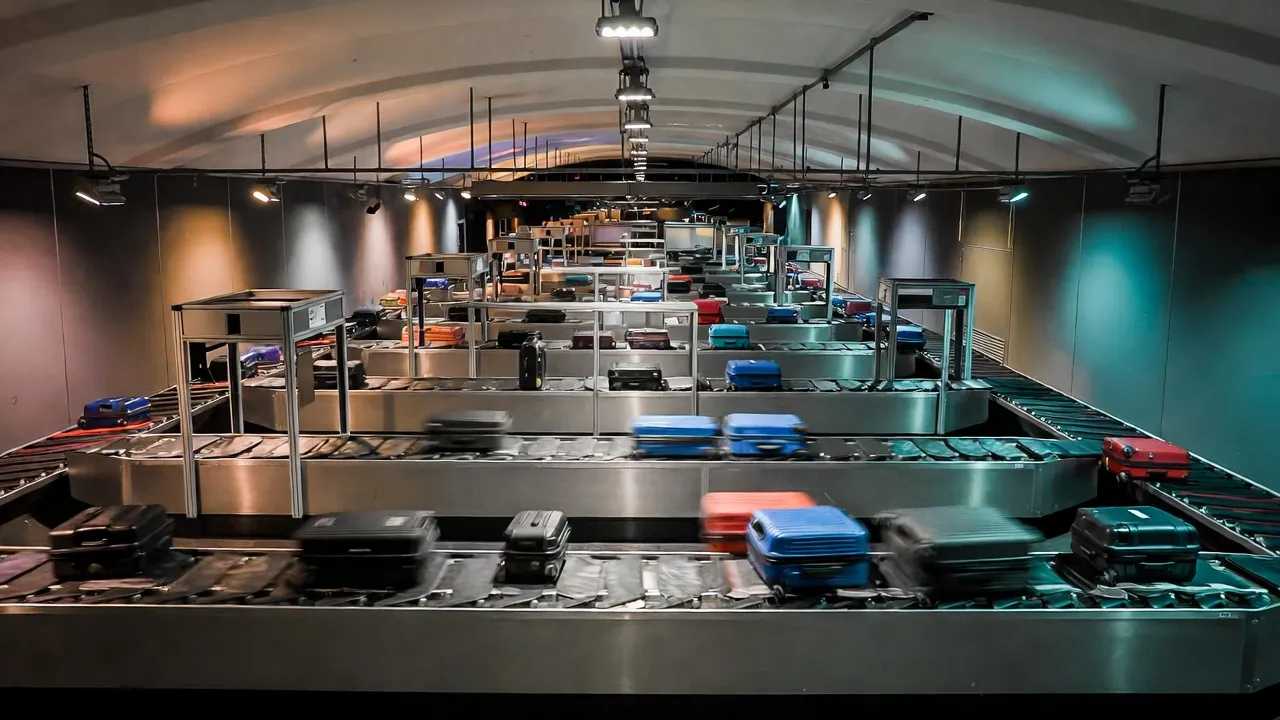
Airport baggage handling systems are among the most demanding mechanical systems ever built for continuous public infrastructure use. A modern Australian international airport processes 30,000–60,000 bags per day, each moving at up to 10 m/s through kilometres of belt conveyor, roller conveyor, tilt-tray sorters, and destination carousels — 24 hours a day, 365 days a year. The gearboxes driving this infrastructure operate in a high-cycle, vibration-rich, underground environment where maintenance access is limited by flight schedules, and any drive failure that stops a baggage belt creates a flight delay that quickly escalates into a regulatory and commercial incident. This guide covers the engineering basis for baggage handling gearbox selection, the specific drive types used across Australian airports, and the maintenance disciplines that keep these critical systems running reliably.
Belt Conveyors & Tilt-Tray Sorters
Check-In to Aircraft Loading
High Availability & 24/7 Reliability
Technical Specifications
Engineering parameters for gearboxes deployed across airport baggage handling infrastructure, from check-in belt conveyors to high-speed tilt-tray sortation systems and baggage reclaim carousels.
| Parameter |
Typical Range |
Notes |
| Output Torque |
50 – 15,000 N·m |
Carousel drives at lower; main belt drives higher |
| Belt / Tray Speed |
0.5 – 10 m/s |
Check-in belts to high-speed sortation carriers |
| System Availability |
99.5 % minimum |
Airport infrastructure SLA requirement |
| Operating Hours |
24/7; 8,760 h/yr |
No seasonal downtime; minimum planned maintenance |
| Service Factor |
1.5 – 2.5 |
Higher for impact at manual induction stations |
| Design Life |
20–30 years |
Matched to airport infrastructure asset life |
The Baggage Handling Journey: Drive Positions and Load Profiles
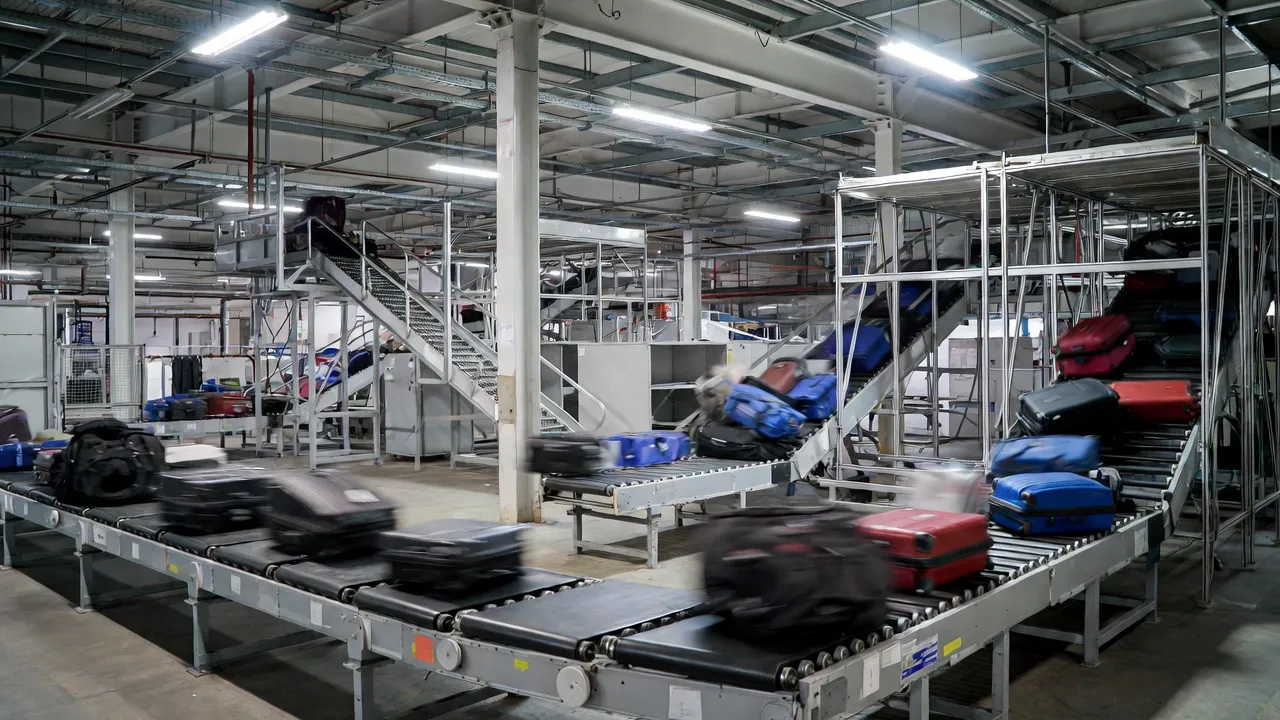
A bag processed through an Australian international airport travels through seven to ten distinct mechanical systems between check-in and aircraft loading, each driven by a separate category of gearbox. Understanding the unique load profile, speed requirement, and criticality of each position determines the specification approach for the gearboxes at that point in the system.
Check-In Belt Conveyors (0.5–1.5 m/s)
The check-in belt is the first drive system a bag encounters. It moves at walking pace — 0.5–1.0 m/s — and is typically 2–4 metres long, connecting the check-in desk to the main baggage hall outfeed. The load profile is relatively benign: bags are placed manually with a typical weight of 5–32 kg and the conveyor runs continuously between flights. Worm gear motors in the 0.12–0.75 kW range, or helical-bevel units at the heavier end, are standard. The critical requirement is noise — these drives are immediately adjacent to the passenger check-in experience and must operate below 60 dB(A) to avoid affecting the check-in environment.
Main Baggage Belt Highways (1.5–3.5 m/s)
The main belt highway conveyors that carry bags from check-in to the screening and sortation area, and from the sorted destination to the aircraft loading area, run at 1.5–3.5 m/s and must achieve the highest availability of any drive in the system. These are typically 600–800 mm wide belts driven by helical-bevel shaft-mounted gear motors at intervals along the conveyor length. The multiple-drive-point arrangement means any single drive failure is covered by the adjacent drives, but the system operator’s SLA (service level agreement) with the airport authority typically requires each drive to be restored within a defined maximum restoration time — usually 4 hours for a non-critical drive and 30 minutes for a critical path drive. This response time requirement drives the spare parts holding strategy: critical path drives carry on-site spare gearboxes as hot spares, not just spare parts.
Tilt-Tray Sorters (3–7 m/s)
Tilt-tray sortation systems in large Australian airports (Sydney Kingsford Smith, Melbourne Tullamarine, Brisbane) carry bags on individual trays that tilt to divert each bag to its destination chute at precisely timed points. The tray-tilting gearbox must execute the tilt cycle — full tilt, brief dwell, return to level — within the window defined by the tray passing the divert chute at operating speed. At 5 m/s tray speed with 0.5-metre-pitch chutes, the tilt gearbox has less than 100 ms to complete the cycle. Compact servo gear motors with precision planetary reductions — backlash below 5 arc-minutes, fast response — are the correct specification, and the drive for each tray is an on-board unit that travels continuously around the sorter loop, requiring vibration-hardened construction and sealed bearings rated for continuous dynamic loading.
Baggage Reclaim Carousels (0.3–0.8 m/s)
Baggage reclaim carousels in the arrivals hall deliver bags from the aircraft to waiting passengers. These are oval or elliptical flat-belt or roller conveyor loops running at 0.3–0.8 m/s, driven by one or two gear motors per carousel. The reclaim carousel is the most passenger-visible mechanical system in the airport and must operate quietly, smoothly, and reliably through the full arrivals period. Drive failures during busy arrival periods are immediately visible and create passenger complaints. Low-noise helical-bevel gear motors with anti-vibration mounts are standard, and the drive must be accessible for maintenance without disrupting the carousel structure in the arrivals hall.
High Availability Engineering: Design Choices That Prevent Downtime
Achieving the 99.5% availability targets in airport infrastructure service agreements requires design decisions at the gearbox selection stage that go beyond standard industrial practice. Three principles distinguish baggage handling gearbox specifications from equivalent industrial conveyor drives.
Conservative Service Factor to Prevent Surprise Failures
In a standard industrial plant, a gearbox that reaches the end of its rated service life can be replaced during a planned maintenance shutdown. In an airport, “planned maintenance” windows are 1–4 hours between midnight and 5 am, and an unplanned failure during operating hours means bags sit on a stopped belt while engineers work under time pressure. Service factors of 2.0–2.5 on baggage handling drives — significantly higher than the standard industrial 1.25–1.5 — extend the interval between failures and reduce the probability of an end-of-life event during operating hours. This conservatism is deliberately chosen and is standard in global airport baggage handling engineering practice.
Standardisation Across the Entire System
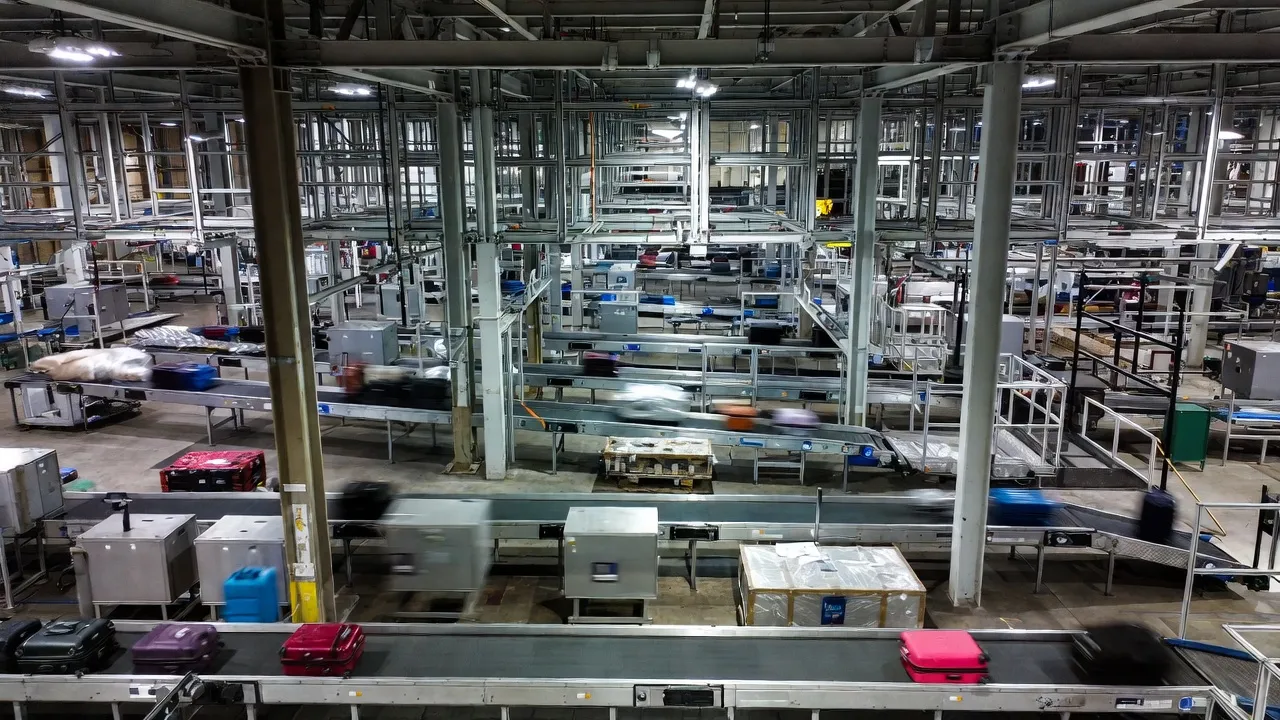
Modern airport baggage handling systems are designed with a minimal number of distinct drive specifications — often as few as 3–5 different gear motor types across hundreds of drive points. This standardisation allows the maintenance team to hold a small number of pre-commissioned hot-spare gear motors on site and swap any failed unit in 15–20 minutes without waiting for a replacement. The procurement cost premium of standardising on a higher-rated unit across all zones of similar duty (rather than optimising each individually) is small compared to the operational benefit of a single on-site spare covering every drive in a zone category.
Remote Condition Monitoring from Commissioning
Wireless vibration and temperature sensors installed at commissioning on critical-path drive gearboxes transmit condition data to the building management or SCADA system continuously. Alarm thresholds at 150% of baseline vibration RMS provide 4–8 weeks of early warning before an incipient bearing failure would produce audible symptoms — enough time to schedule a maintenance window and procure the replacement before the failure occurs. At the cost of sensor hardware and installation labour during the initial build (when all access is available), condition monitoring converts random unplanned failures into predictable planned events — transforming the airport’s maintenance posture from reactive to proactive on the most critical drives.
Australian Airport Baggage Handling Context
Major International Airports (SYD, MEL, BNE, PER)
Sydney, Melbourne, Brisbane, and Perth international airports collectively process over 100 million bags per year. Their baggage hall infrastructure includes kilometres of belt conveyor, multiple tilt-tray sortation loops, and dozens of reclaim carousels — each driven by hundreds of gear motors. These airports operate under infrastructure concession agreements with Airports Council International standards that require documented maintenance programmes and availability reporting for all mechanical systems.
Regional Airports (ADL, CBR, OOL, HBA)
Adelaide, Canberra, Gold Coast, and Hobart operate smaller but equally critical baggage systems proportionate to their passenger volumes. Many Australian regional airports have limited on-site engineering capability — driving a preference for robust, simple drives with long service intervals over complex high-efficiency units that require specialist servicing. Worm gear motor zone drives with 10-year design life are the standard for regional airport conveyor sections.
New Infrastructure & Terminal Upgrades
Australian airport expansion projects — including Western Sydney Airport (Nancy-Bird Walton Airport), Brisbane parallel runway terminal development, and Melbourne terminal upgrades — are incorporating new-generation baggage handling systems with integrated condition monitoring, energy-efficient helical-bevel drives on main conveyors, and drum motor zone drives on accumulation sections. These projects specify gearbox drive systems to ITA (International Air Transport Association) BHS engineering guidelines alongside Australian airport authority technical standards.
Maintenance & Refurbishment Projects
Aging Australian airport baggage systems built in the 1980s–1990s are reaching end of service life. Refurbishment projects replace entire conveyor sections during scheduled maintenance windows, requiring gearbox replacements that are dimensionally interchangeable with the original equipment. Where original equipment manufacturers are no longer active, providing accurate shaft, bore, and mounting dimensions for cross-reference specification is essential to avoid field machining during the narrow maintenance window available.
Sourcing Baggage Handling Gearboxes in Australia
Baggage handling gearbox procurement requires the specification to address the aviation infrastructure availability requirements beyond the standard conveyor drive parameters. In addition to output torque, gear ratio, IP rating, and motor flange details, the specification should include: design life in years at the specified operating hours and throughput; L10 bearing life at the application loading confirming the design life; service factor applied and the basis for its selection; spare parts availability commitment over the design life (confirming the gearbox model and key components will remain available for the full infrastructure life); on-site hot-spare unit provision if required by the airport operator’s SLA; and condition monitoring sensor mounting points if remote monitoring is integrated. For belt conveyor gearboxes incorporating bevel gear stages at transfer point drives, providing complete bevel gear load, material, and dimensional specifications to the supplier ensures the mesh is rated for the combined torque and shock loads of baggage impact at conveyor transfer points.
We supply helical-bevel gear motors, worm gear motors, and precision planetary gearboxes for airport baggage handling system applications across Australia. Browse available configurations on our baggage handling and airport conveyor drive solutions page, or contact our engineering team with your conveyor speed, load, availability requirement, and design life for a specification that meets your airport infrastructure SLA.
Frequently Asked Questions
Common questions from airport infrastructure engineers, baggage system integrators, and facility maintenance managers.
1. Why do airport baggage handling systems use such conservative service factors?
+
Service factors of 2.0–2.5 — significantly higher than the standard industrial 1.25–1.5 — are used in airport baggage handling because the cost of an unplanned failure during operating hours far exceeds the cost premium of a larger gearbox. An unplanned baggage belt failure that stops a conveyor during peak operations creates a queue of bags, triggers manual handling to recover the flow, and if not resolved within 15–20 minutes can cause a flight departure delay. A single departure delay costs the airline and airport authority several thousands to tens of thousands of dollars in costs and regulatory reporting. The service factor premium of SF 2.5 versus SF 1.5 on a mid-range conveyor gear motor is typically $200–$500 — an investment that pays back immediately the first time it prevents a departure delay. This economics calculation is clearly understood by airport engineering teams and is the basis for the conservative specifications in all major airport baggage handling engineering standards.
2. What is the design life requirement for a baggage handling gearbox, and how is it verified?
+
Airport baggage handling infrastructure is designed to a 20–25 year asset life, consistent with airport terminal infrastructure design lives and the concession or operating agreement terms under which airports are built and expanded in Australia. Gearbox design life of 20 years at 8,760 operating hours per year equates to 175,200 operating hours — a figure that exceeds standard industrial catalogue service life specifications for most drives. Verification is through L10 bearing life calculation at the actual load and speed conditions: L10 (hours) must exceed the design life hours at the rated loads. Gear tooth fatigue life must also be confirmed against the cumulative cycle count (operating hours × output RPM × 60). Suppliers should provide these calculations as part of the technical tender submission, not just a catalogue life claim.
3. How is maintenance access managed for gearboxes in the underground baggage hall?
+
Access to the underground baggage hall is restricted during flight operations by both security requirements and operational risk. Maintenance windows typically occur between midnight and 5 am, during which all maintenance work — including gearbox replacements — must be completed before the first flights of the morning bank. This constraint drives the spare unit strategy: rather than repairing a failed gearbox on-site, the maintenance team swaps the complete gear motor unit for a pre-commissioned hot spare that has been aligned, connected, and test-run in the maintenance workshop in advance. Swap time of 15–20 minutes for a shaft-mounted hollow-bore gear motor with pre-connected wiring is achievable; this requires the gear motor to be designed for rapid removal with a single torque arm bolt and a plug-type motor connector rather than hard-wired terminals.
4. What causes baggage handling conveyor drives to fail most often?
+
Analysis of baggage handling drive failures at major airports identifies three dominant failure modes. Bearing failure from oil contamination is the most common — the underground baggage hall environment has high year-round humidity from temperature differentials, and any seal degradation allows moisture to enter the oil. Second is output bearing fatigue from unaccounted-for overhung load — the O-ring or poly-V belt tension from roller-to-roller drives adds radial load that exceeds the output bearing OHL rating in drives that were not correctly specified for the actual drive chain arrangement. Third is motor failure from accumulated thermal stress on direct-on-line started drives that cycle frequently under high inertia loads — VFD-controlled drives with soft-start acceleration profiles eliminate this failure mode and are specified on all new systems. Addressing all three — desiccant breathers and annual seal inspection, OHL verification at specification, and VFD soft start — dramatically reduces the unplanned failure rate.
5. What documentation is required for an airport baggage handling gearbox supply?
+
Airport infrastructure gearbox delivery documentation should include: dimensional drawing with all mounting dimensions, bore diameter and tolerance class, torque arm and motor mounting details; rated output torque and gear ratio; L10 bearing life calculation at the specified load and speed confirming design life; service factor with loading basis; vibration velocity at rated speed; noise level at rated load; IP rating certificate; oil type, grade, and fill volume; IOM manual with maintenance schedule, seal inspection interval, oil change interval, and hot-spare swap procedure; spare parts list with catalogue part numbers for bearings and seals; and parts availability commitment letter from the supplier confirming component availability for the full design life period. For tilt-tray sorter carrier drives: additionally include backlash specification, actuation cycle time confirmation, and RMS torque at maximum cycle rate. Collect all documentation before equipment delivery begins — on large airport projects, receiving incomplete technical files from individual suppliers delays the commissioning programme.
Get Airport-Grade Baggage Handling Gearboxes Specified Correctly
Share your conveyor speed, load, operating hours, design life, and availability SLA — our engineers will return a complete specification with L10 life verification and spare parts availability confirmation.
Request a Free Baggage Handling Specification →
