Automation & Robotics Drive Systems · Precision Gearbox Engineering · Australia
Technical Application Reference
Automation and robotics applications demand a different set of gearbox properties than any other industrial category. Where a conveyor gearbox prioritises sustained torque output and a lifting gearbox prioritises safety factor, a robotics gearbox must optimise backlash, torsional stiffness, weight, and repeatability simultaneously — often within a form factor that is far more constrained than industrial applications allow. This guide covers the gearbox technologies used across automation and robotics, from simple worm gear motor actuators in automated machinery to precision planetary and harmonic drives in industrial robot joints.
Low-Backlash Precision Drives
Servo & Robot Joint Gearboxes
Manufacturing, Mining & Logistics Automation
Technical Specifications
Key parameters for gearboxes used in automation and robotics applications, from simple actuator drives to high-precision robot joint reducers.
| Parameter |
Automation Range |
Notes |
| Output Torque |
1 – 10,000 N·m |
Light robot joints to heavy industrial actuators |
| Backlash |
<3 arc-min (robot) to <20 arc-min (automation) |
Critical for positioning accuracy |
| Torsional Stiffness |
High — specified in N·m/arc-min |
Determines dynamic response quality |
| Gear Types |
Planetary, harmonic, worm, helical-bevel |
Application and precision requirement dependent |
| Efficiency |
85 % – 98 % |
Critical for battery-powered AMRs and cobots |
| Encoder Compatibility |
Hollow shaft or integrated feedback |
Closed-loop position control requirement |
How Automation and Robotics Applications Differ from Industrial Drives
The fundamental difference between a robot joint gearbox and a conveyor gearbox of similar torque rating is the set of properties that matter most. A conveyor gearbox is optimised for sustained torque, thermal capacity, and service life under continuous load. A robot joint gearbox must minimise backlash so that command positions translate accurately to physical positions; maximise torsional stiffness so that the control loop does not excite mechanical resonance; minimise weight and envelope so the robot arm can reach its designed payload rating; and tolerate frequent reversals and dynamic torque spikes from acceleration and deceleration cycles that accumulate fatigue damage very differently from one-directional running loads.
For simpler automation applications — automated guided vehicles, gate actuators, rotary indexing tables, and linear axis drives — the requirements are less stringent than for robot joints but still more demanding than conveyor drives in terms of repeatability and dynamic response. Understanding which tier of automation precision your application requires is the first step in selecting the correct gearbox technology, since the cost premium between a standard conveyor worm gearbox and a servo-rated precision planetary unit of similar torque is substantial.
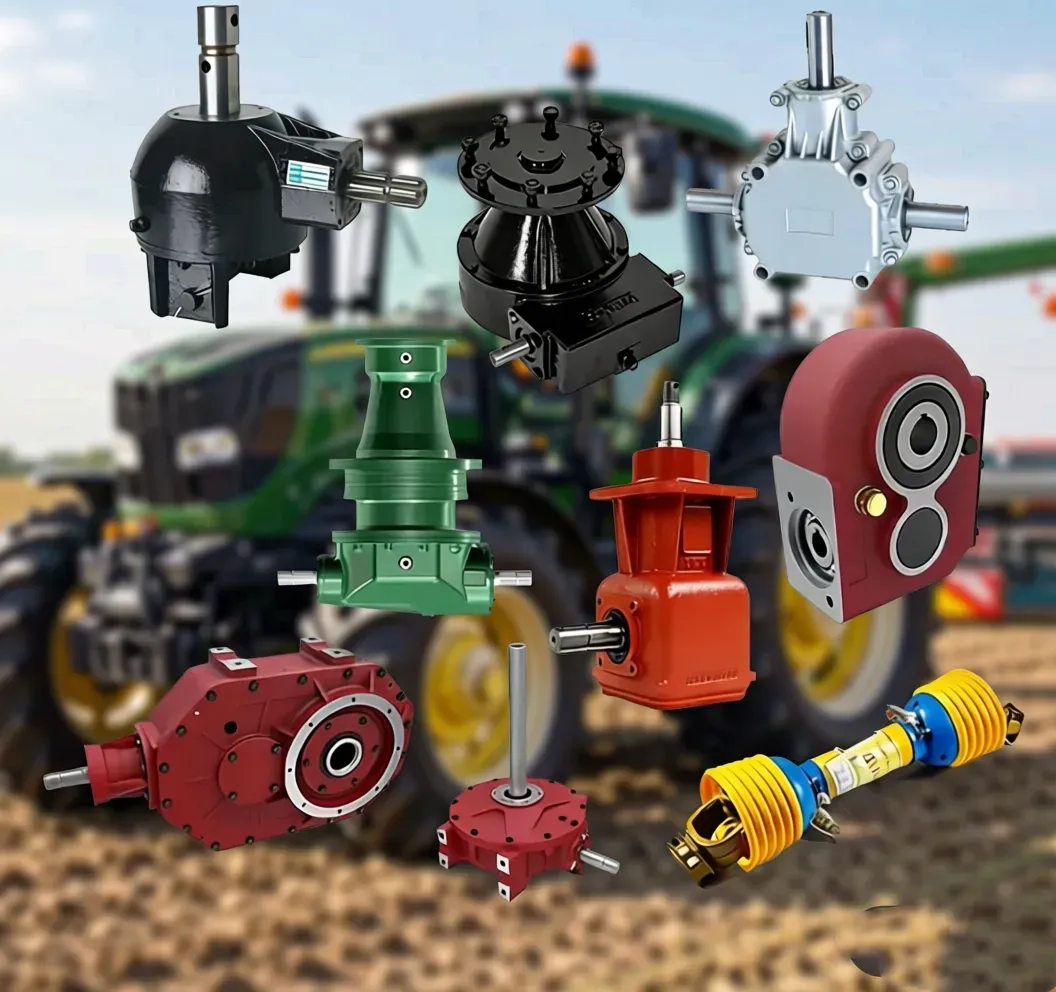
Gearbox Technologies for Automation and Robotics
Worm Gearbox (Automation Grade)
The entry-level precision option for automation applications. Backlash 10–20 arc-minutes; self-locking at high ratios; compact right-angle form. Suitable for automated gate and door actuators, slow-speed rotary indexing stages, simple axis drives on packaging machinery, and AMV wheel steering mechanisms where position accuracy within ±1 mm is acceptable. Not suitable for servo motor closed-loop control above 10 Hz bandwidth due to compliance in the worm mesh and inherent backlash.
Gate actuators · Simple automation · Low-speed positioning
Precision Planetary Gearbox
Coaxial inline configuration; backlash 3–8 arc-minutes (standard) or below 1 arc-minute (precision ground); high torsional stiffness; rated for servo motor dynamic torque loads with frequent reversals. The standard gearbox for servo-motor-driven linear axes, rotary tables, SCARA robot arms, and collaborative robot (cobot) joints in Australian manufacturing. Available with IEC or NEMA motor flanges for direct servo coupling without an adapter. Two-stage planetary units cover ratios 16:1–100:1 in a very compact envelope.
Servo axes · Rotary tables · Robot joints (SCARA, cobot)
Harmonic Drive (Strain Wave)
Zero backlash by design (elastic deformation mechanism rather than gear mesh clearance); very high reduction ratio in a single stage (50:1–160:1); extremely compact and lightweight. The preferred technology for high-payload industrial robot wrist joints and shoulder joints where zero-backlash repeatability is essential for weld line tracking, assembly placement accuracy, and material handling precision. Higher cost per unit of torque than planetary but unmatched in repeatability and compactness for robot joint applications.
Industrial robot joints · Zero backlash · Weld/assembly robots
Key Selection Parameters for Automation Gearboxes
Selecting an automation gearbox differs from industrial gearbox selection in the parameters that must be specified and the trade-offs between them.
Backlash — The Precision Metric
Backlash is the total angular play at the output shaft when the input direction is reversed under no load — the gap between gear teeth that allows the output to remain stationary while the input reverses through a small angular range. For a rotary table with a 200 mm radius, 10 arc-minutes of backlash produces 0.58 mm positional error at the perimeter — acceptable for most industrial automation but not for precision assembly or measurement applications. Precision planetary gearboxes achieve 3–5 arc-minutes; high-precision ground units below 1 arc-minute; harmonic drives essentially zero backlash. Specify backlash explicitly in the procurement document and require the supplier to confirm the measurement method used (input torque level, measurement temperature) as test conditions affect the measured value.
Torsional Stiffness — The Dynamic Response Metric
Torsional stiffness (N·m/arc-minute) determines how much angular deflection occurs under load and how quickly the system responds to control commands. A low-stiffness gearbox in a fast-response servo system introduces a mechanical resonance frequency within the servo bandwidth, causing the axis to oscillate or ring during positioning moves. This appears in the machine as vibration at the end of a move or as positional overshoot. Specifying torsional stiffness above the value required to keep the first mechanical resonance frequency above 3× the servo bandwidth prevents this problem at the design stage rather than after commissioning when the machine is already built around the wrong gearbox.
Dynamic Torque Rating for Cyclic Duty
Automation gearboxes perform thousands to millions of start-stop-reverse cycles over their service life, accumulating gear tooth and bearing fatigue damage very differently from a conveyor drive that runs in one direction continuously. Suppliers publish both peak torque ratings (for short-duration acceleration spikes) and RMS torque ratings (thermally and fatigue-equivalent continuous torque) specifically for servo applications. The RMS torque calculation for a multi-phase move profile integrates the square of the torque over each phase, weighted by phase duration — the resulting figure must be below the gearbox’s rated output torque at the selected service factor to ensure adequate fatigue life.
Automation and Robotics Applications Across Australian Industries
Manufacturing Automation
Australian automotive, electronics, and general manufacturing facilities deploy SCARA robots, 6-axis articulated robots, and Cartesian gantry systems for assembly, welding, painting, and inspection. These robots use precision planetary gearboxes (for SCARA shoulder and elbow joints) and harmonic drives (for wrist joints) to achieve the repeatability required for automated assembly within tolerance. Collaborative robots (cobots) working alongside human operators typically use precision planetary units with integrated torque sensing for safe force-limited operation.
Warehouse & Logistics Automation
Autonomous Mobile Robots (AMRs) and Automated Guided Vehicles (AGVs) in Australian distribution centres use wheel drive gearboxes that must balance compactness, efficiency, and battery life. Precision planetary gear motors with integrated encoders provide the combination of position feedback and efficiency needed for navigation control. Shuttle systems and mini-load AS/RS equipment use servo-driven linear axes with precision planetary gearboxes for accurate tray positioning within storage locations.
Mining Automation
Australian mining leads globally in autonomous haulage and drill automation deployment. Autonomous drill systems use precision servo-driven feed and rotation axes with IP67-rated planetary gearboxes capable of handling the vibration, dust, and temperature extremes of an operational drill rig. Robotic sampling and analysis systems in mine laboratories use small harmonic drives and precision planetaries for the gentle, accurate manipulation required to prepare and analyse ore samples without human contact.
Indexing & Rotary Tables
Rotary indexing tables in machining centres, assembly stations, and inspection systems use precision worm or planetary gearboxes to position workpieces between stations. The gearbox must hold position accurately under the cutting or assembly forces applied at each station — requiring both low backlash and high torsional stiffness. Cam-driven index units provide the highest precision for fixed-cycle applications; servo-driven precision planetary units provide flexibility for variable cycle times and multi-position indexing that cam units cannot achieve.
Sourcing Precision Gearboxes for Automation in Australia
Specifying a precision gearbox for automation requires more detail than a standard industrial application. In addition to output torque and ratio, the specification must state: maximum backlash (arc-minutes); torsional stiffness minimum (N·m/arc-minute); peak and RMS torque capacities with duty cycle; motor flange standard and shaft connection dimensions; encoder or feedback device compatibility if integrated; IP rating; and operating temperature range. For servo motor applications, also specify the maximum input speed and confirm the gearbox bearing speed rating at that input — precision planetary units at high gear ratios have input bearings running at motor speed, which on a 3,000 RPM servo motor exceeds the input bearing speed rating of some catalogue products.
We supply precision planetary gear motors, right-angle worm gearboxes, and helical-bevel units for automation applications across Australia. Specifications for worm gear drive configurations and performance data for automation applications are available at our worm gear reducer technical specifications resource. Browse the full range on our automation and robotics gearbox solutions page, or contact our engineering team with your axis specifications and motion profile for a matched recommendation within one business day.
Frequently Asked Questions
Common questions from automation engineers and system integrators specifying gearboxes for robotics and automated systems in Australia.
1. What is backlash, and how much is acceptable for different automation applications?
+
Backlash is the angular play at the gearbox output shaft when the input direction is reversed without changing output position — the dead zone between direction commands and actual movement. For a 200 mm radius rotary table: 20 arc-minutes backlash = 1.16 mm positional error; 5 arc-minutes = 0.29 mm; 1 arc-minute = 0.058 mm. Application guidance: simple automation (gate actuators, conveyor diversions) tolerates 15–25 arc-minutes; standard industrial robot base and shoulder joints need 5–8 arc-minutes; wrist joints and assembly robot end-effectors require 1–3 arc-minutes; semiconductor and precision measurement applications require below 1 arc-minute. Harmonic drives provide essentially zero backlash and are specified where any repositioning error is unacceptable.
2. Why does my servo-driven axis vibrate at the end of each move?
+
End-of-move vibration (ringing or oscillation after the servo command has completed) is almost always caused by a mechanical resonance frequency that falls within the servo bandwidth. The resonance frequency is determined by the torsional stiffness of the gearbox and couplings divided by the load inertia. If the gearbox torsional stiffness is too low for the servo bandwidth and load inertia, the axis sees the gearbox as a spring that stores and releases energy at the resonance frequency, causing the characteristic oscillation. The solution is either to increase gearbox torsional stiffness (specify a stiffer unit), reduce servo bandwidth (slower position loop, acceptable for some applications), or add a notch filter in the servo controller tuned to the resonance frequency. Specifying gearbox torsional stiffness correctly before selection — targeting first resonance frequency above 3× servo bandwidth — prevents this problem from occurring in the first place.
3. What is the difference between a standard industrial worm gearbox and an automation-grade worm gearbox?
+
An automation-grade worm gearbox differs from a standard industrial unit in four respects. First, backlash is specified and tested — standard industrial units do not have backlash specifications; automation units are tested to a stated maximum (typically 10–20 arc-minutes for automation grade). Second, the input flange matches servo motor IEC dimensions precisely, with a circular pilot for motor centring that a standard industrial unit may not have. Third, the output shaft dimensions and tolerance class are held more tightly to support direct attachment of encoders or other feedback devices. Fourth, the bearing arrangement is designed for bidirectional loading and frequent reversal — standard industrial worm gearboxes may not specify reversal load capacity or fatigue life under cyclic duty. For applications below 10 arc-minutes backlash or above 10 Hz servo bandwidth, a precision planetary unit is the better choice than even an automation-grade worm.
4. How do I select the gear ratio for a robot joint drive?
+
Robot joint ratio selection optimises three competing requirements: torque multiplication (higher ratio provides more joint torque from the motor); speed (higher ratio reduces maximum joint speed for the same motor speed); and inertia matching (the optimal ratio places the reflected load inertia at the motor shaft close to the motor rotor inertia, typically within 3:1 ratio, to maximise dynamic response). The inertia matching condition determines the optimal ratio: i_opt = √(J_load / J_motor), where J_load is the load inertia reflected to the gearbox output and J_motor is the motor rotor inertia. If this ratio does not provide adequate torque, increase to the next standard ratio that meets both torque and maximum speed requirements. For high-speed delta robots, the ratio is typically 5:1–15:1 to maintain arm speed; for high-payload articulated robots, 50:1–100:1 on the wrist joints for maximum torque multiplication.
5. What maintenance does a precision planetary gearbox in a robot require?
+
Modern precision planetary gearboxes for robot and automation applications are designed for long-service-interval operation with greased-for-life bearing arrangements and sealed housings — they do not require periodic oil changes like open-bath industrial gearboxes. The maintenance programme consists of: annual visual inspection for oil or grease leakage at shaft seals; backlash measurement at annual service (or every 5,000 operating hours for high-cycle applications) compared to the commissioning baseline — an increase in measured backlash beyond 50% of the initial value indicates approaching end of life for the gear mesh; vibration trending on the servo drive current monitoring — many modern servo drives can detect developing gear wear from changes in the current waveform shape during a standardised test move. When measured backlash approaches the application limit, plan gearbox replacement before it exceeds the limit and causes product quality problems.
6. Can I use a standard worm gearbox on a servo motor for a simple automated axis?
+
Yes, for simple automation applications where servo control bandwidth below 5 Hz is acceptable and positional accuracy within ±1 mm satisfies the application requirement. A standard worm gearbox connected to a servo motor via a flexible coupling works adequately for gate actuators, slow-speed turntables, and simple positioning axes where the move profile has long acceleration and deceleration ramps and settling time is not critical. The limitations are: backlash of 10–20 arc-minutes will appear as positioning uncertainty at the output; worm mesh compliance limits servo bandwidth; and the self-locking characteristic means the axis cannot be back-driven by external forces, which is a feature or a limitation depending on the application. For any application requiring position accuracy below 0.5 mm at the load point, backlash below 5 arc-minutes, or servo bandwidth above 10 Hz, a precision planetary unit is the correct specification.
7. What IP rating do I need for a gearbox in a mining robot or outdoor automated system?
+
For outdoor automation and mining robotics in Australia, IP67 is the practical minimum standard — it provides temporary immersion protection that handles dust ingress, rain, hose washing, and occasional submersion events during equipment cleaning. Underground mining environments additionally require the gearbox to tolerate continuous fine dust (IP6X) and regular water wash from drill flushing — IP67 or IP68 depending on submersion frequency. For agricultural outdoor robotics (autonomous harvest robots, field scouts), IP66 handles direct rainfall and spray irrigation contact; IP67 is preferred where the robot operates in flooded field conditions common in Australian rice and sugarcane crops. The precision bearing and seal arrangements in automation-grade planetary gearboxes are inherently more vulnerable to ingress than simple industrial gearboxes — always verify the IP test was conducted on the complete assembled unit, not individual components.
8. What documentation should a precision automation gearbox supplier provide?
+
A precision automation gearbox delivery package should include: dimensional drawing with motor flange dimensions (pilot diameter, bolt circle, bolt size), output shaft dimensions and tolerance class, and overall envelope; rated peak and rated (nominal) output torque; maximum input speed; torsional stiffness (N·m/arc-minute); maximum and typical backlash at stated test conditions (load, temperature); emergency stop torque rating; bearing L10 life at rated conditions; grease type and relubrication interval (or confirmation of greased-for-life design); IP certification from accredited test body; and dimensional verification certificate for the motor flange pilot and bolt circle (critical for servo motor fit). For safety-rated collaborative robot applications, add the applicable functional safety standard compliance documentation (ISO 10218, ISO/TS 15066). Missing any of these at delivery adds time to the machine build and commissioning verification process.
Get a Precision Gearbox Matched to Your Automation System
Share your axis torque, speed, backlash requirement, servo motor specifications, and IP rating — our engineers will return a precision gearbox recommendation with backlash and stiffness verification within one business day.
Request a Free Automation Gearbox Specification →
