Description
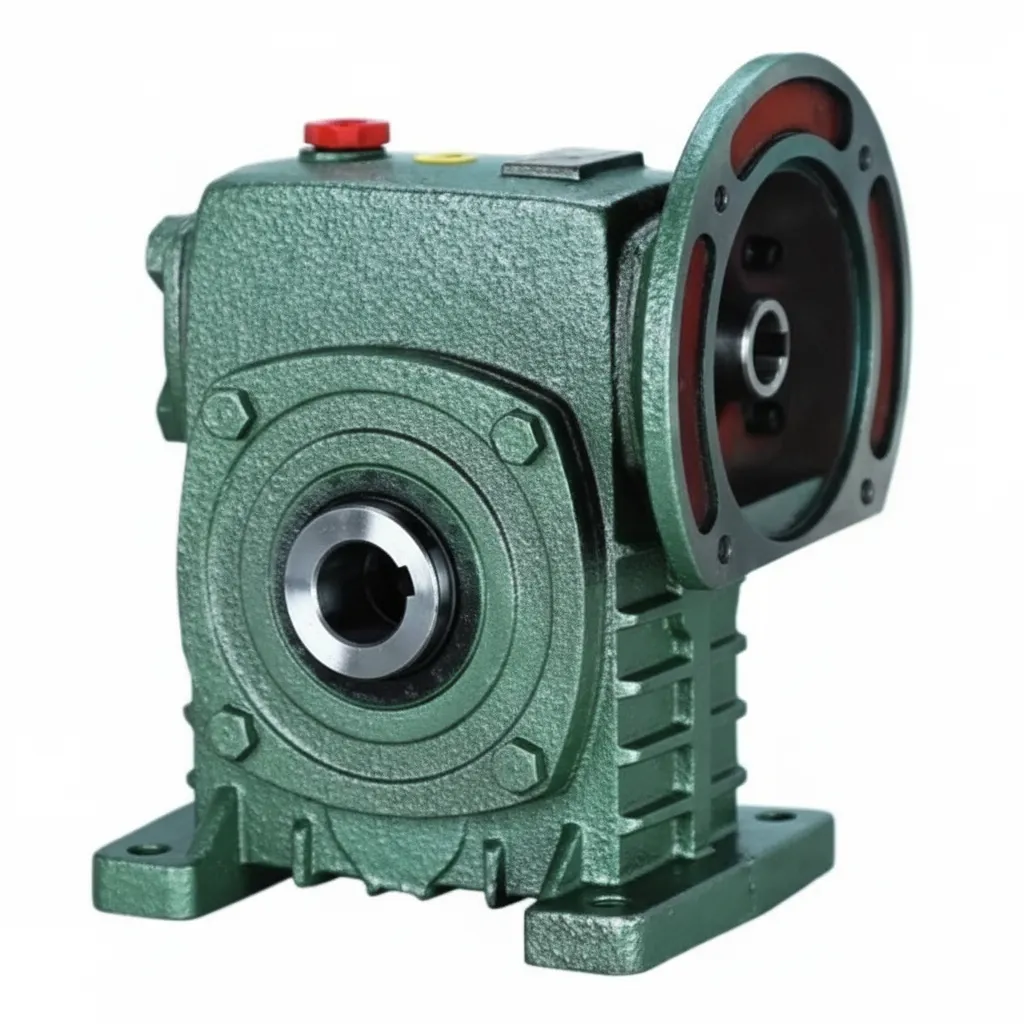
The WPDKS Series worm gear reducer sits at the apex of the WP hollow-bore family — the only configuration that simultaneously combines an IEC B5 motor-mounting flange input (no input coupling), a WPS-class deep hollow bore output (no output coupling, maximum engagement depth), and tapered roller output bearings from size 80 upward. Where the WPDKA provides the same coupling-free interfaces but with the lighter WPA-class bore depth, the WPDKS steps up to the WPS-class bore engagement — between 150% and 250% deeper than the WPDKA at the same frame size — and replaces the deep-groove ball output bearings with tapered rollers that carry combined radial and axial shaft loads without distortion. For Australian engineers in Sydney, Melbourne, Brisbane, Perth, and Adelaide specifying a motorised hollow-bore worm reducer in heavy chain conveyor, mining feeder, agricultural auger, or shock-loaded rotating equipment drives, the WPDKS delivers all four interface advantages in one unit: direct motor mount, deep bore engagement, heavy bearing arrangement, and foot-mount stability. Covering sizes 50 through 175, input powers from 0.18 kW to 7.5 kW, bore diameters Ø20 to Ø80 mm, and gear ratios from 10:1 to 60:1. Manufactured to ISO 9001:2015, designed per AGMA 6034, and supplied by Ever-Power Worm Gear Reducer Co., Ltd. (Australia), 27 Harley Crescent, Condell Park NSW 2200.
Key Specifications & Parameters — WPDKS Series Worm Gear Reducer
All parameters per ISO 9001:2015, AGMA 6034, and IEC 60034-7. Bore tolerance H7 per DIN 286. ★ = tapered roller output bearing.
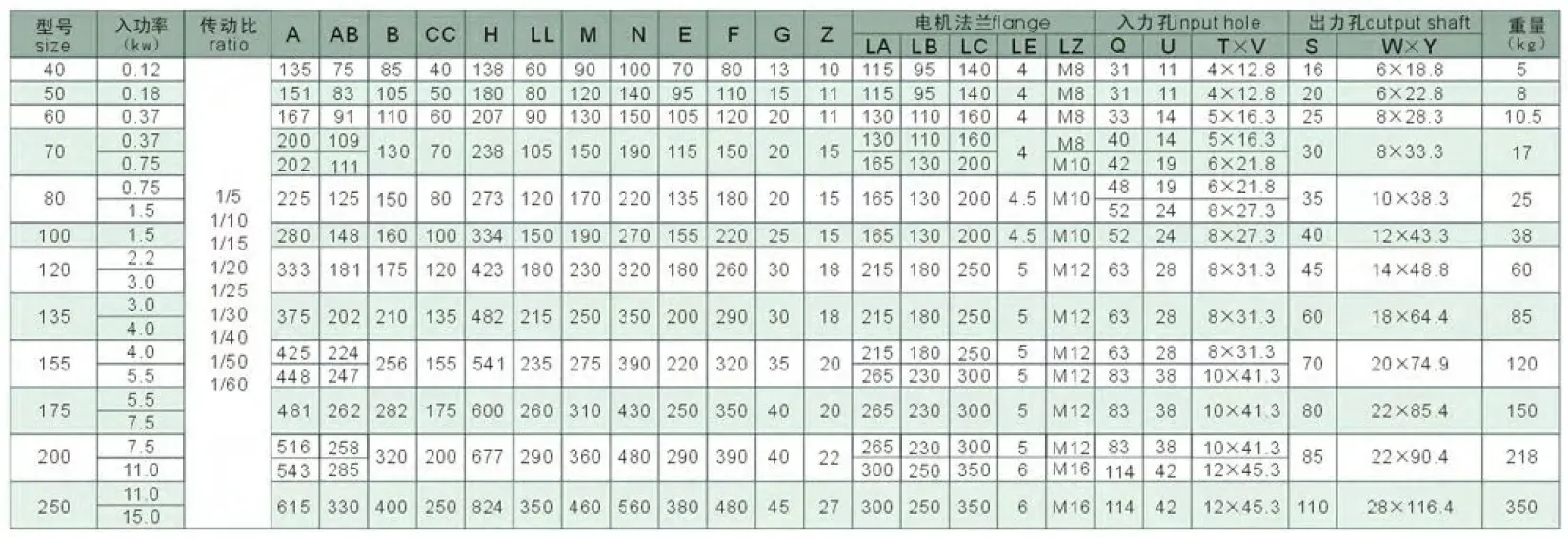
| Size | Input Power (kW) | Ratio Range | Centre Dist. A (mm) | Length B (mm) | Height H (mm) | Bore Depth HL (mm) | IEC Flange LA (mm) | Output Bore Ø (mm) | Weight (kg) |
|---|---|---|---|---|---|---|---|---|---|
| 50 | 0.18 | 10:1–60:1 | 155 | 107 | 180 | 130 | 115 | Ø20 | 8 |
| 60 | 0.37 | 10:1–60:1 | 170 | 117 | 205 | 150 | 130 | Ø25 | 10.5 |
| 70 | 0.55 | 10:1–60:1 | 200 | 131 | 235 | 175 | 145 | Ø30 | 15 |
| 80 ★ | 0.75 | 10:1–60:1 | 228 | 144 | 265 | 200 | 160 | Ø35 | 23 |
| 100 ★ | 1.5 | 10:1–60:1 | 266 | 175 | 327 | 250 | 165 | Ø40 | 38 |
| 120 ★ | 3.0 | 10:1–60:1 | 340 | 200 | 388 | 300 | 200 | Ø45 | 65 |
| 155 ★ | 5.5 | 10:1–60:1 | 442 | 312 | 483 | 390 | 265 | Ø70 | 120 |
| 175 ★ | 7.5 | 10:1–60:1 | 465 | 334 | 550 | 435 | 265 | Ø80 | 150 |
★ Sizes 80 and above: tapered roller output bearings for combined radial and axial load capacity.
What Is the WPDKS and Where Does It Fit in the WP Family?
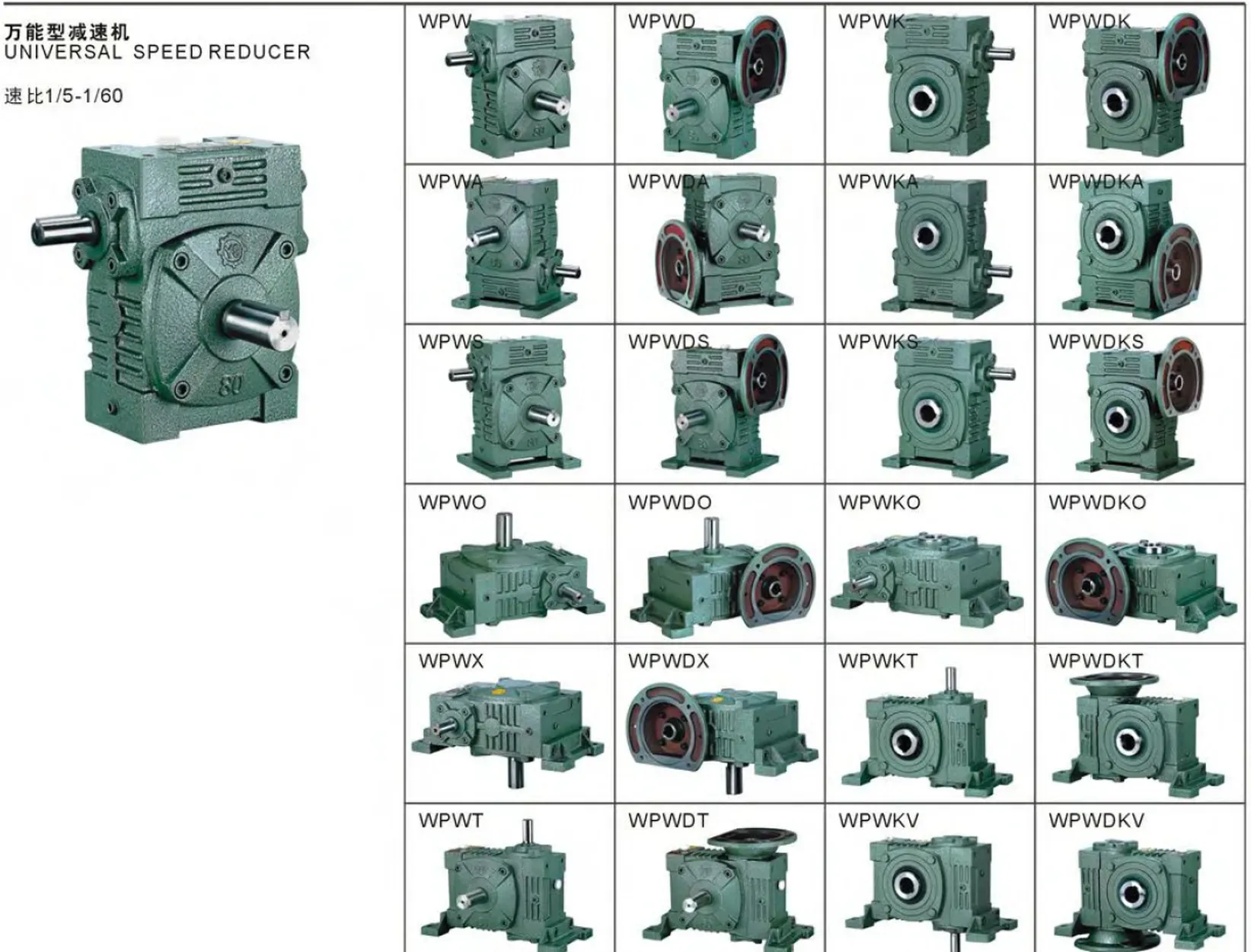
The WPDKS can be understood as the intersection of the WPDKA and the WPKS: it combines the IEC B5 motor-direct input of the WPDKA with the deeper bore engagement, tapered roller output bearings, and WPS-class housing of the WPKS. In the WP configuration matrix, it occupies the most demanding quadrant — the four-feature combination that no other single WP unit provides:
| Feature | WPDKA | WPKS | WPDKS |
|---|---|---|---|
| IEC B5 motor flange input | ✅ | ❌ | ✅ |
| Hollow bore output | ✅ | ✅ | ✅ |
| WPS-class deep bore (HL) | ❌ (WPKA-class) | ✅ | ✅ |
| Tapered roller output bearing (80+) | ❌ | ✅ | ✅ |
| No input coupling required | ✅ | ❌ | ✅ |
| No output coupling required | ✅ | ✅ | ✅ |
How to Select the WPDKS — When to Choose It Over WPDKA or WPKS
Specify WPDKS when all three of the following are true for your application:
- IEC B5 motor is available and direct mounting is preferred — the motor frame is standard and you want to eliminate the input coupling, motor base, and alignment procedure.
- The driven shaft requires deep bore engagement — the shaft engagement length needed exceeds the WPDKA’s WPKA-class bore depth (HL), or the application involves shock loading, reversing torque, or sustained high-cycle fatigue that benefits from the WPS-class bore engagement depth and tapered roller bearings.
- Output coupling elimination is also required — the machine layout requires the driven shaft to pass directly into the output bore, and adding an output coupling is not acceptable due to space, maintenance, or contamination constraints.
If only the first condition applies — direct motor mount but light output shaft load — specify WPDKA. If only the second and third conditions apply — deep bore and no output coupling but existing motor input arrangement — specify WPKS. If all three apply, specify WPDKS.
- Confirm IEC Motor Frame: Select motor frame based on power. Cross-reference with WPDKS IEC flange acceptance range (same as WPDKA) for your chosen frame size.
- Confirm Bore Diameter and Engagement: Verify driven shaft diameter ≤ WPDKS standard bore at your frame. Verify shaft engagement length ≤ WPDKS HL (deep bore depth listed in spec table above). For shock loads (SF ≥ 1.5), specify WPDKS over WPDKA at the same frame regardless of engagement length adequacy.
- Calculate Torque with Service Factor: WPDKS rated output torques equal the WPKS (WPS-class) at the same frame size. Apply SF 1.5 for chain conveyor and auger applications; SF 2.0 for mining feeder and impact loads.
- Thermal Check: Same derating applies as WPKS — 10% per 10 °C above 20 °C ambient. Specify synthetic ISO VG 220 for Queensland and WA summer conditions.
Accessories We Also Supply: Shrink disc assemblies (Ø35+ bores), heavy-duty torque arm kits, motor support brackets (frame 100+), IEC adaptor rings, tapered roller bearing replacement sets, and Viton bore seals. Contact Ever-Power Australia.
WPDKS Applications in Australian Heavy-Duty and Compact Drive Design
- Heavy Chain Conveyor Drives (Sydney, Melbourne, Brisbane): Chain conveyors carrying stone, grain, or processed food where the head shaft diameter is 40–70 mm and the engagement depth requirement exceeds 150 mm. The WPDKS 100–120 with a 1.5–3.0 kW 90–112 frame IEC motor provides direct motor mount, 250–300 mm bore engagement, and tapered roller bearings — all in one foot-mounted unit.
- Agricultural Auger Drives (QLD, NSW, SA): Grain and fertiliser auger head shafts in Australian broadacre farming where PTO or electric motor drives must mount compactly with no external couplings. The WPDKS 80–100 at 20:1–30:1 with a 0.75–1.5 kW 80–90 frame motor suits auger shaft diameters of 35–40 mm with engagement depths of 200–250 mm.
- Mining Feeder and Screen Drives (WA, QLD): Vibrating screen head shaft drives and apron feeder drives in Queensland coal and WA iron ore operations where both deep bore engagement (to resist shock-reversal fretting) and direct motor mounting (to minimise machine envelope in confined underground or elevated platform installations) are required simultaneously.
- Food Processing Mixer Drives (Sydney, Adelaide): Large paddle mixer and ribbon blender shaft drives in Australian food plants where the IP65-rated IEC motor flanges directly to the WPDKS, the mixer shaft passes into the deep bore, and no external couplings are present — satisfying both the drive engineering requirement and the AS/NZS 4696 food machinery hygiene standard’s preference for coupling-free designs in food-contact-adjacent environments.
What Australian Customers Say About the WPDKS Series
“Our Brisbane chain conveyor head shaft is Ø40 mm, 240 mm engagement. The WPDKS 100 fits perfectly — IEC 90B5 motor flanges straight on, the shaft goes all the way into the 250 mm bore with the shrink disc locking it. Zero fretting after 18 months of two-shift operation. Replaced a WPDKA that had bore wear at 12 months.”
— Brett M., Conveyor Engineer, Brisbane QLD
“WPDKS 120 at 30:1 on our grain auger drive in SA. The 3 kW 112B5 motor flanges straight on — no motor base needed in our compact grain shed layout. 300 mm bore depth handles the auger shaft engagement perfectly. The tapered roller bearings at size 120 make a real difference under the harvest season reversing loads.”
— Lisa B., Agricultural Engineer, Yorke Peninsula SA
“Using WPDKS 80 units on vibrating screen feeder shafts in our WA operation. The combination of direct motor mount and deep bore with tapered rollers is exactly what this application needs. 4 stars rather than 5 because our non-standard Ø38 bore took 3 weeks — standard sizes are much faster.”
— Shane O., Site Manager, Pilbara WA
“WPDKS 100 on our food plant mixer shaft drive in Sydney. IP65 motor flanged on, mixer shaft into the bore — no coupling anywhere. Passed our food safety audit first time. The Ever-Power team confirmed the IEC flange and bore compatibility together in one calculation — that’s the kind of service that saves us time.”
— Michelle R., Plant Engineer, Sydney NSW
Why Choose Ever-Power for WPDKS Worm Reducers in Australia?
Ever-Power Worm Gear Reducer Co., Ltd. (Australia) at 27 Harley Crescent, Condell Park NSW 2200 provides WPDKS units with free dual-interface engineering support — confirming both IEC flange compatibility and bore engagement adequacy in a single written recommendation within one business day. Standard bore configurations dispatch in 5–10 business days. See our capabilities at About Us and technical reference at worm-gearbox.top.