Description
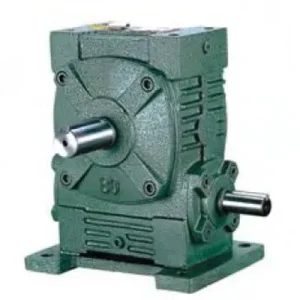
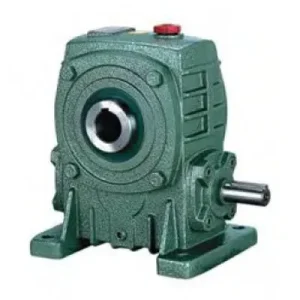
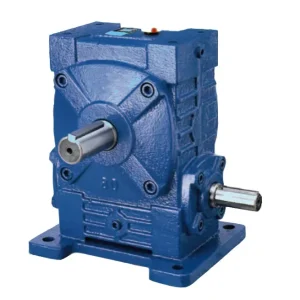
When a single worm gearbox must drive two separate output loads simultaneously — a requirement that arises in twin-roll conveyors, balanced dyeing ranges, symmetrical agitator drives, dual-lane packaging systems, and gantry crane travel drives — installing two independent reducers doubles the cost, doubles the maintenance points, and creates synchronisation errors that can only be corrected electronically. The O & X Series (WPO and WPX) dual-output worm gear reducer eliminates all three problems in a single sealed housing. The WPO provides two co-axial output shafts extending from opposite faces of the gear centre on the same axis, guaranteeing mechanically exact speed synchronisation between two driven loads. The WPX provides one co-axial output and a second output exiting at 90° — addressing machine geometries where a co-axial second output is not physically possible. Covering centre distances from size 50 to 250, standard ratios from 10:1 to 60:1, and output torques reaching 15,000 N·m, the O & X series is deployed across Australian manufacturing, mining, and infrastructure sectors. Supplied by Ever-Power Worm Gear Reducer Co., Ltd. (Australia), 27 Harley Crescent, Condell Park NSW 2200.
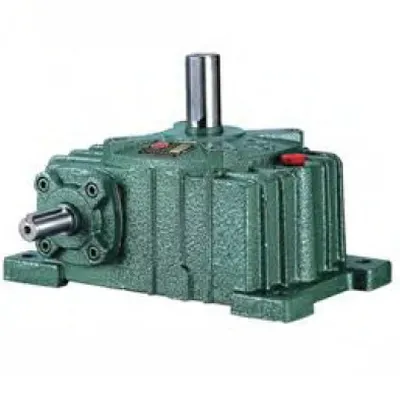
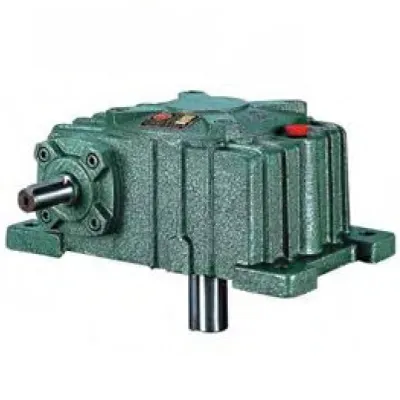
Key Specifications & Parameters — O & X Series (WPO / WPX) Worm Gear Reducer
WPO (FCO) — Co-Axial Dual Output
Input shaft at 90° to two co-axial output shafts extending from opposite housing faces on the same axis. Mechanically guarantees equal output speed on both shafts at all times. Used for symmetrical twin-load drives.
WPX (FCX) — 90° Dual Output
Input shaft co-axial with one output; second output exits at 90° via an internal bevel gear stage. Used for offset-axis distribution drives where a co-axial second output is not geometrically possible in the machine envelope.
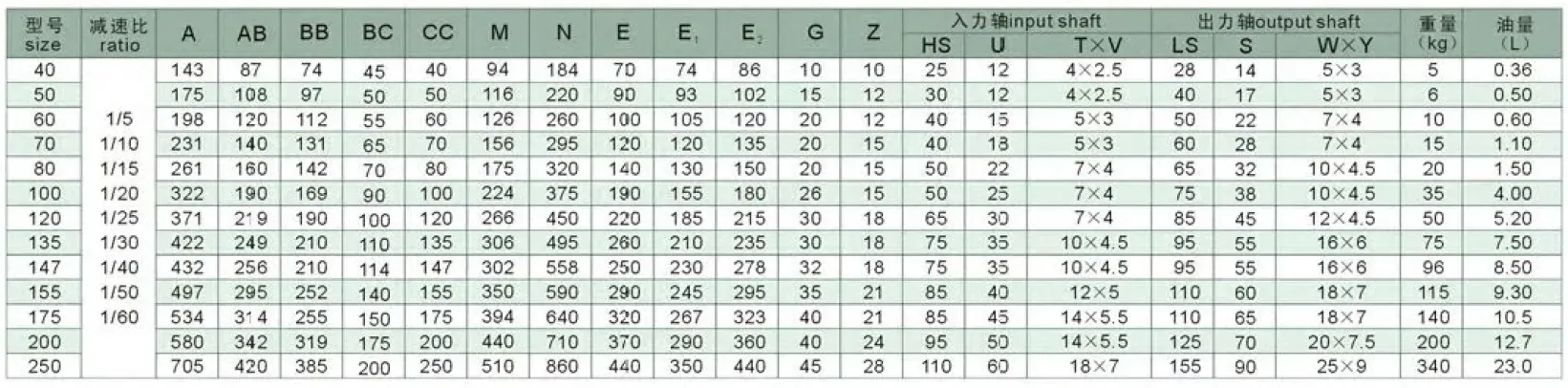
| Size | Ratio | Centre Dist. A (mm) | Housing Width AB (mm) | Overall Length B (mm) | Output Shaft LS (mm) | Output Shaft S (mm) | Weight (kg) |
|---|---|---|---|---|---|---|---|
| 50 | 10:1–60:1 | 175 | 105 | 145 | 40 | 17 | 0.5 |
| 60 | 10:1–60:1 | 195 | 120 | 165 | 50 | 22 | 0.6 |
| 70 | 10:1–60:1 | 234 | 140 | 195 | 60 | 28 | 1.1 |
| 80 | 10:1–60:1 | 264 | 160 | 210 | 65 | 32 | 1.4 |
| 100 | 10:1–60:1 | 322 | 190 | 245 | 75 | 38 | 3.0 |
| 120 | 10:1–60:1 | 385 | 230 | 285 | 85 | 45 | 5.1 |
| 135 | 10:1–60:1 | 435 | 260 | 320 | 95 | 55 | 7.2 |
| 155 | 10:1–60:1 | 507 | 302 | 392 | 110 | 60 | 9.0 |
What Are the WPO and WPX Worm Gear Reducers?
The WPO and WPX represent the dual-output-shaft branch of the standard WP worm reducer family. Where a conventional WP unit drives a single load from one output shaft stub, the WPO and WPX housings are machined to present two output shaft extensions — doubling the load-driving capacity without doubling the number of reducers, motors, or maintenance points.
In the WPO configuration, both output shaft stubs emerge from opposite faces of the housing on a common axis — the worm wheel shaft simply extends through both sides of the housing rather than terminating at one face. Both output stubs rotate at identical speed at all times, since they are physically the same shaft. This mechanical identity of speed — without any electronic control — is the core engineering value of the WPO for Australian twin-roll conveyor, dyeing range, and bridge crane travel drive applications where electronic speed matching is either unreliable, too expensive, or creates single-point-of-failure risk in the control system.
In the WPX configuration, one output is co-axial with the worm wheel shaft (same as one side of the WPO), while the second output exits at 90° via a compact bevel gear stage housed within the WPX casting. The bevel gear efficiency is approximately 97–98%, adding only 2–3% power loss compared with the WPO arrangement. The 90° second output is particularly useful in Australian gantry crane drives and agricultural equipment where the machine geometry cannot accommodate both output shafts on the same axis.
Both WPO and WPX use the standard WP family material specification: 20CrMnTi worm shaft (carburised and quenched, HRC 56–62), ZCuSn10Pb1 tin-bronze worm wheel, GG25 cast-iron housing, and output shafts in 45# chromium steel to DIN 748 h6 tolerance. Gear quality is produced to DIN 3975 Class 8, and rated torque and thermal power are calculated per AGMA 6034.
WPO vs WPX — Choosing the Right Dual-Output Configuration
| Decision Criterion | Choose WPO | Choose WPX |
|---|---|---|
| Output shaft geometry | Both loads co-axial (same axis) | Second load at 90° to first |
| Speed synchronisation | Mechanically exact — same physical shaft | Near-exact — bevel gear adds <0.1% slip |
| Efficiency | Standard worm efficiency (75–85%) | 2–3% lower due to bevel stage |
| Machine geometry | Symmetrical twin-roll, twin-sprocket | Offset-axis, gantry, angular drives |
| Relative cost | Lower (simpler machining) | 5–10% higher (bevel gear set added) |
| Torque distribution | Proportional to load resistance on each shaft | Consult engineering team for split calculation |
| Self-locking (ratio ≥20:1) | Yes — same as standard WP | Yes on worm stage; bevel stage not self-locking |

How to Select the Right WPO or WPX for Your Application
- Define Total Output Torque: Calculate the torque required at the output shaft at each driven load point. For WPO, both outputs share a common worm wheel shaft — the rated torque of the WPO frame is the total torque available to be split between both stubs. Sum both load torques (plus service factors) and ensure this does not exceed the WPO frame’s rated output torque.
- Confirm Output Geometry: If both driven loads are co-axial (same physical axis, 180° apart), specify WPO. If the second load is at 90° to the first, specify WPX. If neither configuration matches your machine geometry, contact Ever-Power’s engineering team for a custom configuration review.
- Assess Torque Imbalance Risk: The WPO distributes torque to both shafts in proportion to load resistance. If the two loads can become significantly unequal during operation (e.g., one load stalls while the other continues), the full rated torque can concentrate on one shaft. For applications with this risk, add a torque-limiting coupling on the lighter-loaded stub to cap its contribution at 50% of rated.
- Check Self-Locking Requirement: At ratios of 20:1 and above, the WPO/WPX worm stage is self-locking. For WPX, the bevel gear stage is not self-locking — if the 90° output drives a gravity-loaded machine, a separate brake on the 90° output shaft is required per AS 4024 regardless of the ratio.
- Specify Output Shaft Dimensions: Both output stubs of the WPO have identical diameters and keyway dimensions. For WPX, the co-axial output and the 90° output may differ in diameter — confirm both shaft diameters match your drive element (sprocket, coupling, pulley hub) bores at time of order.
Accessories We Also Supply: Finished-bore sprockets for both output shafts, jaw couplings and hubs, IEC motor adaptor flanges, torque-limiting couplings for unbalanced load protection, foot-mount shim packs, and replacement oil seals. Contact Ever-Power Australia for a combined supply quote.
Applications of WPO / WPX Dual-Output Worm Reducers Across Australian Industry
| Industry & Location | Application | Configuration | Key Benefit |
|---|---|---|---|
| Packaging (Sydney, Melbourne) | Twin-roll conveyor infeed / outfeed | WPO | Mechanical speed sync — eliminates electronic speed matching |
| Dyeing & Textile (Melbourne, Geelong) | Fabric spreader rolls, tension rolls | WPO | Balanced surface speed prevents fabric tracking error |
| Material Handling (Brisbane, Perth) | Gantry crane travel drives | WPO or WPX | Identical wheel speeds prevents rail binding and skewing |
| Agricultural (QLD, NSW) | Dual-auger grain conveyors | WPX | Motor offset from auger centre — fits machine geometry |
| Mining (WA, QLD) | Symmetrical agitator / thickener drives | WPO | Single reducer replaces two — halves maintenance points |
Why Mechanical Synchronisation Outperforms Electronic Speed Matching in Australian Industry
Electronic speed matching — using two independently controlled motors with closed-loop speed feedback — is the conventional approach to twin-load synchronisation. The WPO’s mechanical approach is superior in several scenarios that are common across Australian manufacturing:
- Eliminating electronic single points of failure: An encoder failure, VFD fault, or PLC communication error in an electronically synchronised system causes a speed mismatch that can damage the product, the conveyor structure, or both. The WPO’s mechanical synchronisation cannot fail in this way — both shafts are physically the same steel shaft.
- Reducing capital cost: Two independently controlled VFD-motor combinations for a twin-roll conveyor drive add approximately $3,000–8,000 to the machine cost at typical Australian industrial electrical pricing (2025 rates). A WPO with a single motor and no VFD required for synchronisation represents a significant saving, particularly relevant in the current environment of rising electrical installation costs in Australian industrial construction.
- Simplifying maintenance certification: Under Australian electrical safety regulations (AS/NZS 3000 and state-based electrical installation licensing requirements), any addition to the electrical installation requires certified electrical work. Replacing a mechanical WPO like-for-like requires only a mechanical fitter — no electrical work, no permit, no inspection.
What Australian Customers Say About the O & X Series
“WPO 90 at 20:1 on our Melbourne twin-roll packaging conveyor. The mechanical synchronisation is perfect — we eliminated a constant electronic speed-matching calibration issue that was generating 2 rejects per hour. Installation was straightforward; the dual shaft stubs accepted our standard sprocket hubs directly.”
— Natasha R., Process Engineer, Melbourne VIC
“Used WPX 110 at 30:1 for our gantry crane travel drive in Perth. The 90° second output kept the motor clear of the runway beam — couldn’t have used a WPO with the physical constraints of that crane. 14 months in, tracking perfect with no electronic correction needed at all.”
— Steve L., Mechanical Engineer, Perth WA
“WPO 75 on our Sydney dyeing range spreader rolls. Equal torque to both rolls keeps fabric tension perfectly balanced — this is a physical property of the WPO that you simply cannot replicate electronically without very expensive control systems. One unit had a minor seal weep on arrival, resolved by Ever-Power next day.”
— Joanne W., Production Manager, Sydney NSW
“Replaced a cascade of two separate WPA units with a single WPO 130 on our Brisbane grain bridge. Floor space saving is significant, one fewer coupling to maintain, and the ever-Power team confirmed the WPO would handle the unequal startup load before we committed. Excellent technical support.”
— Chris B., Maintenance Engineer, Brisbane QLD
Why Choose Ever-Power for WPO / WPX Dual-Output Worm Reducers in Australia?
Ever-Power Worm Gear Reducer Co., Ltd. (Australia), 27 Harley Crescent, Condell Park NSW 2200, stocks WPO and WPX units in the most common frame sizes and ratios. Our engineering team provides free dual-output load distribution analysis for your specific application, WPO vs WPX configuration guidance, and confirmed interchange checks against existing installed units — delivered in writing within one business day. Learn more at About Us and explore extended technical resources at worm-gearbox.top.
- ISO 9001:2015 certified supply with documented quality records — suitable for inclusion in plant maintenance asset management systems
- Free load distribution analysis for dual-output applications provided by our engineering team before you commit to an order
- 5–10 business day standard dispatch to all Australian states; express freight options available for urgent replacements
- Customisation: Hollow bore output shafts (both WPO stubs), non-standard shaft diameters, Viton seal upgrade, IP65 sealing — available with 2–4 week lead time
- Volume pricing for OEM and MRO repeat orders above 5 units — contact us for a project schedule