Description
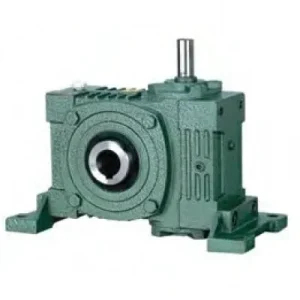
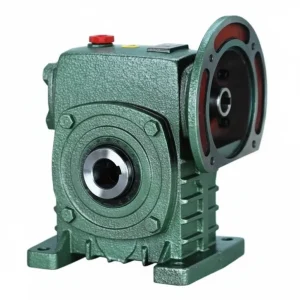
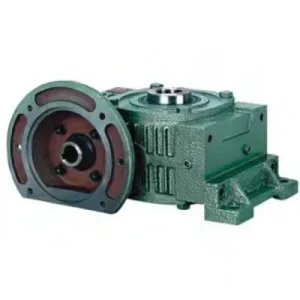
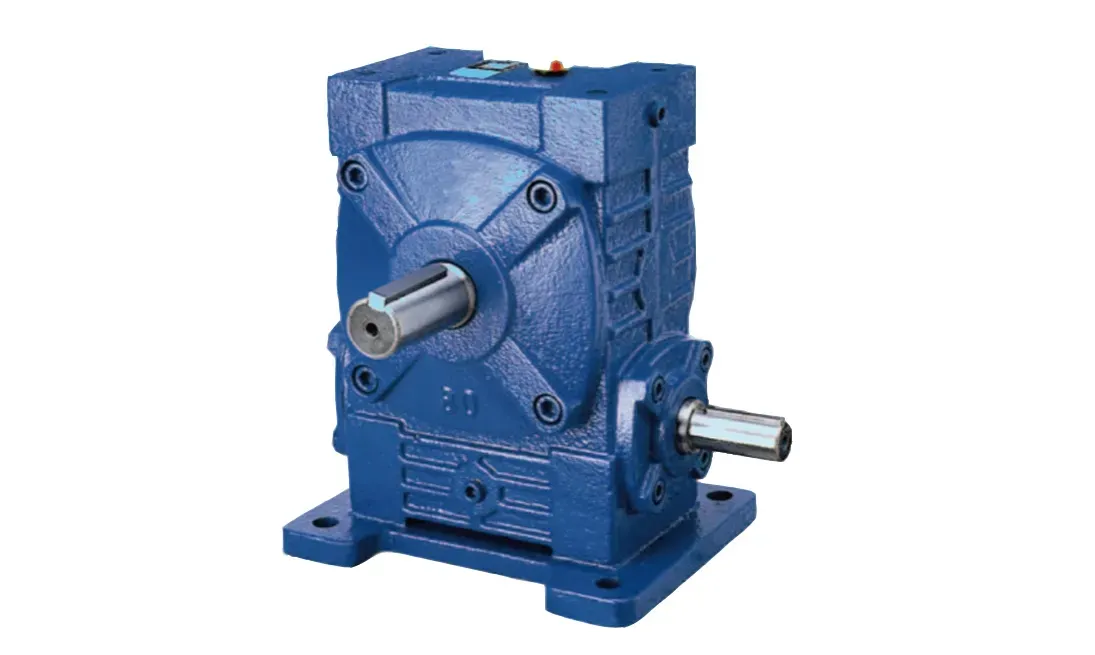
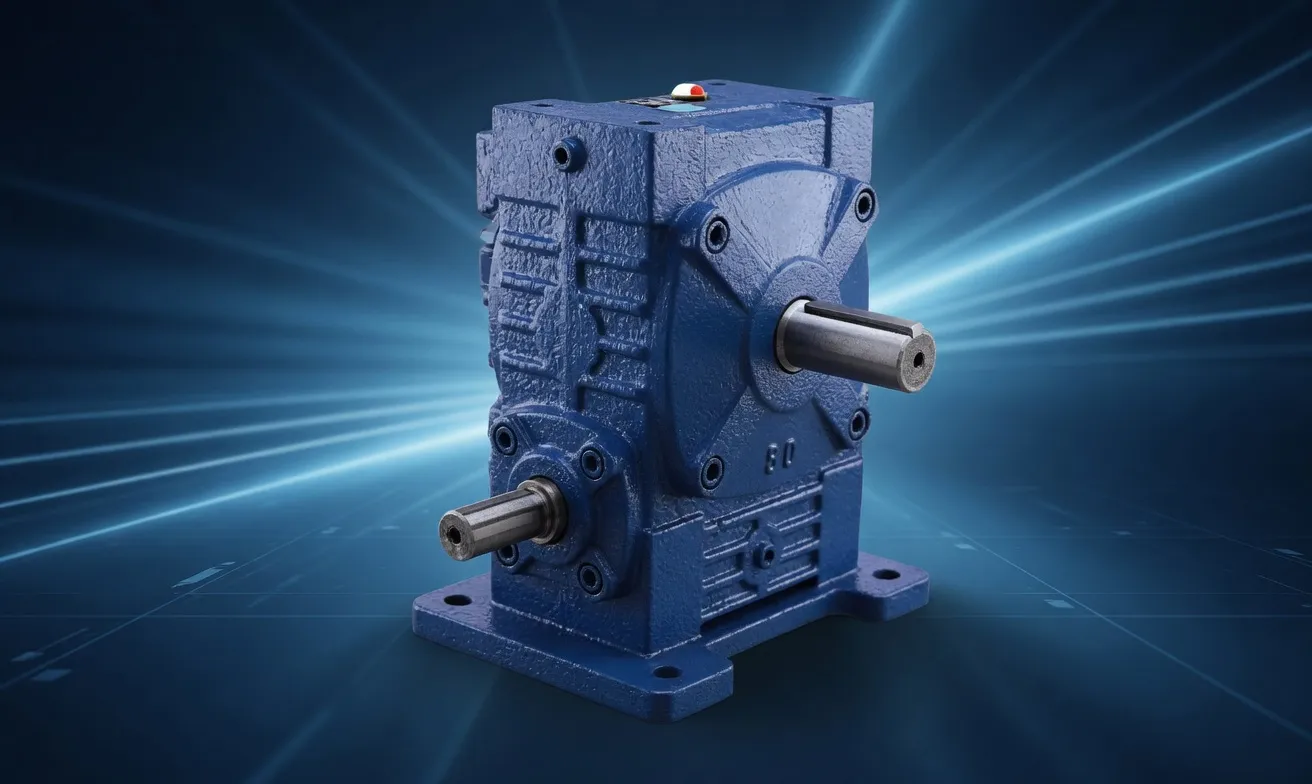
The WA & WS Series worm gearbox is the hollow-bore shaft-mount configuration within the W family, carrying the W series’ through-shaft input accessible from either housing side while replacing the solid output shaft with a precision hollow bore that seats directly onto the driven machine shaft. For Australian maintenance engineers maintaining legacy W-convention machinery across Sydney, Melbourne, Brisbane, Perth, and Adelaide — and for machine designers specifying new W-convention hollow-bore drives — these two units are the standard solution across the size range from 40 to 200. The WA carries a WA-class bore depth optimised for smooth continuous loads; the WS provides the deeper WS-class bore engagement for shock, chain-loaded, and reversing applications where bore fretting is the primary maintenance concern. This guide covers the complete engineering picture: specification, selection between WA and WS, installation procedure, maintenance schedule, failure diagnosis, and identification of legacy units without nameplates. Manufactured to ISO 9001:2015, designed per AGMA 6034, supplied by Ever-Power Worm Gear Reducer Co., Ltd. (Australia), 27 Harley Crescent, Condell Park NSW 2200.
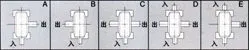
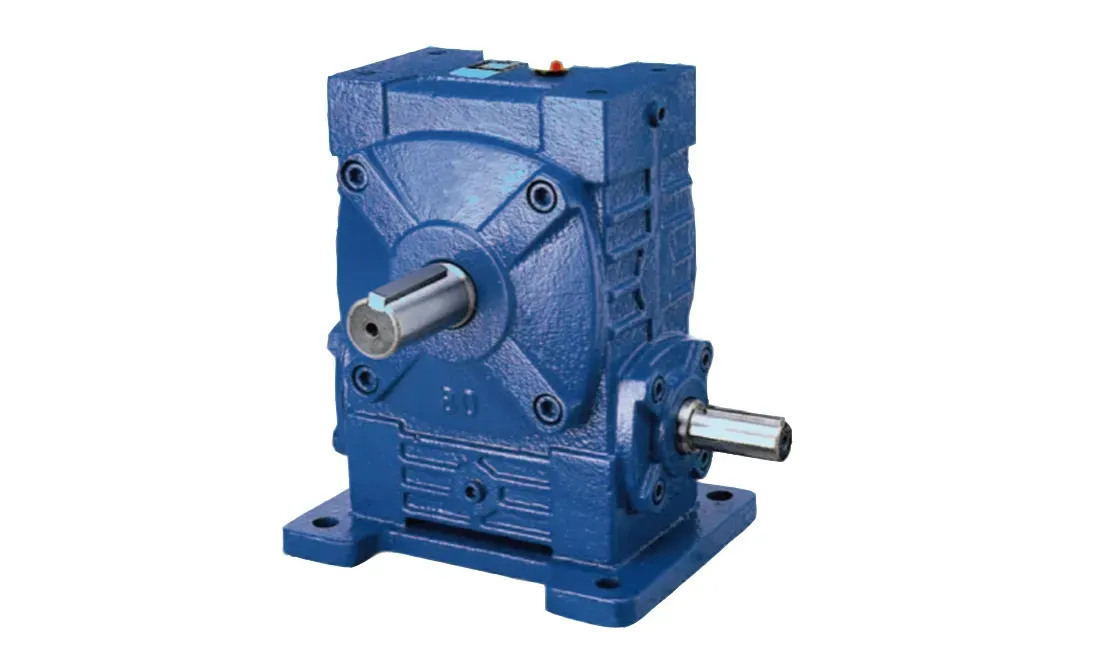

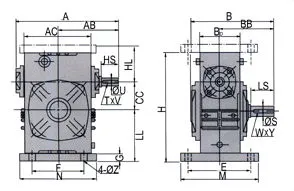
Technical Specifications — WA & WS Series Worm Gearbox
WS — Deep Bore (Heavy Duty)
WPS-class bore depth HL-WS. Through-shaft input both sides. Preferred for chain/belt loads, shock, reversals, cyclic fatigue.
WA — Standard Bore
WPA-class bore depth HL-WA. Through-shaft input both sides. Best for smooth continuous loads in W-convention machinery.
| Size | Ratio | A (mm) | B (mm) | H (mm) | HL-WS (mm) | HL-WA (mm) | Bore Ø (mm) | Weight (kg) |
|---|---|---|---|---|---|---|---|---|
| 40 | 10:1–60:1 | 148 | 122 | 135 | 60 | 45 | Ø14 | 4 |
| 50 | 10:1–60:1 | 175 | 145 | 165 | 80 | 50 | Ø17 | 7 |
| 60 | 10:1–60:1 | 195 | 165 | 195 | 93 | 60 | Ø22 | 11 |
| 70 | 10:1–60:1 | 234 | 195 | 233 | 108 | 73 | Ø28 | 15 |
| 80 | 10:1–60:1 | 264 | 210 | 268 | 123 | 83 | Ø32 | 23 |
| 100 | 10:1–60:1 | 322 | 245 | 330 | 150 | 100 | Ø38 | 38 |
| 120 | 10:1–60:1 | 385 | 285 | 395 | 180 | 120 | Ø45 | 65 |
| 135 | 10:1–60:1 | 435 | 320 | 455 | 215 | 135 | Ø55 | 84 |
| 155 | 10:1–60:1 | 494 | 387 | 493 | 235 | 135 | Ø60 | 114 |
| 175 | 10:1–60:1 | 548 | 407 | 558 | 260 | 160 | Ø65 | 150 |
| 200 | 10:1–60:1 | 688 | 480 | 620 | 290 | 175 | Ø70 | 218 |
WA vs WS — Practical Selection Guide for Australian Maintenance Engineers
The single most important selection decision is WA or WS — determined by your application’s duty classification:
| Condition | Specify WA | Specify WS |
|---|---|---|
| Service factor | SF ≤ 1.25 (smooth, steady load) | SF ≥ 1.5 (shock, reversals) |
| Bore fretting history | No history of fretting | Previous WA failed — WS is the direct upgrade |
| Output load type | Direct coupling, smooth start | Chain/belt drive, DOL motor start |
| Required bore engagement | Within HL-WA at your frame size | Exceeds HL-WA, or long shaft available |
| Replacing existing unit | Replacing WA — match WA bore depth | Replacing WS — match WS bore depth |
Installation, Commissioning & Maintenance Schedule
Installation sequence:
- Clean shaft, check keyway for burrs. Apply anti-fretting compound (Molykote G-n or equivalent) to shaft engagement zone.
- Slide WA/WS bore over shaft with key aligned. Torque setscrews to specification (M8: 10 N·m; M10: 20 N·m; M12: 35 N·m). Confirm no axial play.
- Mount torque arm bracket to housing (W-family-specific bolt pattern — do not substitute WP-family torque arm). Connect pivot pin to machine frame with 3–5 mm free movement at pivot centre.
- Connect motor to through-shaft input via flexible coupling. Align per coupling manufacturer specification (typically ≤0.1 mm radial, ≤0.5° angular misalignment).
- Fill with ISO VG 220 oil to sight glass centre for your mounting orientation. Guard unused through-shaft stub per AS 4024.1.
- Run-in: 30 min unloaded; 2 hr at 50% load; check for excessive heat (housing surface ≤ ambient +60 °C) and unusual noise; then full load.
Maintenance schedule:
| Interval | Task | Action if Abnormal |
|---|---|---|
| 200 h run-in check | Check setscrew torque, check oil level and colour | Re-torque setscrews; change oil if milky (water ingress) |
| 2,500 h (mineral oil) | Change oil, inspect seals, check torque arm bush | Replace cracked bush; investigate seal wear source |
| 5,000 h (synthetic) | Change oil, inspect bore for fretting marks | Fretting depth >0.2 mm: replace unit with WS; <0.2 mm: continue with anti-fretting compound |
| Annual | Check housing for cracks, check coupling alignment, verify oil level | Coupling misalignment >0.3 mm radial: realign immediately |
Failure Diagnosis — Identifying WA/WS Problems in the Field
| Symptom | Most Likely Cause | Remedy |
|---|---|---|
| Bore slip under load (shaft rotates, bore does not) | Undertorqued setscrew or worn bore | Re-torque setscrew; if bore worn, replace unit with WS + shrink disc |
| Rattling noise at input coupling | Coupling insert worn; coupling misalignment | Replace coupling insert; check and correct alignment |
| Housing abnormally hot (>90 °C surface) | Low oil, wrong oil grade, or overloading | Check oil level; switch to synthetic ISO VG 220; review load and SF |
| Oil leaking from bore seal | Worn NBR seal; high oil level overfill | Replace seal (Ever-Power stocks spares); check and correct oil level |
| Grinding noise at output under load | Bronze wheel wear or damaged worm thread | Inspect worm and wheel — unit replacement typically required |
| Rust-red powder at bore-shaft interface | Bore fretting (iron oxide from micro-movement) | Replace WA with WS; add anti-fretting compound or shrink disc |
Applications Across Australian Industry
- Legacy machine MRO (all states): Direct dimensional replacement for worn WA and WS units in W-convention Australian food, packaging, and conveyor machinery. Ever-Power stocks bore Ø14–Ø70 mm across all sizes for fast dispatch.
- Grain and bulk handling (QLD, NSW, SA, WA): WS at sizes 80–135 for reversible grain conveyor head shaft drives where the deeper bore resists fretting under seasonal full-load reversals.
- Water and irrigation infrastructure (Perth, Adelaide): WA at sizes 100–135 at 40:1–60:1 for W-convention gate actuator systems — through-shaft allows hand-wheel override from the unused input side; hollow bore eliminates output coupling on the gate shaft.
- Food processing and mixing (Sydney, Melbourne): WA at sizes 60–100 for agitator and ribbon-blender shaft drives in W-convention machinery where self-locking at 30:1+ holds paddles stationary without power during cleaning cycles.
What Australian Engineers Say About the WA & WS Series
“We maintain a QLD grain facility with 30 WA and WS units across sizes 60 to 135. Ever-Power is the first supplier matching our W-convention bore dimensions exactly. Replaced 8 worn WA units with WS after fretting problems — the deeper WS bore depth solved the issue permanently.”
— Mark D., Bulk Grain Manager, Toowoomba QLD
“WA 80 units on our Melbourne packaging conveyor roller shafts — direct replacement for 15-year-old originals. Same bore dimensions, same torque arm attachment. Running 16 months without issues. The through-shaft encoder on the unused input side gives us the belt speed feedback we need.”
— Karen M., Maintenance Supervisor, Melbourne VIC
“WS 175 on our WA mineral processing shaft drives — the Ø65 mm bore at 260 mm depth handles our shaft engagement and torque perfectly. 10-day delivery to Kalgoorlie was impressive for a large size. One star less because the size 175 required a torque arm kit ordered separately — I’d prefer it bundled.”
— Andrew P., Process Engineer, Kalgoorlie WA
“WA 100 on our Adelaide water plant gate actuators. The through-shaft hand-wheel emergency manual override is a critical safety requirement — no other single unit gives us hollow bore output plus dual-side input plus self-locking in the right dimensions. Works perfectly.”
— Colin R., Infrastructure Engineer, Adelaide SA
Why Choose Ever-Power for WA & WS Worm Gearboxes in Australia?
Ever-Power Worm Gear Reducer Co., Ltd. (Australia) at 27 Harley Crescent, Condell Park NSW 2200 stocks WA and WS units from size 40 through 200 for 5–10 business day dispatch. We provide free legacy interchange checks, bore fretting diagnosis (WA vs WS upgrade assessment), and torque arm sizing — all delivered in one business day. Visit About Us and technical reference at worm-gearbox.top.