Description
The WDKO Series worm gear reducer is the most integration-dense twin-shaft configuration in the W family — combining an IEC B5 motor flange at the input face with two co-axial hollow bores exiting from opposite housing faces simultaneously. One motor bolts directly to the input flange; both driven shafts slide directly into the co-axial output bores; no coupling exists anywhere in the drive chain. The co-axial bore arrangement means both output shafts share the same rotational axis and rotate at mechanically identical speed from a single worm wheel — a physical guarantee of synchronisation that electronic control loops cannot match in precision or reliability. Covering sizes 40–175 with input powers from 0.12 kW to 7.5 kW, dual bore diameters from Ø20 × 2 to Ø80 × 2, and ratios 10:1–60:1, the WDKO is specified by Australian plant engineers in Sydney, Melbourne, Brisbane, Perth, and Adelaide for twin-auger conveyors, fermentation paddle drives, packaging infeed/outfeed pairs, and matched irrigation shaft drives where one motor must drive two loads in perfect synchronisation with zero couplings throughout. Manufactured to ISO 9001:2015, designed per AGMA 6034, and supplied by Ever-Power Worm Gear Reducer Co., Ltd. (Australia), 27 Harley Crescent, Condell Park NSW 2200.
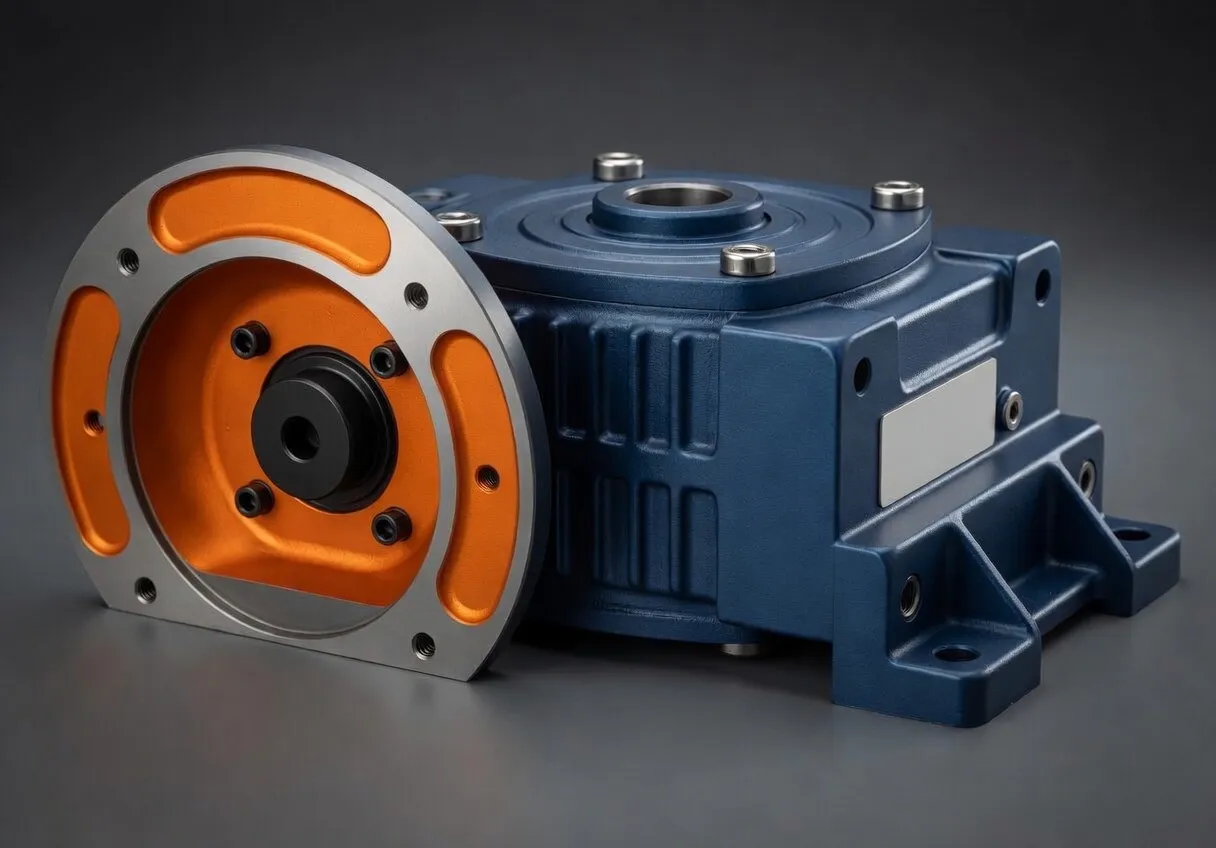
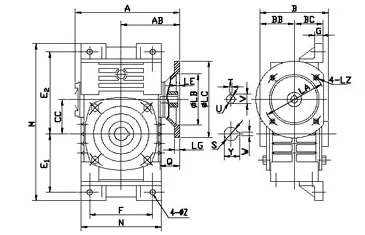
Technical Specifications — WDKO Series Worm Gear Reducer
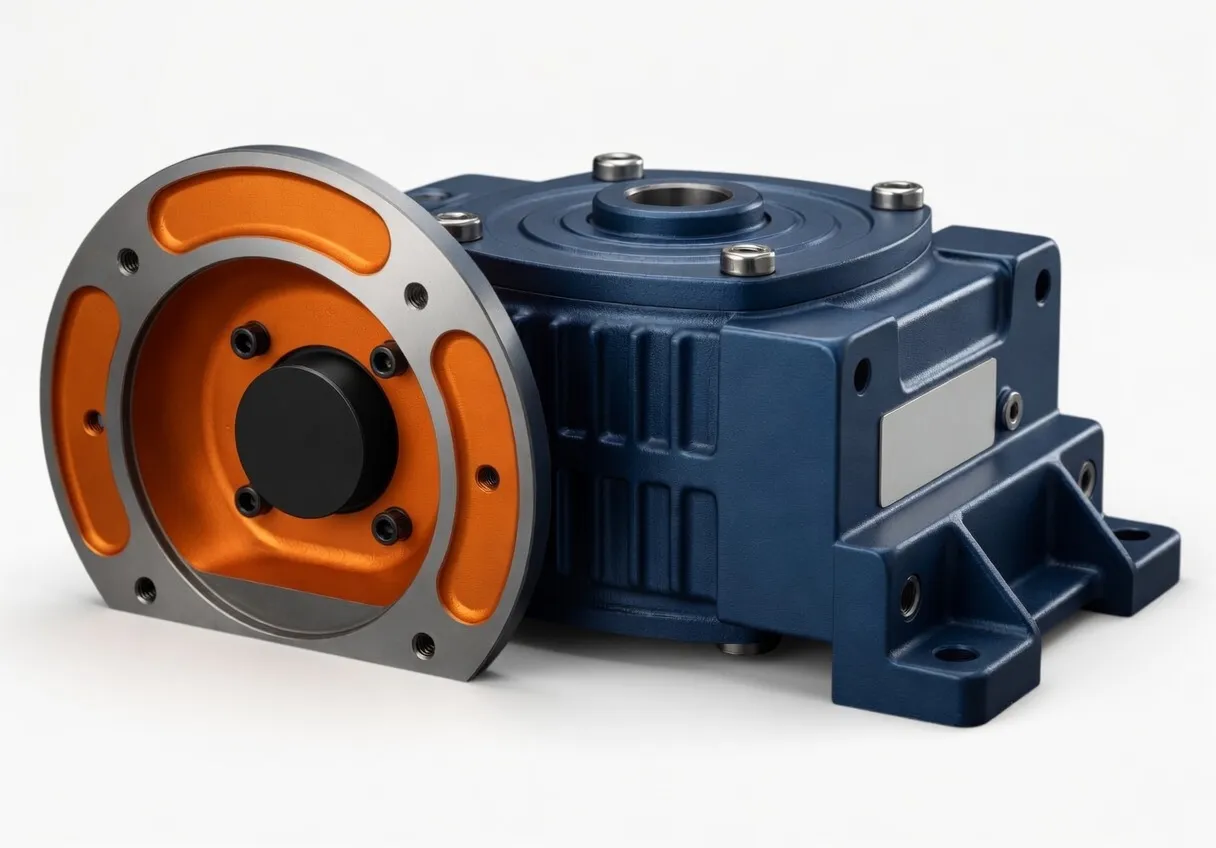
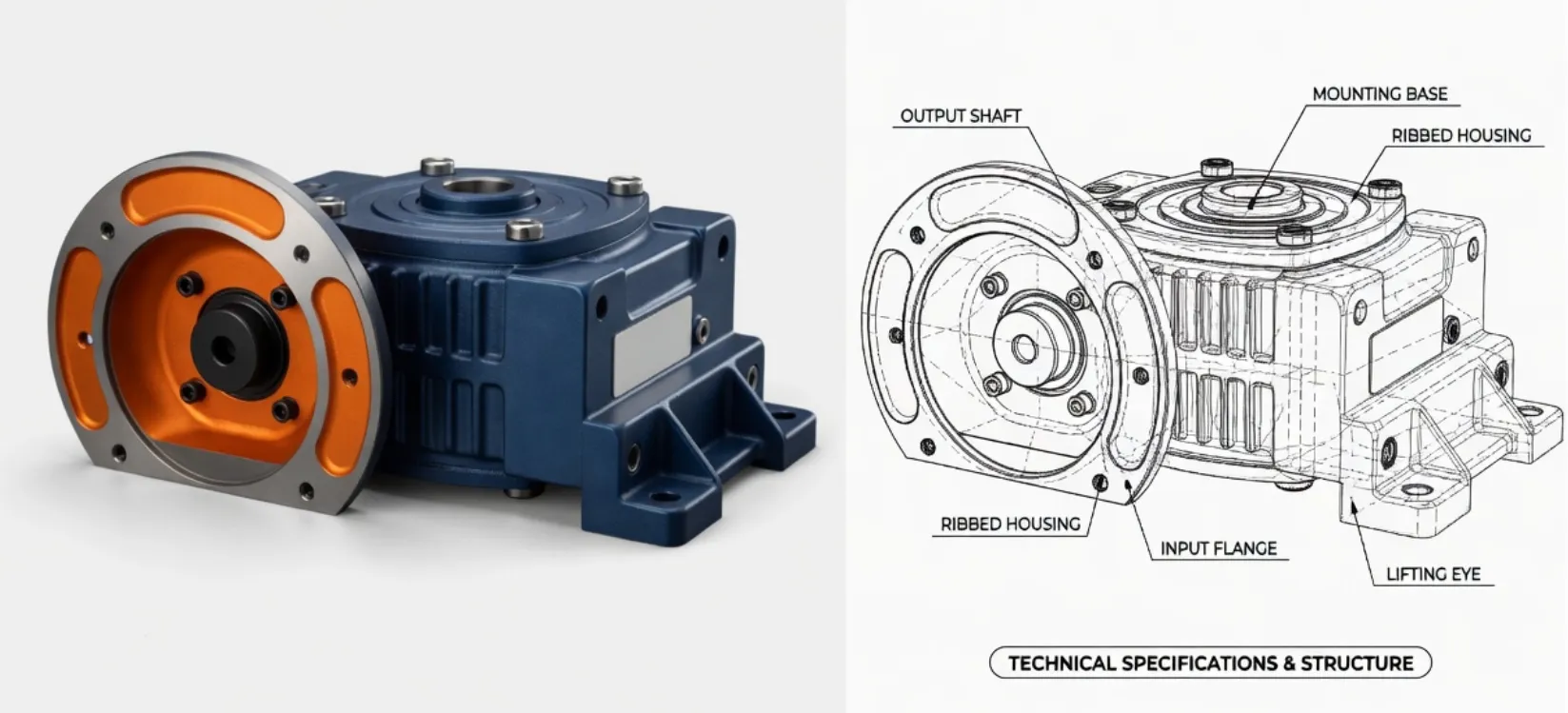
WDKO — Co-Axial Dual Hollow Bore Configuration
IEC B5 motor flange input (no input coupling). Twin hollow bores on opposite housing faces — same axis, both Ø and depth identical. Mechanically guaranteed identical speed on both output shafts at all times. Foot-mount base standard.
All parameters per ISO 9001:2015 and AGMA 6034. Both output bores identical Ø and depth. Bore H7/DIN 286.
| Size | Power (kW) | Ratio | A (mm) | B (mm) | BC (mm) | E1 (mm) | Flange LZ (mm) | Input Pilot Ø Q (mm) | Output Bore Ø × 2 | Weight (kg) |
|---|---|---|---|---|---|---|---|---|---|---|
| 40 | 0.12 | 10:1–60:1 | 138 | 90 | 45 | 40 | 140 | 25 | Ø20 × 2 | 5 |
| 50 | 0.18 | 10:1–60:1 | 155 | 107 | 53.5 | 50 | 140 | 25 | Ø20 × 2 | 8.5 |
| 60 | 0.37 | 10:1–60:1 | 170 | 117 | 58.5 | 60 | 160 | 35 | Ø25 × 2 | 12 |
| 70 | 0.37–0.75 | 10:1–60:1 | 206 | 131 | 65.5 | 70 | 160–200 | 35–45 | Ø30 × 2 | 18 |
| 80 | 0.75–1.5 | 10:1–60:1 | 232 | 144 | 72.2 | 80 | 200 | 45 | Ø35 × 2 | 26 |
| 100 | 1.5 | 10:1–60:1 | 266 | 175 | 87.5 | 100 | 200 | 55 | Ø40 × 2 | 39 |
| 120 | 2.2–3.0 | 10:1–60:1 | 340 | 200 | 100 | 120 | 250 | 65 | Ø45 × 2 | 61 |
| 135 | 3.0–4.0 | 10:1–60:1 | 375 | 212 | 110 | 135 | 250 | 65 | Ø60 × 2 | 88 |
| 155 | 5.5 | 10:1–60:1 | 442 | 312 | 140 | 155 | 300 | 85 | Ø70 × 2 | 124 |
| 175 | 7.5 | 10:1–60:1 | 465 | 334 | 150 | 175 | 300 | 85 | Ø80 × 2 | 158 |
What Is the WDKO — Zero-Coupling Twin Synchronisation in the W Family
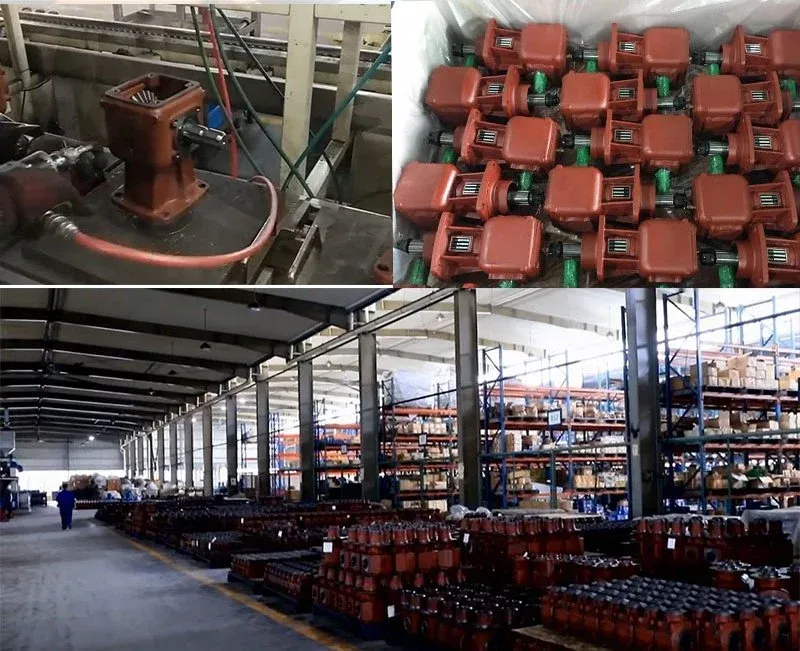
In the W family, the WDKO fills the most integrated position in the entire configuration matrix: IEC flange input (no input coupling) plus dual co-axial hollow bore output (no output coupling on either driven shaft). The motor-to-shaft coupling count is zero. Both output shafts rotate at the same speed because they are the same physical worm wheel shaft — not because of any electronic synchronisation control.
This mechanical synchronisation is the WDKO’s fundamental engineering advantage over electronically synchronised two-motor arrangements. Electronic synchronisation loops — whether VFD master-slave or CNC axis control — have a finite response time, drift under load, require calibration, and can fail independently. The WDKO’s mechanical synchronisation has zero response time, zero drift, requires no calibration, and cannot fail independently of the reducer itself. For Australian packaging lines where belt tension balance, textile spreader roll speed matching, or twin-auger conveyor balance is critical to product quality, this physical guarantee of synchronisation is worth the entire cost premium over a two-motor arrangement.
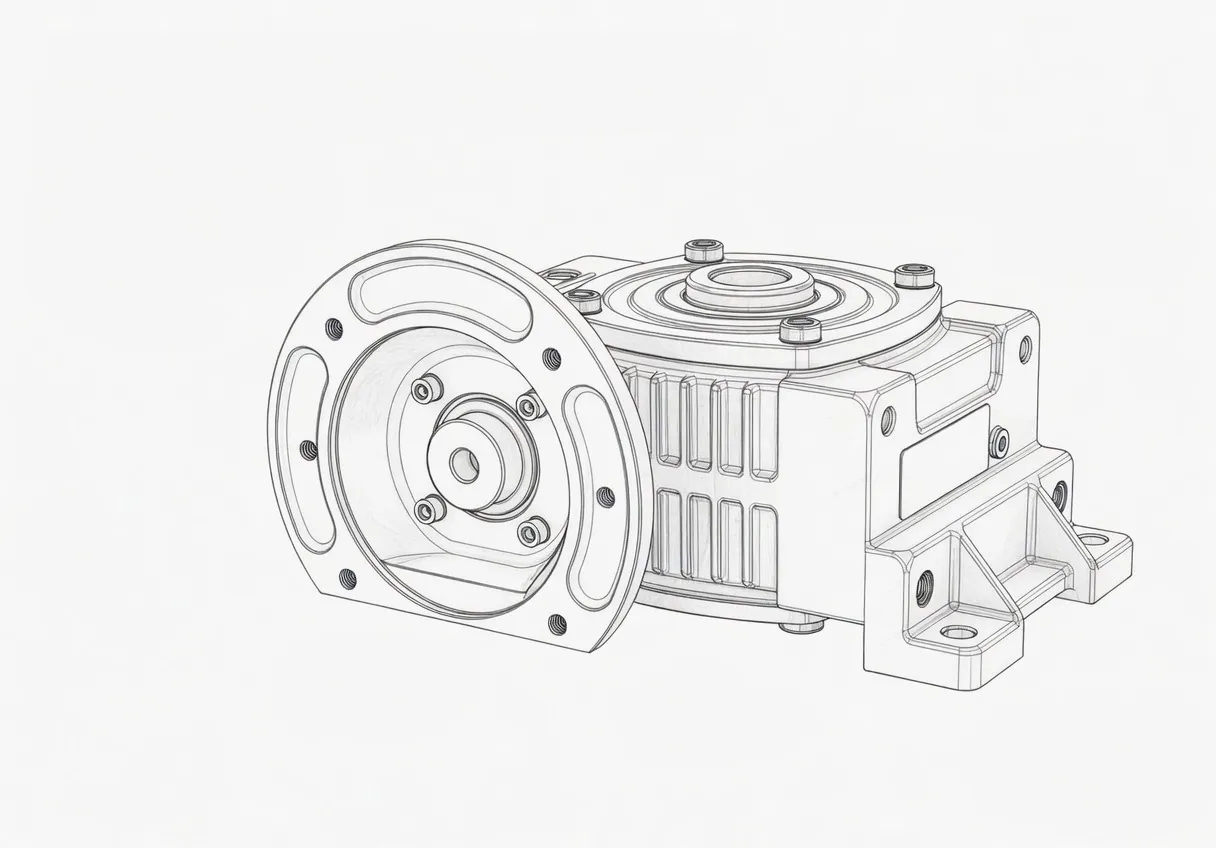
WDKO vs WDO vs WDX — Choosing the Right W-Family Twin-Output Unit
| Feature | WO (W family) | WDO (W family) | WDKO (W family) |
|---|---|---|---|
| Input | Through-shaft coupling | IEC B5 flange + shaft stub | IEC B5 flange — no shaft extension |
| Output | Dual co-axial hollow bore | Dual co-axial hollow bore | Dual co-axial hollow bore |
| Input coupling needed? | Yes | No (but shaft stub present) | No — cleanest housing |
| Size range | 40–135 | 50–155 | 40–175 |
| Max bore Ø | Ø55 × 2 | Ø60 × 2 | Ø80 × 2 |
How to Select the WDKO — Step-by-Step Guide
- Confirm co-axial layout: WDKO is for applications where both driven shafts are on the same axis — extending from opposite sides of the reducer. For 90°-offset twin outputs, the WDKO is not appropriate; enquire about a WDKX variant or specify the WDX series with a coupling motor.
- Confirm both shaft diameters: Both WDKO output bores are identical in diameter. If your two driven shafts are different diameters, the WDKO cannot accommodate them directly — contact Ever-Power for a custom dual-bore variant with different bore diameters at each face.
- Calculate total torque: Sum the torque from both output loads (with SF applied) and confirm the WDKO frame’s rated output torque is adequate. Also confirm no single bore carries more than 70% of the total rated torque alone under any realistic load imbalance scenario.
- Confirm IEC motor frame: WDKO IEC flange acceptance follows the same pairings as WDK at equivalent frame sizes. Provide motor IEC frame designation for a compatibility check before ordering.
- Consider shrink disc option: For shock-loaded twin-shaft applications (twin reversible conveyors, twin-rack gate drives), specify shrink disc engagement on both output bores for maximum fretting resistance. Both bores can be fitted with shrink discs simultaneously — specify both driven shaft diameters at order time.
Accessories We Also Supply: W-family torque arm kits (WDKO-specific), shrink disc assemblies for both output bores (Ø35+), IEC motor adaptor rings, torque-limiting couplings for unequal load protection, and DIN 6885 parallel keys. Contact Ever-Power Australia.
WDKO Applications in Australian Industry
- Twin-auger conveyors and granulators (QLD, NSW, SA): WDKO at sizes 80–120 on twin-screw grain and fertiliser conveyor drives where one IEC motor must drive both auger shafts at identical speed — the WDKO eliminates input coupling, both output couplings, and the synchronisation electronics in a single compact unit.
- Food processing fermentation and mixing vessels (Sydney, Melbourne): WDKO at sizes 60–100 on twin-paddle fermentation vessel drives and twin-scraper mixing vessels where mechanical speed synchronisation ensures uniform product mixing, and the zero-coupling configuration satisfies AS/NZS 4696 food machinery hygiene requirements.
- Packaging infeed/outfeed pair drives (Sydney, Melbourne): WDKO at sizes 50–80 on conveyor infeed/outfeed pairs where both belts must run at identical speed relative to each other — the WDKO mechanical synchronisation eliminates the product jamming that occurs when VFD-synchronised belt pairs drift apart during production shifts.
- Irrigation and gate drives (Perth, Adelaide, Brisbane): WDKO at sizes 80–135 on twin-rack gate and weir drives in Australian water infrastructure — mechanical bore-shaft synchronisation prevents rack differential advance that jams gate guides, and the IEC brake motor flange provides motor-direct emergency braking without an external backstop.
- Legacy W-convention twin-drive upgrades (All States): WDKO replaces WO units in W-convention machinery where IEC motor direct mount is desired. Both output bore dimensions follow the W-convention (identical to WO at the same frame size), so existing shaft engagement is maintained without modification.
What Australian Customers Say About the WDKO Series
“WDKO 100 on our Sydney packaging infeed/outfeed conveyor pair. Previously we had two VFD-synchronised motors drifting 0.5–1% apart by end of shift — product jams every few hours. The WDKO mechanical sync eliminated drift entirely. One motor, one reducer, zero speed error. Production line uptime improved dramatically.”
— David F., Production Manager, Sydney NSW
“WDKO 80 on our Brisbane twin-auger grain conveyor. IEC 80B5 motor flanges on, both auger shafts into the Ø35 bores. No couplings anywhere. Replaced WO unit from a legacy machine — same bore dimensions, same torque arm attachment, just the motor coupling is gone. 16 months without issues.”
— Clare W., Grain Systems Engineer, Brisbane QLD
“WDKO 135 on our Perth twin-rack irrigation gate drives. Mechanical sync is perfect — both racks advance identically, no gate racking. IEC brake motor flanges directly. 4 stars because the size 135 took 12 days delivery — larger standard sizes need better stock levels for remote WA sites.”
— Ian P., Infrastructure Engineer, Perth WA
“WDKO 70 on our Melbourne food processing twin-paddle fermentation drives. W-convention bore dimensions matched our original WO exactly. IEC motor direct mount eliminated the coupling guard we spent 30 minutes cleaning each washdown cycle. Food safety audit passed first time. Outstanding product.”
— Rachel H., Food Safety Engineer, Melbourne VIC
Why Choose Ever-Power for WDKO Worm Reducers in Australia?
Ever-Power Worm Gear Reducer Co., Ltd. (Australia) at 27 Harley Crescent, Condell Park NSW 2200 stocks WDKO units across common frame sizes for 5–10 business day dispatch. We provide free WO → WDKO upgrade assessments confirming dimensional compatibility, and dual-bore shrink disc selection for both output shafts simultaneously. Visit About Us and technical reference at worm-gearbox.top.