Description
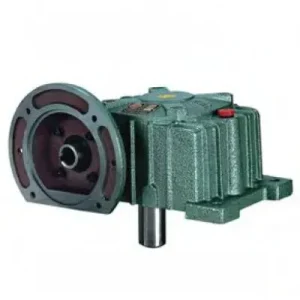
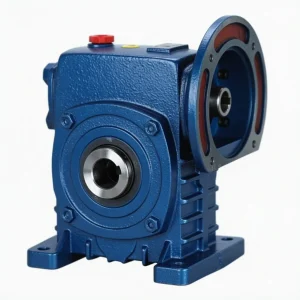
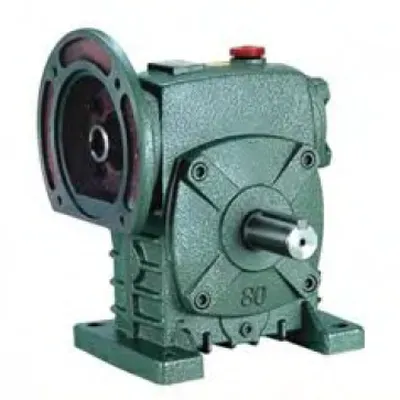
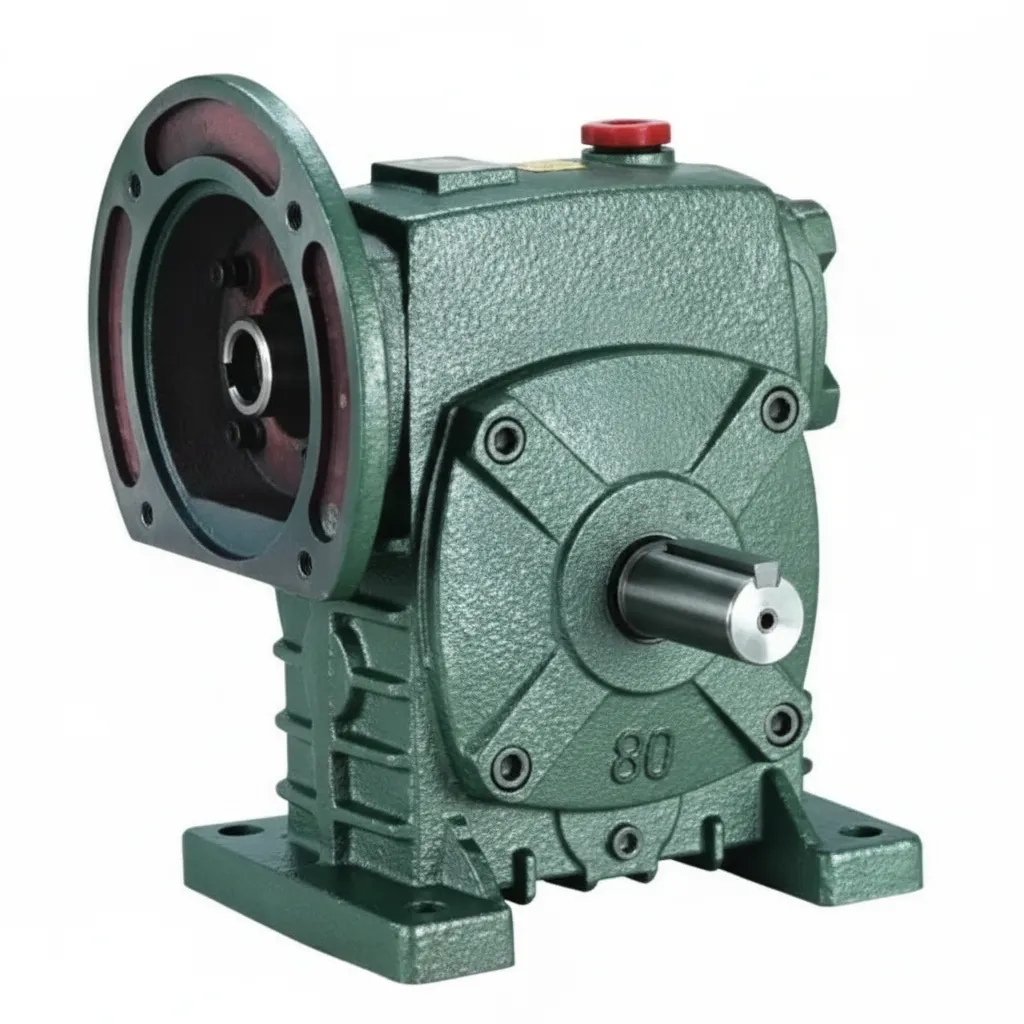
When a motorised worm gearbox must simultaneously accept a direct-flanged IEC motor at the input and sustain substantial chain, belt, or sprocket radial loads at the output — a combination that neither the WPDA nor the WPS alone satisfies — the DS Series (WPDS) worm gear reducer is the purpose-built solution. The WPDS combines the IEC B5 motor-mounting flange of the WPDA with the extended output shaft geometry and reinforced bearing arrangement of the WPS, delivering both benefits in one housing. Covering sizes 50 through 155, input powers from 0.18 kW to 5.5 kW, and standard gear ratios from 10:1 to 60:1, the WPDS provides a rated overhung load capacity approximately 30–40% higher than the standard WPDA at equivalent frame size — making it the specification of choice for chain conveyor drives, sprocket-loaded auger drives, and gear-pinion output drives in Australian manufacturing, food processing, and material-handling applications across Sydney, Melbourne, Brisbane, Adelaide, and Perth. Designed per AGMA 6034, manufactured to ISO 9001:2015, and supplied with free engineering support from Ever-Power Worm Gear Reducer Co., Ltd. (Australia), 27 Harley Crescent, Condell Park NSW 2200.
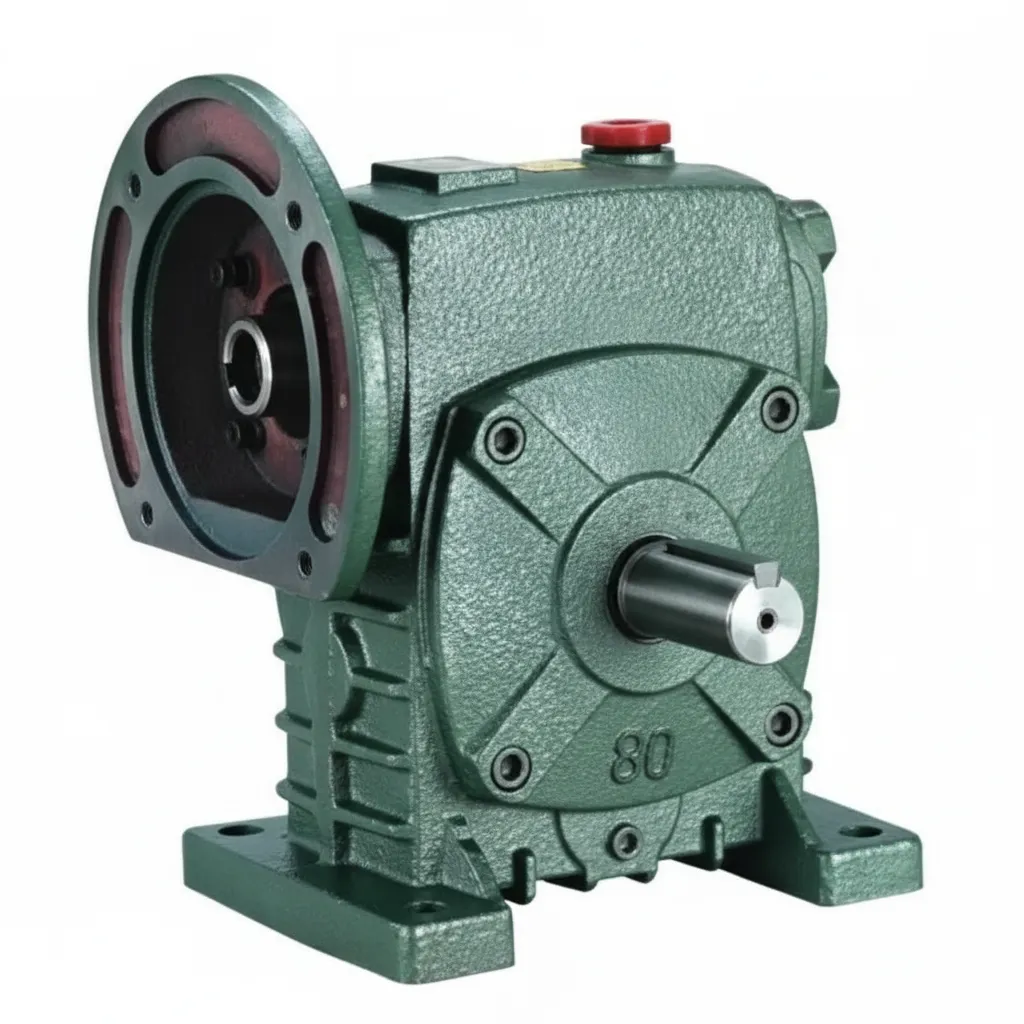
Key Specifications & Parameters — DS Series (WPDS) Worm Gear Reducer
All parameters per ISO 9001:2015, AGMA 6034, and IEC 60034-7 motor flange dimensional standards.
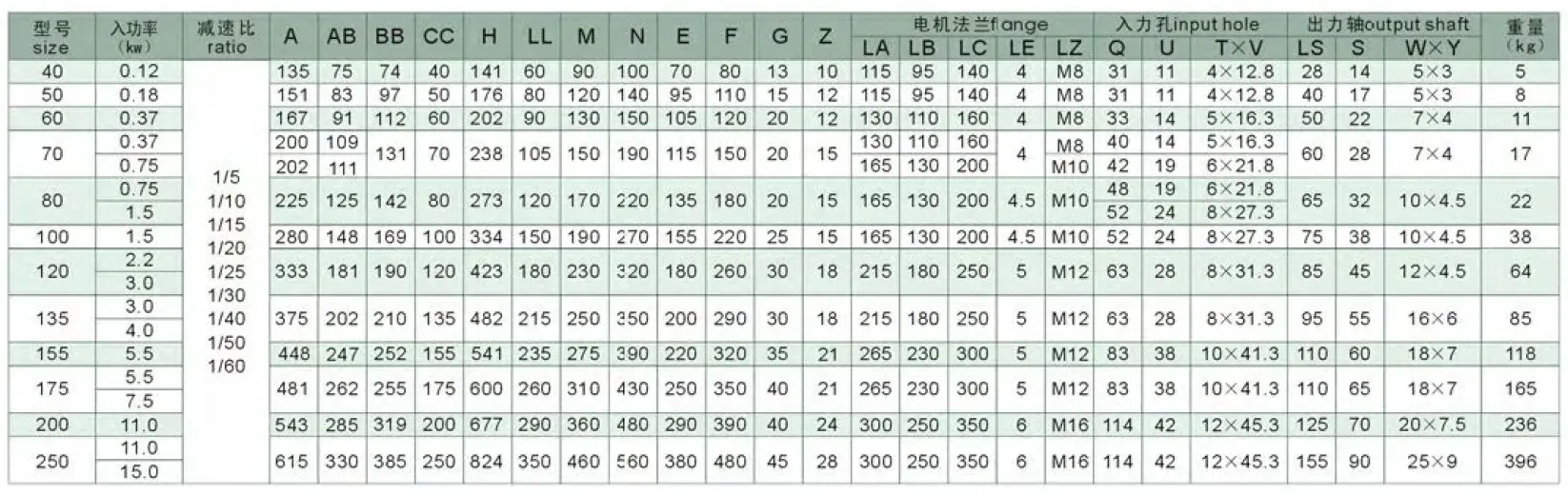
| Size | Input Power (kW) | Ratio Range | Centre Dist. A (mm) | Length B (mm) | Height H (mm) | IEC Flange LA (mm) | Output LS (mm) | Weight (kg) |
|---|---|---|---|---|---|---|---|---|
| 50 | 0.18 | 10:1 – 60:1 | 165 | 175 | 180 | 115 | 40 | 7 |
| 60 | 0.37 | 10:1 – 60:1 | 185 | 190 | 205 | 130 | 50 | 11 |
| 70 | 0.55 | 10:1 – 60:1 | 215 | 215 | 240 | 145 | 60 | 16 |
| 80 | 0.75 | 10:1 – 60:1 | 250 | 240 | 280 | 160 | 65 | 25 |
| 100 | 1.5 | 10:1 – 60:1 | 310 | 255 | 363 | 165 | 75 | 40 |
| 120 | 3.0 | 10:1 – 60:1 | 370 | 305 | 435 | 200 | 85 | 68 |
| 135 | 4.0 | 10:1 – 60:1 | 415 | 345 | 490 | 225 | 95 | 88 |
| 155 | 5.5 | 10:1 – 60:1 | 442 | 402 | 536 | 265 | 110 | 122 |
What Is the DS Series (WPDS) and How Does It Differ from WPDA and WPS?
To understand the WPDS, it helps to think of it as the intersection of the WPDA and the WPS in a Venn diagram of WP configurations:
- From the WPDA: The IEC B5 motor-mounting flange machined concentrically into the input housing face — no coupling, no alignment, no motor base.
- From the WPS: The larger output shaft diameter, extended bearing span, and higher overhung radial load capacity at each frame size compared with the WPA/WPDA output shaft geometry.
This combination is specifically required when a chain-sprocket or belt-pulley output load would exceed the WPDA output bearing rating — a common situation in Australian chain conveyor drives above 0.75 kW and screw auger drives above 1.1 kW where belt or chain tensile forces are significant. At WPDS size 100, the rated mid-shaft overhung load is approximately 3,200 N — compared with approximately 2,400 N for the WPDA at the same frame size, a 33% improvement that is the difference between bearing failure at 8,000 hours and reliable operation beyond 20,000 hours in chain-drive service.
The WPDS also inherits the foot-mount base of the WPS family, giving the gearbox stable four-point floor mounting even with the motor cantilevered on the input flange. For IEC motors above 90 frame size, an additional motor support bracket is recommended to prevent resonant vibration at the motor flange under heavy motor weight — this bracket is available as a stocked accessory from Ever-Power.
WPS vs WPDA vs WPDS — Three-Way Comparison for Australian Engineers
| Feature | WPS | WPDA | WPDS |
|---|---|---|---|
| Motor input | Coupling (shaft input) | IEC B5 flange (direct) | IEC B5 flange (direct) |
| Output shaft section | Extended (WPS-type) | Standard (WPA-type) | Extended (WPS-type) |
| Overhung load (size 100) | ~3,200 N | ~2,400 N | ~3,200 N |
| Alignment requirement | Yes (dial gauge) | None | None |
| Best application | Heavy torque, non-IEC motor | IEC motor, light overhung load | IEC motor + high overhung load |
How to Select the WPDS — Overhung Load Calculation and IEC Flange Matching
- Calculate Overhung Load: F_OH = (2 × T_output) / D_sprocket (N). For a WPDS 100 at 30:1 driving a 200 mm PCD chain sprocket from a 1.5 kW motor: T_output ≈ (1.5 × 9,550 / 48 rpm) × 0.85 efficiency ≈ 255 N·m; F_OH = (2 × 255) / 0.2 = 2,550 N. WPDS 100 rated overhung load of ~3,200 N — acceptable with service factor margin.
- Confirm IEC Motor Frame: Select your IEC motor frame size based on power and speed. Cross-reference against the WPDS flange acceptance table for your chosen frame size. If the motor frame is larger than the standard WPDS flange accepts, specify the next larger WPDS frame size or request a custom adaptor ring from Ever-Power.
- Apply Service Factor: Use SF 1.25 (smooth loads), SF 1.5 (moderate shock), SF 2.0 (heavy shock). For chain conveyors in Australian mining or grain handling, SF 1.5 is typically appropriate. Multiply the design torque by the service factor and confirm the WPDS frame’s rated output torque is adequate.
- Check Thermal Rating: For Queensland and Western Australian summer conditions, derate the thermal power limit by 10% per 10 °C above the 20 °C reference. If marginal, specify synthetic ISO VG 220 lubricant.
Accessories We Also Supply: Motor support brackets (for 112+ frame motors), IEC adaptor rings (for non-standard motor frames), finished-bore sprockets and hubs, output shaft seals (NBR and Viton), and foot-mount shim packs. Contact Ever-Power Australia for bundled pricing.
WPDS Applications in Australian Chain-Drive and Conveyor Systems
The WPDS is specifically valued in Australian industrial applications where both direct motor mounting and significant output shaft radial loading must be accommodated in a single unit:
- Chain Conveyor Drives (Sydney, Melbourne, Brisbane): Light-to-medium duty chain conveyors where the drive sprocket on the gearbox output shaft creates a chain-tension radial force that exceeds the WPDA output bearing rating. The WPDS handles these loads at ratios 15:1–40:1 within the 0.37–3.0 kW power range, eliminating the need to step up to a larger WPDA frame just to accommodate the bearing load.
- Screw Auger Drives (QLD, SA): Grain handling, fertiliser, and cement screw auger drives in rural and industrial Queensland and South Australia where the auger shaft reaction creates significant radial loading on the gearbox output stub. The WPDS 100 and 120 at 20:1–30:1 with 1.5–3.0 kW motors are the standard specification for this application.
- Packaging Line Drives (Sydney, Melbourne): Label applicator rolls, date-coding stamp drives, and bottle-capping torque-head drives where a compact motorised unit with sprocket output is needed. The WPDS form factor — motor flanged directly to the reducer — occupies significantly less axial space than an equivalent WPS with separate motor and coupling.
- Roller Table Drives (Perth, Adelaide): Powered roller conveyors and roller-hearth furnace tables in metal processing and ceramics plants, where V-belt pulley outputs on gearbox stubs create sustained overhung loads during continuous production runs. The WPDS extended output shaft supports these loads without requiring an external pillow-block bearing arrangement.
What Australian Customers Say About the DS Series (WPDS)
“We had constant WPDA output bearing failures on our Brisbane chain conveyor line — the sprocket overhung load was just beyond the WPDA rating. Switched to WPDS 100 at 30:1 and the issue disappeared entirely. 18 months in with zero bearing failures. The Ever-Power engineering team identified the problem before we even ordered.”
— Trevor M., Maintenance Supervisor, Brisbane QLD
“Specified WPDS 80 with 0.75 kW 80B5 motor for our Melbourne packaging line roller drives. The direct flange mount saves about 200 mm of machine length per drive — on an 8-station line that adds up to significant space. Running 12 months without issue and noise levels are excellent.”
— Fiona P., Machine Design Engineer, Melbourne VIC
“WPDS 120 on our Adelaide grain auger drives with 3 kW motors. The extended shaft handles our sprocket loads with room to spare. Delivery was 9 days to Adelaide — good timing for our project. One point less than 5 stars because the motor support bracket is sold separately — would be convenient to have it included for larger motors.”
— Chris W., Operations Engineer, Adelaide SA
“We OEM WPDS units into our roller table drives for the ceramics industry in WA. The combination of direct motor mount and high overhung load rating is exactly what we need — single unit instead of gearbox plus coupling plus motor base. Ever-Power supply has been consistent and the IEC flange dimensions are spot on every batch.”
— Ian K., OEM Design Manager, Perth WA
Why Choose Ever-Power for WPDS Worm Gear Reducers in Australia?
Ever-Power Worm Gear Reducer Co., Ltd. (Australia), 27 Harley Crescent, Condell Park NSW 2200, provides WPDS units in standard and custom configurations with 5–10 business day dispatch from Sydney to all Australian states. Our engineering team offers free overhung load calculation and IEC flange compatibility confirmation before you commit to an order — reducing the risk of incorrect specification. Visit our About Us page for details on our capabilities and our technical resource site at worm-gearbox.top.