Description
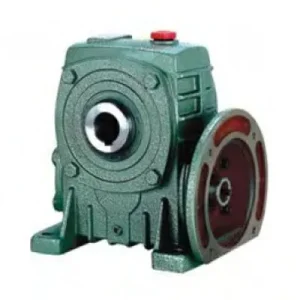
When hollow bore shaft-mount is required but standard bore depth is insufficient — in heavy-duty grain conveyors, mining screen head shafts, and high-cycle agricultural implement drives where the full shaft engagement length is critical to long-term bore integrity — the WP Series (WPKS) heavy-duty hollow bore worm gear reducer is the correct specification. The WPKS is the hollow-bore counterpart to the WPS: it carries the WPS-class extended output shaft geometry, heavier bearing arrangement, and deeper bore engagement length at every frame size, while the WPKA corresponds to the lighter WPA housing. At WPKS size 100, the bore depth (HL) is 250 mm — compared with 100 mm for the WPKA at the same frame size — providing 150% greater shaft-to-bore contact area that directly translates to reduced bore fretting, lower contact stress on the key engagement, and extended service life under shock and reversing loads. For Australian manufacturers in Sydney, Melbourne, Brisbane, Perth, and across regional processing facilities who need the maximum bore engagement depth in a single-stage worm reducer, the WPKS delivers it. Covering sizes 50 through 200, bore diameters from Ø20 to Ø80 mm, input powers to 15 kW, and ratios from 10:1 to 60:1 — manufactured to ISO 9001:2015, designed per AGMA 6034 — supplied by Ever-Power Worm Gear Reducer Co., Ltd. (Australia), 27 Harley Crescent, Condell Park NSW 2200.
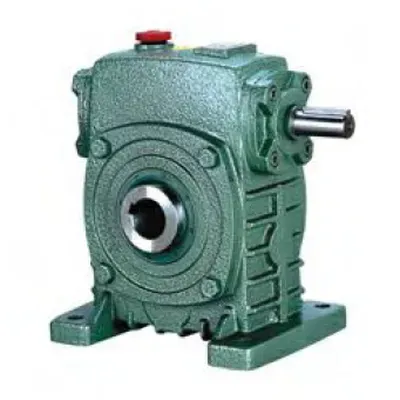
Key Specifications & Parameters — WP Series (WPKS) Hollow Bore Worm Gear Reducer
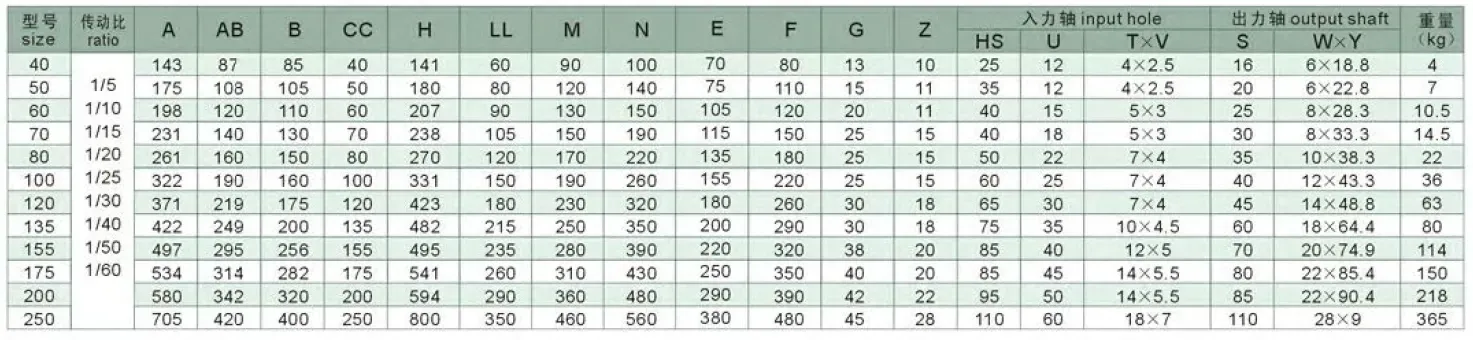
All parameters per ISO 9001:2015, AGMA 6034, and DIN 3975. Bore tolerances H7 per DIN 286. Tapered roller output bearings at sizes 80 and above.
| Size | Ratio | Centre Dist. A (mm) | Hub Width AB (mm) | Overall Length B (mm) | Height H (mm) | Bore Length HL (mm) | Output Bore Ø (mm) | Weight (kg) |
|---|---|---|---|---|---|---|---|---|
| 50 | 10:1–60:1 | 175 | 105 | 107 | 180 | 130 | Ø20 | 7 |
| 60 | 10:1–60:1 | 195 | 120 | 117 | 205 | 150 | Ø25 | 10.5 |
| 70 | 10:1–60:1 | 234 | 140 | 131 | 235 | 175 | Ø30 | 14.5 |
| 80 ★ | 10:1–60:1 | 264 | 160 | 144 | 265 | 200 | Ø35 | 22 |
| 100 ★ | 10:1–60:1 | 322 | 190 | 175 | 327 | 250 | Ø40 | 36 |
| 120 ★ | 10:1–60:1 | 385 | 230 | 200 | 388 | 300 | Ø45 | 63 |
| 135 ★ | 10:1–60:1 | 435 | 260 | 212 | 445 | 350 | Ø60 | 80 |
| 155 ★ | 10:1–60:1 | 507 | 302 | 312 | 483 | 390 | Ø70 | 114 |
★ Sizes 80 and above use tapered roller output bearings for higher overhung load and axial thrust capacity compared with deep-groove ball bearings used at sizes 50–70.
What Makes the WPKS the Heavy-Duty Hollow Bore Standard?

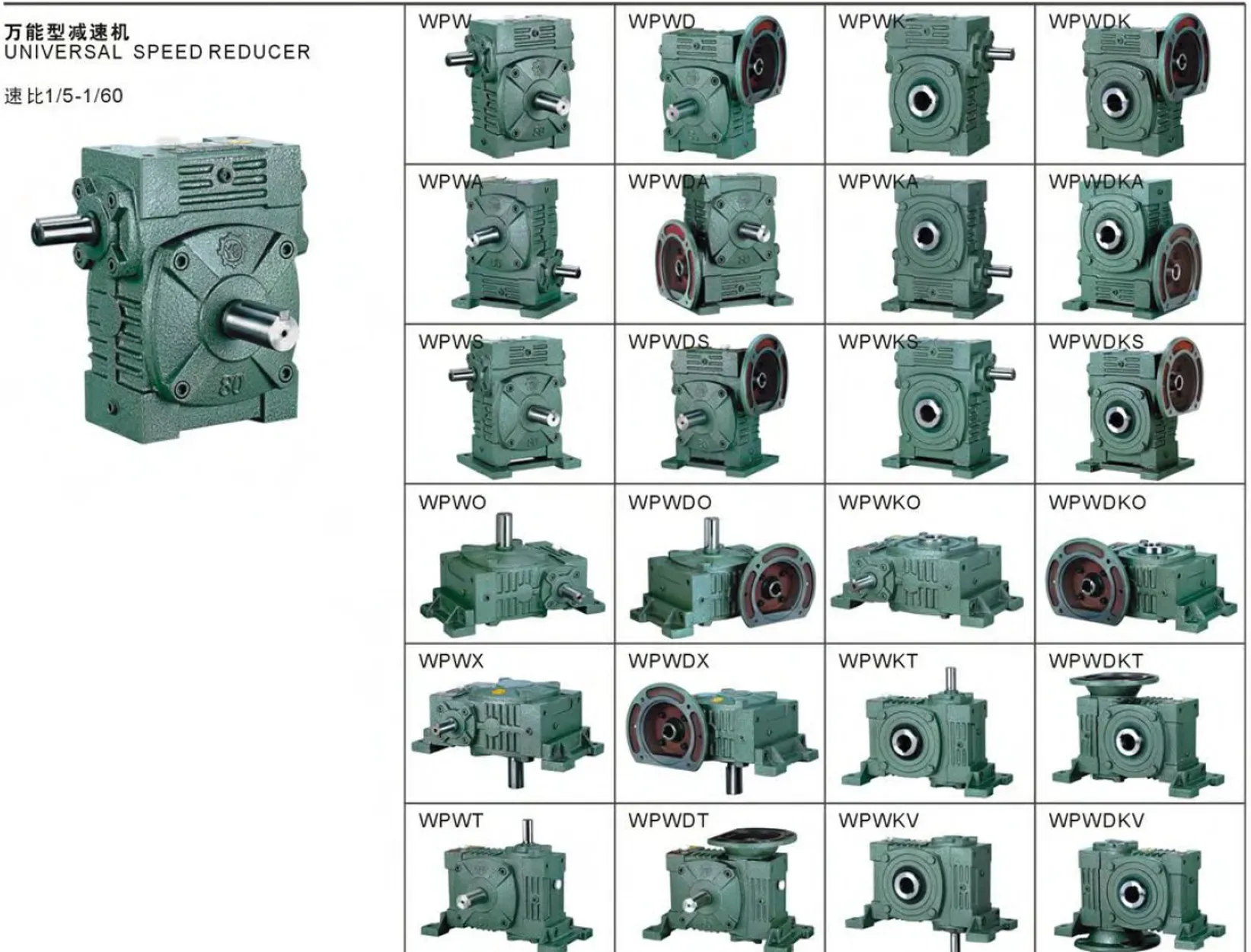
Three engineering features distinguish the WPKS from the WPKA as the heavy-duty specification for hollow bore worm reducer applications in Australian industry:
- Deep Bore Engagement (HL): WPKS bore depths range from 130 mm (size 50) to 390 mm (size 155) — between 150% and 250% deeper than the WPKA at the same frame size. The deeper bore engagement distributes the transmitted torque over a larger key contact area, reducing peak contact stress on the keyway flank by a factor proportional to the engagement length ratio. At size 100, a WPKS bore engagement of 250 mm versus 100 mm for the WPKA gives approximately 2.5× the key contact area — reducing keyway flank pressure by 60% at the same torque level and dramatically extending bore service life under shock and reversing loads common in Australian mining and grain-handling applications.
- Tapered Roller Output Bearings (Sizes 80+): From size 80 upward, the WPKS replaces the deep-groove ball bearings used at the output side in the WPKA with tapered roller bearings. Tapered roller bearings carry combined radial and axial loads simultaneously, which is important in shaft-mount applications where the torque arm reaction force generates a combined loading condition on the output bore bearing. Tapered rollers also maintain preload more consistently over extended service life under sustained heavy loads, reducing output shaft runout growth that can cause bore fretting on long-engagement shafts.
- WPS-Class Housing and Bearing Span: The WPKS uses the WPS housing series (larger output shaft bore, wider bearing span) rather than the WPA housing of the WPKA. The wider bearing span increases the output bearing reaction arm, reducing bearing radial force for the same applied overhung load — directly extending bearing L10 life by approximately 30–40% compared with the WPKA at equivalent loading conditions.
WPKA vs WPKS — Deep-Dive Comparison at Size 100
| Parameter (Size 100) | WPKA | WPKS | WPKS Advantage |
|---|---|---|---|
| Bore depth HL | 100 mm | 250 mm | +150% engagement |
| Output bearing type | Deep-groove ball | Tapered roller | Combined radial + axial load |
| Housing class | WPA (standard span) | WPS (extended span) | +30–40% bearing life |
| Key contact area | 100 mm length | 250 mm length | 60% lower keyway stress |
| Shock load tolerance | Standard | Heavy duty | Suitable for SF 2.0 applications |
| Unit cost relative | Lower | 8–12% higher | Lower total cost of ownership |
How to Select the WPKS for Heavy-Duty Australian Applications
- Determine Duty Classification: The WPKS is the correct specification when any of the following apply: (a) application involves shock loading or regular reversals (SF ≥ 1.5); (b) bore engagement length exceeds the WPKA HL at your chosen frame size; (c) input power exceeds 1.5 kW at sizes 80–155, where tapered roller bearings provide measurably better service life; or (d) the driven shaft is long relative to the bore diameter (HL/bore Ø > 3:1), indicating the WPS-class longer bore engagement will be needed.
- Match Bore to Shaft: Standard WPKS bore diameters are Ø20–Ø70 mm as listed. For driven shafts outside this range, specify the nearest standard bore and confirm the key engagement dimensions. Non-standard bores (e.g., Ø38, Ø42, Ø50 mm) are available on 2–3 week custom order.
- Confirm Torque Rating: WPKS rated output torques equal the WPS at the same frame size. Apply SF 1.5 for Australian grain and mining applications, SF 2.0 for heavy crusher feeder or impact-loaded drives. Select the WPKS frame whose WPS-equivalent rated torque ≥ design torque.
- Thermal Check for Australian Summer: Derating applies the same as for WPS — 10% per 10 °C above 20 °C reference ambient. Specify synthetic ISO VG 220 oil for Queensland and WA summer conditions where ambient exceeds 35 °C continuously.
Accessories We Also Supply: Heavy-duty torque arm kits (for WPKS 80–155), shrink disc assemblies for zero-clearance mounting, tapered roller bearing replacement sets, DIN 6885 parallel keys (all standard sizes), anti-fretting compound, and Viton output bore oil seals. Contact Ever-Power Australia for bundled pricing.
WPKS Applications in Australian Heavy Industry
The WPKS is the go-to hollow bore specification for Australian heavy-duty applications where the WPKA would be undersized:
- Grain Conveyor Head Shafts (QLD, NSW, SA, WA): Bulk grain conveyors with head shaft diameters of 50–70 mm and shaft engagement lengths exceeding 200 mm are a primary WPKS application in Australian receival and storage facilities. The tapered roller bearings and 250–390 mm bore depth handle the combined radial and axial loads from conveyor belt tension and shaft misalignment without the bore fretting that limits WPKA service life in high-tonnage continuous operation.
- Mining Screen and Feeder Head Drives (WA, QLD): Vibrating screen head drives and apron feeder conveyor shafts in Pilbara iron ore and Queensland coal operations require both the deep bore engagement (to resist shock-reversal shaft fretting) and the tapered roller bearing arrangement (to manage the combined loading from belt tension and drive torque reaction). WPKS sizes 100–155 at ratios 20:1–40:1 are the standard specification for these drives.
- Rotary Drum Drives (Perth, Adelaide): Cement mixer drum shafts, rotary dryer trunnion shafts, and trommel screen shafts where the gearbox must mount directly on the drum’s trunnion shaft — eliminating the separate pillow-block bearing and coupling that conventional shaft-coupled reducers require. The WPKS 135 and 155 at 40:1–60:1 handle the sustained torque and axial thrust from drum weight reaction in these applications.
- Agricultural Implement PTO Drives (Regional QLD, NSW, VIC): Seeder auger shafts, fertigation pump drives, and crop-residue spreader shafts where the PTO-driven implement shaft diameter is 35–60 mm and engagement length requirements exceed what the WPKA provides. The WPKS 80–120 series handles the cyclic shock loading typical of PTO implement drives.
What Australian Customers Say About the WPKS Series
“We had constant bore fretting problems with WPKA units on our Queensland grain conveyor head shafts — the 100 mm bore engagement just wasn’t enough under the reversing loads from our auto-tensioned belt. The WPKS 100 with 250 mm bore solved the problem completely. Two full harvests with no bore damage.”
— Dave C., Conveyor Engineer, Darling Downs QLD
“Specified WPKS 135 at 40:1 for our rotary drum dryer drive in Adelaide. The shaft is 60 mm diameter, 320 mm engagement — the WPKA HL wouldn’t have covered it. The tapered roller bearings at size 135 handle the combined load from drum weight and drive torque without any issues. 20 months in, running perfectly.”
— Paul R., Plant Engineer, Adelaide SA
“WPKS 100 on our WA mining screen feeder shaft. The deep bore plus tapered rollers handles the cyclic shock from ore loading without complaint. Delivery was 10 days to Perth — acceptable. One star short of 5 because we had to chase the torque arm fastener spec from the Ever-Power team — could be included in the box documentation.”
— Nathan G., Site Engineer, Pilbara WA
“We OEM WPKS 80 and 100 units into our grain auger systems sold to NSW and VIC grain handlers. The deep bore engagement and tapered roller bearings are a real selling point — our auger shafts are long and the engagement matters for bore life. Ever-Power supply has been consistent in quality and delivery over 3 years.”
— Craig N., OEM Director, NSW
Why Choose Ever-Power for WPKS Worm Reducers in Australia?
Ever-Power Worm Gear Reducer Co., Ltd. (Australia) at 27 Harley Crescent, Condell Park NSW 2200 stocks WPKS units in common frame sizes and bore configurations for 5–10 business day dispatch. We provide free bore engagement calculations, WPKA vs WPKS selection analysis, and tapered roller bearing load confirmation for your application — delivered within one business day. Visit our About Us page and technical reference at worm-gearbox.top.