Description
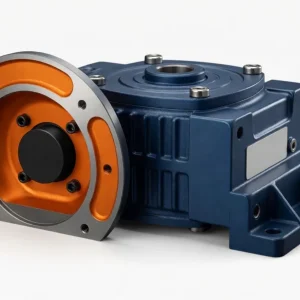
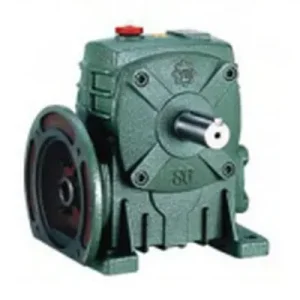
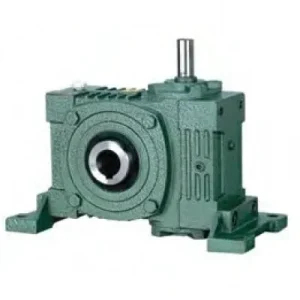
When a hollow bore shaft-mount application demands the maximum possible bore engagement length within the W series dimensional convention — for heavy shock loads, cyclic reversals, sustained chain tension, or large-diameter shaft engagement — the WKA Series worm gear reducer is the correct specification. Where the WK provides standard bore depths optimised for smooth continuous loads, the WKA upgrades to a substantially deeper bore engagement at every frame size: at size 100, WKA bore depth (HL) is 150 mm versus the WK’s 80 mm — an 88% increase in key contact area that halves the keyway face pressure at equivalent torque, reducing bore fretting to negligible levels under shock and reversing loads. The WKA is the W family’s equivalent of the WPKS in the WP family — a deep hollow bore unit built on the W series housing convention, extending from size 50 to size 200 with bore diameters from Ø20 mm to Ø85 mm. Through-shaft solid input is standard on both housing sides, accepting motor coupling from either direction. For Australian manufacturers, mining engineers, and agricultural equipment specialists in Sydney, Melbourne, Brisbane, Perth, and Adelaide who need the deepest bore engagement available in a W-family hollow bore reducer, the WKA delivers it. Manufactured to ISO 9001:2015, designed per AGMA 6034, and supplied by Ever-Power Worm Gear Reducer Co., Ltd. (Australia), 27 Harley Crescent, Condell Park NSW 2200.

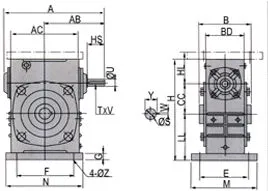
Key Specifications & Parameters — WKA Series Worm Gear Reducer
All parameters per ISO 9001:2015, AGMA 6034, and DIN 3975. Bore tolerance H7/DIN 286. Through-shaft solid input accessible from both sides standard.
| Size | Ratio | Centre Dist. A (mm) | Overall Length AC (mm) | Hub Width B (mm) | Height H (mm) | Bore Depth HL (mm) | Input Shaft Ø HS (mm) | Output Bore Ø (mm) | Weight (kg) |
|---|---|---|---|---|---|---|---|---|---|
| 50 | 10:1–60:1 | 175 | 115 | 107 | 165 | 50 | 30 | Ø20 | 7 |
| 60 | 10:1–60:1 | 195 | 126 | 117 | 195 | 60 | 40 | Ø25 | 11 |
| 70 | 10:1–60:1 | 234 | 155 | 131 | 233 | 73 | 40 | Ø30 | 14 |
| 80 | 10:1–60:1 | 264 | 174 | 144 | 268 | 83 | 50 | Ø35 | 22 |
| 100 | 10:1–60:1 | 322 | 224 | 175 | 330 | 150 | 50 | Ø40 | 36 |
| 120 | 10:1–60:1 | 385 | 264 | 200 | 395 | 180 | 65 | Ø45 | 63 |
| 135 | 10:1–60:1 | 435 | 304 | 212 | 455 | 215 | 75 | Ø60 | 80 |
| 155 | 10:1–60:1 | 494 | 330 | 312 | 495 | 235 | 85 | Ø70 | 114 |
| 175 | 10:1–60:1 | 548 | 370 | 334 | 558 | 260 | 85 | Ø80 | 150 |
| 200 | 10:1–60:1 | 688 | 420 | 346 | 620 | 290 | 95 | Ø85 | 218 |
WKA vs WK — Deep Bore vs Standard Bore at Key Frame Sizes
The WKA’s defining advantage is bore depth (HL). Deeper engagement distributes torque over a larger key contact area, directly reducing keyway face pressure and preventing bore fretting under cyclic and shock loads.
| Frame Size | WK Bore Depth HL (mm) | WKA Bore Depth HL (mm) | HL Increase | Key Stress Reduction |
|---|---|---|---|---|
| 50 | 35 | 50 | +43% | −30% |
| 80 | 65 | 83 | +28% | −22% |
| 100 | 80 | 150 | +88% | −47% |
| 135 | 105 | 215 | +105% | −51% |
| 200 | 130 | 290 | +123% | −55% |
What Is the WKA Series and When Does Deeper Bore Engagement Matter?
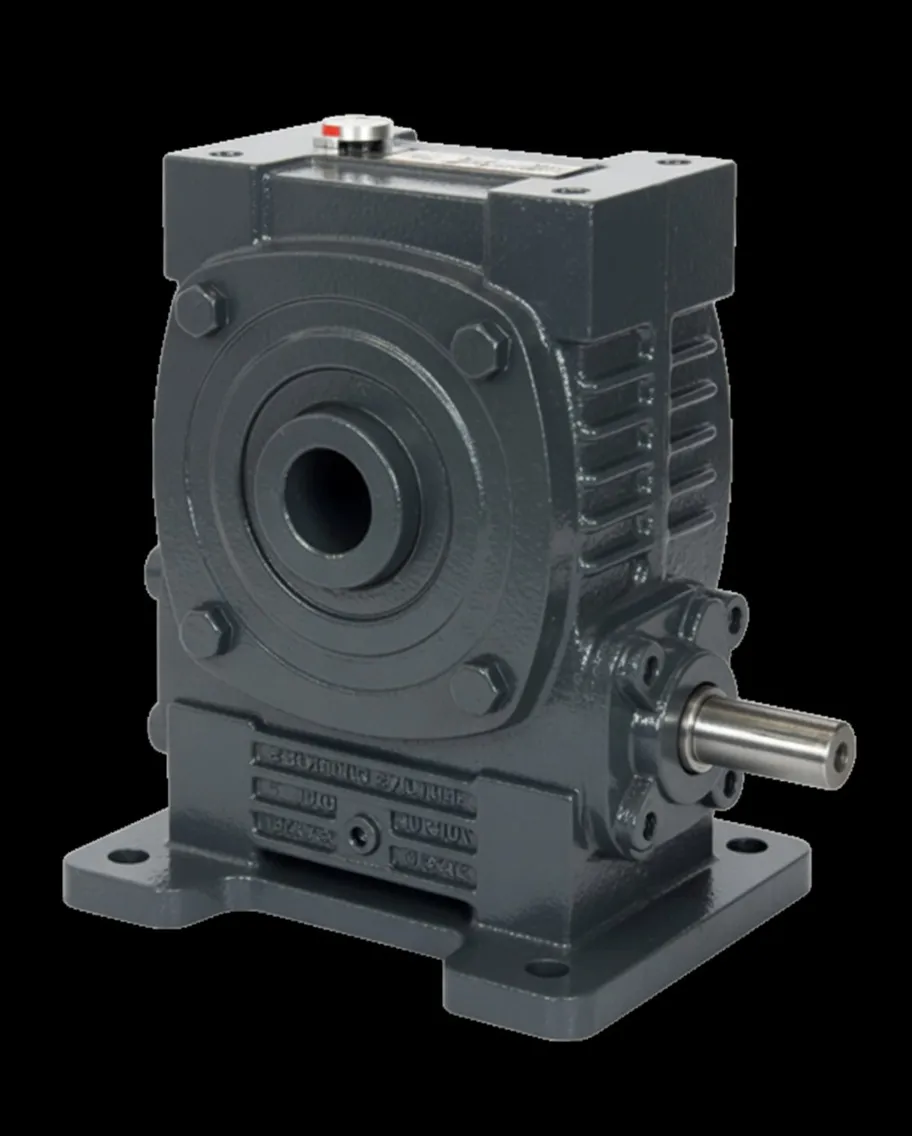
The WKA fills the same role in the W family that the WPKS fills in the WP family — the deep hollow bore unit for applications where the standard bore depth is the life-limiting constraint. Bore fretting — the micro-scale surface damage at the bore-shaft interface caused by cyclic elastic deflection of the shaft under reversing or shock torque — is the primary failure mode in hollow bore worm reducers installed on chain conveyor head shafts, grain and fertiliser auger drives, and rotary drum trunnion drives across Australian industry.
The mechanics are straightforward: deeper bore engagement distributes the transmitted torque over a proportionally larger key flank contact area, reducing peak contact stress per unit area. At WKA size 100 with HL=150 mm versus WK HL=80 mm, the key contact area is 88% larger — the same torque is carried at 47% lower surface stress, pushing the keyway contact pressure well below the fretting initiation threshold for most Australian chain and shock-load applications at this frame size.
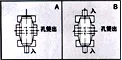
The WKA is built on the same W series housing geometry as the WK — same centre distance, same bore diameter, same through-shaft input diameter on both sides, same foot-mount base, same torque arm attachment points. The only difference between WKA and WK at any frame size is the bore depth (HL) — the WKA hub is simply machined deeper into the worm wheel hub, without any external dimensional change visible to the machine designer. This means the WKA is a drop-in upgrade for any WK installation where bore fretting has been identified as the failure mode.
How to Select — WK or WKA for Your Australian Application
Specify WKA when any of the following apply:
- Service factor ≥ 1.5 (moderate shock, cyclic reversals, or sustained chain tension loading)
- Bore fretting has occurred on a WK in the same application — WKA is the direct mechanical remedy
- Driven shaft engagement length requirement exceeds the WK HL at your chosen frame size
- Application involves regular reversals (e.g., reversible conveyor, bi-directional gate actuator) where cyclic torque direction change accelerates fretting in standard-depth bores
- Input power is ≥ 1.5 kW at frame sizes 80 and above, and the drive is chain-loaded
Specify WK when:
- Load is smooth and continuous (SF ≤ 1.25), no shock or reversal
- Shaft engagement length is within the WK HL value and no fretting history exists
- Cost optimisation is a priority — WKA costs approximately 8–12% more than WK at the same frame size
Accessories We Also Supply: Shrink disc assemblies (zero-clearance engagement, Ø35+ bores), W-family torque arm kits (WKA-specific), anti-fretting compound (Molykote G-n), DIN 6885 parallel keys (all standard sizes), stub shaft cover plates (AS 4024.1), and Viton bore seals. Contact Ever-Power Australia.
WKA Applications in Australian Heavy Industry
- Grain Conveyor Head Shafts (QLD, NSW, SA, WA): WKA 100–135 on reversible bulk grain conveyors where the head shaft reverses under full load during receival season. The 150–215 mm bore depth at these sizes handles the combined reversing torque and chain tension without bore fretting — the key failure mode experienced with WK units on the same applications in two consecutive harvest seasons.
- Mining Vibrating Screen Head Drives (WA, QLD): WKA 135–155 on Pilbara iron ore and Queensland coal vibrating screen drives where shock impulses from material loading occur up to 4–6 times per minute and the shaft engagement length requirement for the large-diameter screen shafts (Ø55–Ø70 mm) demands the deeper WKA bore depth to achieve minimum engagement ratio of 1.2 × bore diameter.
- Rotary Drum and Trommel Trunnion Drives (WA, SA): WKA 175–200 on large rotary drum trunnion shafts in mineral processing and agricultural processing installations where sustained axial thrust from drum loading acts on the bore-shaft interface in addition to the torsional load — the WKA’s deeper bore provides the largest possible contact patch to resist both simultaneously.
- Agricultural Auger and Feeder Drives (QLD, NSW, Regional VIC): WKA 80–120 on grain and fertiliser auger head shaft drives where stone-strike incidents and start-under-load conditions generate shock torque peaks of 2–4× rated torque. The WKA’s deeper key contact area absorbs these shock peaks without initiating fretting at the bore surface.
- Legacy WK Upgrade (All States): The WKA is dimensionally identical to the WK at all external dimensions — same foot-mount, same shaft diameters, same torque arm attachment. Any WK installation suffering bore fretting can be upgraded to WKA by direct substitution, without modifying the driven shaft, machine base, or torque arm arrangement.
What Australian Customers Say About the WKA Series
“We had WK 100 units failing at our QLD grain conveyor head shafts after two reversal seasons — bore fretting every time. Swapped to WKA 100 with the deeper 150 mm bore and zero fretting in two full harvest seasons since. Drop-in replacement, no modifications, same torque arm. Should have done it years ago.”
— Warren S., Grain Storage Manager, Darling Downs QLD
“WKA 155 on our Pilbara vibrating screen head drive. Size 155 bore is Ø70 mm, depth 235 mm — well within the minimum engagement ratio for our shaft. 16 months of shift work in iron ore operation with no bore damage. The deep bore handles the shock loading that damaged two WK 155 units in 9 months each.”
— Craig L., Site Maintenance Eng., Pilbara WA
“WKA 200 on our SA mineral processing drum trunnion drive. The Ø85 bore at 290 mm depth is exactly what we needed — handles the combined torsional and axial loads from drum weight. 4 stars as the WKA 200 at 218 kg required a crane to install but that’s expected at this size. Excellent unit once in place.”
— Helen B., Process Engineer, Eyre Peninsula SA
“Specified WKA 120 for our NSW grain auger drives after stone-strike damage destroyed WK 120 bores twice. The 180 mm bore depth vs WK’s 95 mm made the critical difference — the deeper key engagement simply absorbs the shock pulses without marking the bore. 20 months in, zero fretting. Ever-Power’s selection advice was spot on.”
— Andrew F., Agricultural Engineer, NSW Riverina
Why Choose Ever-Power for WKA Worm Reducers in Australia?
Ever-Power Worm Gear Reducer Co., Ltd. (Australia) at 27 Harley Crescent, Condell Park NSW 2200 stocks WKA units across all ten frame sizes (50–200) for 5–10 business day dispatch, including the large frames 175 and 200 that most competitors carry on order only. Our engineering team provides free WK vs WKA selection analysis and bore fretting diagnosis — if you are experiencing WK bore failures, we identify whether WKA or shrink disc engagement (or both) is the correct solution. Visit About Us and technical reference at worm-gearbox.top.