Description
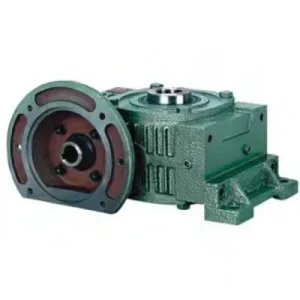
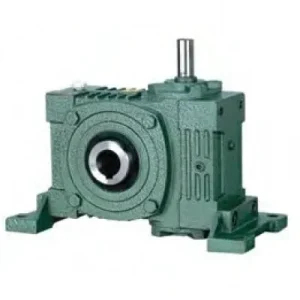
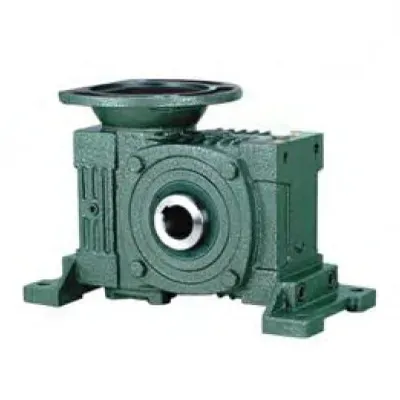
In Australian industrial applications where a conventional solid-shaft reducer cannot be accessed for maintenance or motor replacement without disturbing the driven load, the WPWDKT series universal worm gearbox solves the problem with a split-housing (P-type) design combined with a hollow output shaft and dual input access. Covering frame sizes 40 through 250, gear ratios from 10:1 to 60:1, and input power from 0.06 kW to 15 kW with output torque reaching 3,000 N·m, the WPWDKT is a versatile right-angle worm reducer used by Australian manufacturers across Sydney, Melbourne, and Brisbane in food, ceramics, chemicals, packaging, dyeing, woodworking, and glass industries. The cast-iron split housing — assembled from two precision-machined halves — allows the worm gear set to be inspected, adjusted, or replaced without removing the reducer from its machine mounting, reducing planned maintenance downtime by up to 50% compared with integral-housing designs. Supplied by Ever-Power Worm Gear Reducer Co., Ltd. (Australia), 27 Harley Crescent, Condell Park NSW 2200, with full engineering support and fast dispatch to all Australian states.
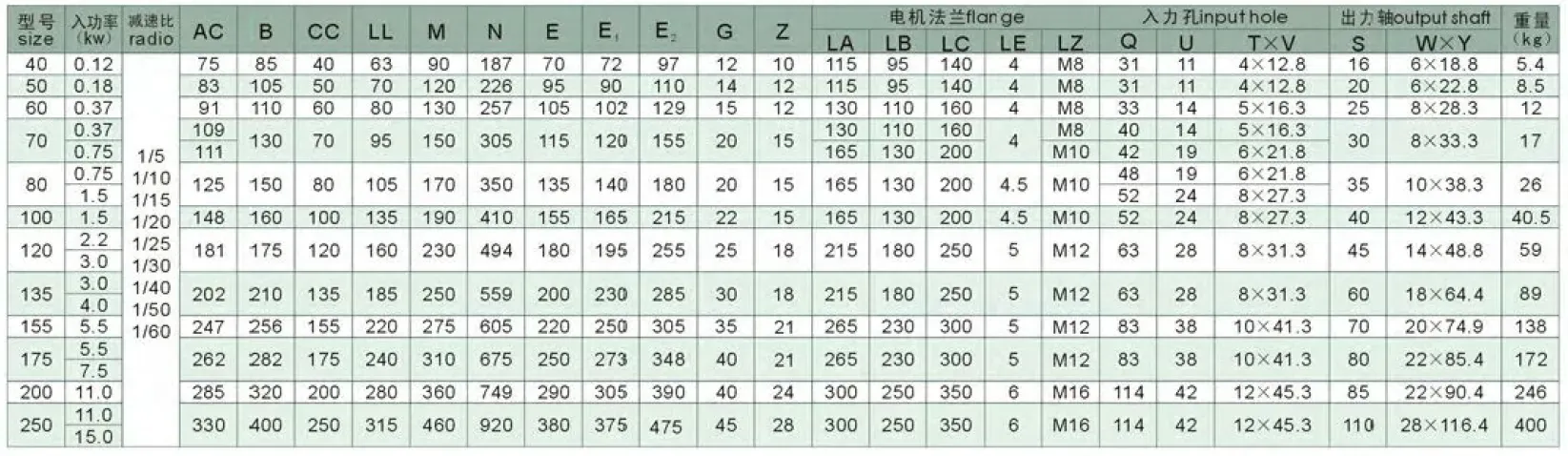
Key Specifications & Parameters — WPWDKT Series Worm Gearbox
| Parameter | Specification |
|---|---|
| Series / Frame Sizes | WPWDKT 40, 50, 63, 75, 90, 110, 130, 155, 175, 200, 250 |
| Gear Ratio Range | 10:1, 15:1, 20:1, 25:1, 30:1, 40:1, 50:1, 60:1 |
| Input Power | 0.06 kW – 15 kW |
| Max. Output Torque | Up to 3,000 N·m (size 250) |
| Output Type | Hollow output shaft (K); dual input access (D) |
| Housing Type | Split-housing (P-type) cast iron — two-piece bolted assembly |
| Housing Material | Die-cast iron (GG25) — machined mating faces |
| Worm Wheel Material | Tin bronze (Copper-10-3#) |
| Worm Shaft Material | 20CrMnTi — carburised & quenched, surface HRC 56–62 |
| Output Shaft Material | 45# chromium steel |
| Bearing | C&U deep-groove ball bearings |
| Oil Seal | KSK radial lip seals |
| IEC Flange Options | 56B14, 63B14, 63B5, 71B14, 80B14 and others |
| Lubricant | Synthetic or mineral ISO VG 220 |
| Colour Options | Blue / Green / Custom |
| Quality Standard | ISO 9001:2015; gear quality to DIN 3975 / AGMA 6034 |
| Warranty | 12 months from dispatch |
What Is the WPWDKT Series and How Does the Model Code Work?
The WPWDKT designation follows a structured naming convention used across the WP worm gearbox family. Understanding the code allows procurement engineers and maintenance managers to specify the exact configuration required:
| Code Letter | Meaning | Alternatives |
|---|---|---|
| W | Worm gear worm reducer family | — |
| P | Split / two-piece housing (P = split box) | No P = integral/solid housing |
| W | Universal mounting (any orientation) | No W = base-mount only |
| D | Dual input shaft access (both ends of worm shaft accessible) | No D = single input side |
| K | Hollow output shaft | No K = solid output shaft |
| T | Input/output shaft type (T = specific shaft extension configuration) | A/S/O/X variants also available |
| 40–250 | Centre distance in mm (frame size) | 11 sizes available |
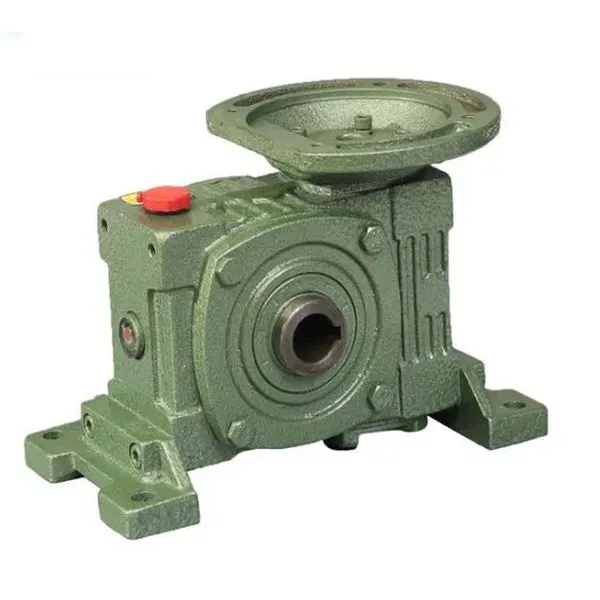
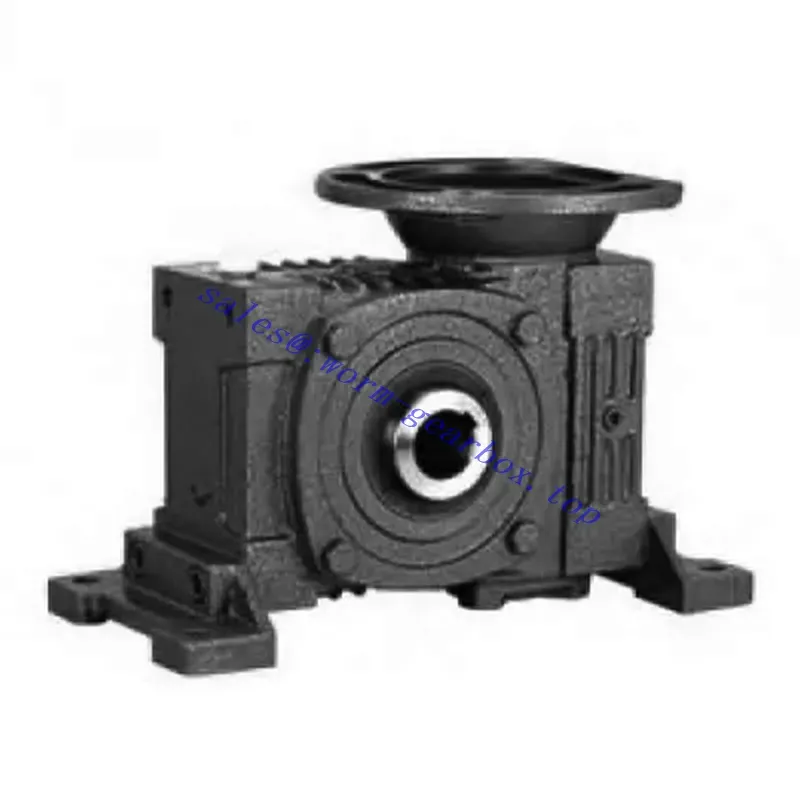
The split-housing design of the P-type is the defining advantage of the WPWDKT over standard integral-housing WP units. Because the housing splits along a plane through the worm shaft axis, the top half of the housing can be lifted clear to expose the full worm gear assembly — worm wheel, worm shaft, bearings, and seals — without disturbing the bottom half which remains bolted to the machine base. This enables worm wheel inspection, measurement of wear, or replacement of the bronze gear set without dismounting the reducer from the machine, removing the motor, or disturbing alignment. For Australian manufacturing facilities operating 24/7 shifts where maintenance windows are short, this translates to a direct reduction in planned downtime.
Key Structural Features of the WPWDKT Worm Gearbox
The WPWDKT series incorporates several structural design features that distinguish it from both standard WP integral-housing units and competing split-housing reducers in the Australian market:
- High Transmission Ratio in Compact Form Factor: Worm gear drives achieve large transmission ratios — up to 60:1 in a single stage — that require three or four gear stages in parallel-axis helical designs. The WPWDKT delivers this ratio in a right-angle, single-stage arrangement that is significantly more compact than an equivalent-ratio helical gearbox, an important advantage in the space-constrained machine designs common in Australian packaging and food processing plants.
- Line Contact at Worm Mesh: The worm and worm wheel engage in line contact (as opposed to the point contact of staggered-shaft helical gears), distributing load across a larger area of the bronze tooth face. At equivalent torque, this results in lower contact stress and extended wear life. The WPWDKT worm mesh is designed per AGMA 6034 contact stress calculation methods, with the bronze gear rated for the full catalogue output torque at the specified ratio.
- Self-Locking at Ratios 20:1 and Above: The worm lead angle in WPWDKT units at ratios of 20:1 and higher is below the equivalent friction angle (approximately 6°), providing mechanical self-locking — the output shaft cannot be back-driven by a static load. This property is utilised in Australian hoist, lifting, and gate-actuator applications where load holding without power is required.
- Multi-Direction Universal Mounting: The “W” universal designation confirms the WPWDKT can be installed in any of six standard orientations — worm above wheel, worm below wheel, vertical input shaft, vertical output shaft, and combinations — without modification. Multiple oil-fill and drain ports are provided for each mounting position. This flexibility reduces machine design constraints and simplifies orientation changes during equipment upgrades.
- Low Noise and Vibration: The sliding meshing action of the worm-on-bronze contact is inherently smoother than gear impact in spur or helical gears, producing operating noise levels typically below 72 dB(A) for sizes up to 110. This is below the 85 dB(A) continuous noise exposure standard referenced in Australian Standard AS/NZS 1269, simplifying compliance for workplace health and safety requirements at Sydney, Melbourne, and Brisbane facilities.
How to Select the Right WPWDKT Frame Size and Ratio
- Calculate Required Output Torque: T_out = (P × 9550 / n_out) × SF, where P = motor kW, n_out = required output rpm, SF = service factor (1.25 smooth, 1.5 moderate shock, 2.0 heavy shock). Match to the WPWDKT frame size with equal or greater rated output torque at your chosen ratio.
- Confirm Hollow Shaft Bore: The hollow shaft must match or be bored to your driven machine shaft diameter. Available bores range from 20 mm (size 40) to 75 mm (size 250). Specify bore diameter, key dimensions (DIN 6885 standard), and setscrew requirement at order.
- Check Thermal Rating: In Queensland and Western Australian summer conditions (ambient above 35 °C), verify that the frame’s thermal rated power meets or exceeds your motor input power. If marginal, specify synthetic lubricant or the next larger frame size.
- Verify Split-Housing Need: If machine layout permits direct access to the full reducer for maintenance without the split housing, a standard integral WPWKT unit may be more cost-effective. Specify WPWDKT specifically where top-access maintenance is required or where periodic worm wheel inspection is part of the planned maintenance programme.
Accessories We Also Supply: IEC motor adaptor flanges, hollow shaft bore extensions, torque arm kits, replacement worm wheel assemblies, and split-housing gasket sets. Contact Ever-Power Australia for a combined supply quote.
Applications of the WPWDKT Worm Gearbox in Australian Industry
| Industry Sector | Typical Application | Key Benefit |
|---|---|---|
| Food & Beverage (Sydney, Melbourne) | Mixer drives, bottling conveyors, filling augers | Top-access inspection without production halt |
| Ceramics & Glass (Brisbane, Adelaide) | Kiln car drives, glass annealing lehr conveyors | Self-locking at 40:1+ holds load without power |
| Chemical Processing (Perth, Adelaide) | Agitator drives, chemical dosing pumps | Split housing enables seal inspection in-situ |
| Packaging Machinery | Carton erectors, shrink-wrap turntables | High ratio in compact right-angle envelope |
| Woodworking (NSW, QLD) | Feed drives, thickness planers, panel saws | Dual input allows manual advance for tool changes |
Maintenance Advantages of the Split-Housing Design
The WPWDKT’s split housing delivers a measurable reduction in planned and unplanned maintenance time versus integral-housing worm reducers. The table below compares maintenance task time for the WPWDKT against an equivalent integral-housing WP unit:
| Maintenance Task | Integral Housing WP | WPWDKT Split Housing |
|---|---|---|
| Worm wheel visual inspection | 2–4 hours (full removal) | 30–45 minutes (top half only) |
| Worm wheel replacement | 4–8 hours | 1.5–3 hours |
| Bearing replacement (output) | 3–5 hours | 1–2 hours |
| Oil seal replacement (output shaft) | 1–2 hours | 30 minutes |
Customer Reviews — WPWDKT Universal Worm Gearbox
“We replaced SEW WA-series hollow-shaft units with WPWDKT 110s on our Melbourne bottling line. The split housing has been a game-changer — our maintenance team can check the worm wheel condition during a scheduled 45-minute production pause instead of the 4-hour changeout we used to plan for.”
— Paul N., Maintenance Supervisor, Melbourne VIC
“The WPWDKT 90 at 40:1 on our chemical agitators in Perth has been running 18 months without a single unplanned stoppage. The dual input port lets us attach a manual hand-crank for emergency operation during power outages — a requirement in our hazardous area classification.”
— Rachel K., Process Engineer, Perth WA
“Specified WPWDKT units for our Brisbane ceramics kiln drives at 60:1. The self-locking means we don’t need a separate brake to hold kiln car position — saving cost and a potential failure point. Delivery was 9 business days to Brisbane. Would prefer slightly more comprehensive installation notes in the box.”
— Jason T., Plant Engineer, Brisbane QLD
“We use WPWDKT 63 units across our woodworking feed drives in Sydney. The hollow shaft mount eliminated alignment issues we had constantly with the previous solid-shaft-plus-coupling arrangement. Noise levels are noticeably lower than the units we replaced. Re-ordering already.”
— Damien F., Workshop Manager, Sydney NSW
Why Choose Ever-Power for WPWDKT Worm Gearboxes in Australia?
Ever-Power Worm Gear Reducer Co., Ltd. (Australia), 27 Harley Crescent, Condell Park NSW 2200, stocks WPWDKT units across the most common frame sizes and ratios for fast dispatch. Our engineering team provides free selection support, and all units are backed by a 12-month warranty. Learn more on our About Us page. For extended technical documentation visit worm-gearbox.top.