Description
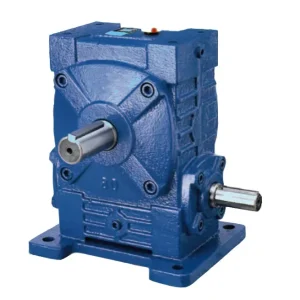
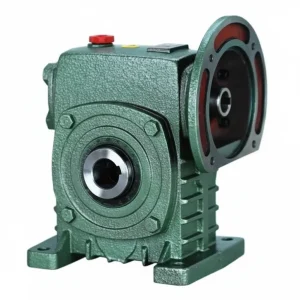
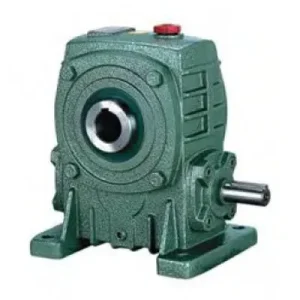
The WDKA and WDKS Series worm gear reducers extend the WDK zero-coupling concept into shock-load territory. Where the WDK carries a standard bore depth suited for smooth continuous drives, the WDKA and WDKS step up bore engagement substantially — the WDKA to WA-class depth, the WDKS to WS-class depth with tapered roller output bearings from size 80 onwards. Both variants retain the IEC B5 motor flange input, requiring no input coupling. Size 40 is unique to this series within the WD range, extending coverage down to 0.12 kW for small-frame shaft-mounted applications where motor flange input and deep bore engagement are both required simultaneously. Covering sizes 40–175, up to 7.5 kW, bore diameters Ø20–Ø80 mm across all standard ratios. For Australian grain handlers, mineral processors, and heavy agricultural machinery operators across Sydney, Melbourne, Brisbane, Perth, and Adelaide where shock loads, stone strikes, and belt-jam events are routine, the WDKA and WDKS specify the correct bore depth from the first season. Manufactured to ISO 9001:2015, designed per AGMA 6034, and supplied by Ever-Power Worm Gear Reducer Co., Ltd. (Australia), 27 Harley Crescent, Condell Park NSW 2200.
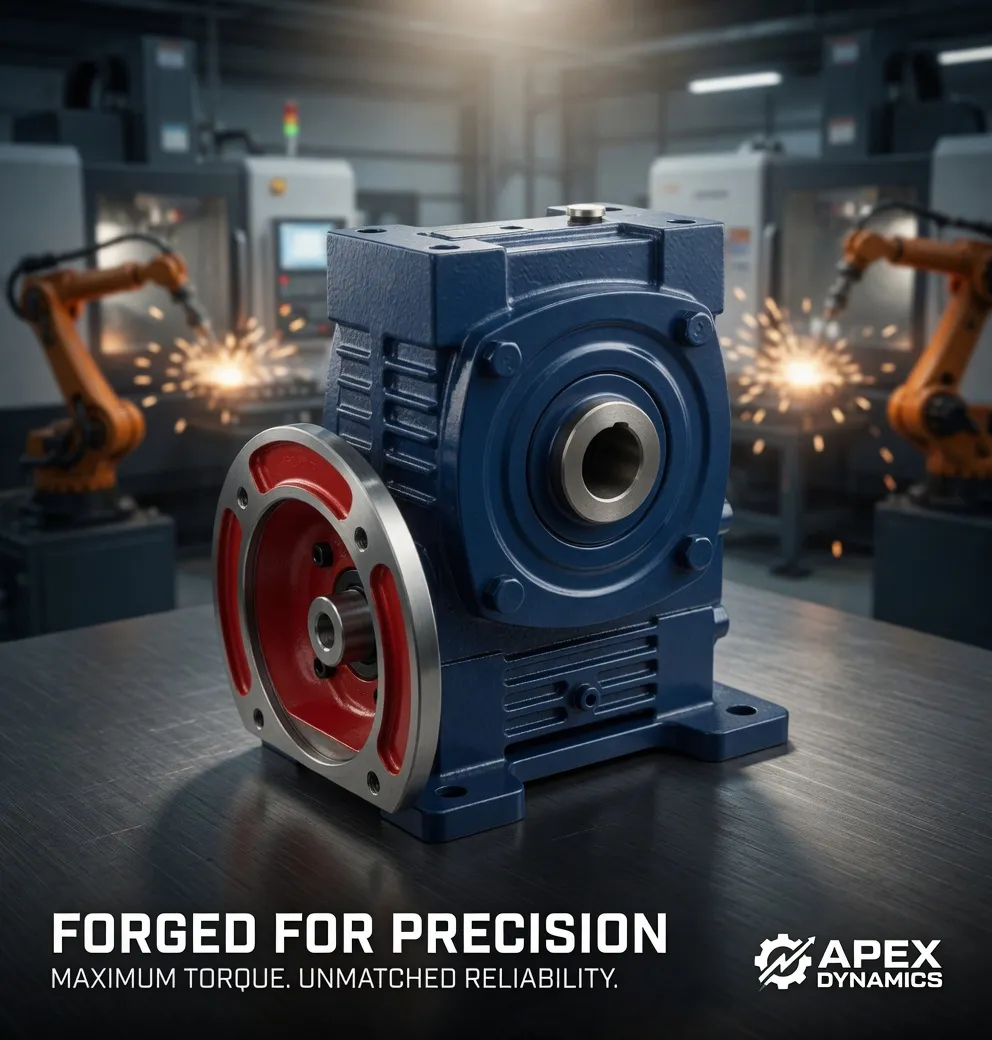
WDKA & WDKS Series — IEC Flange Input, Deep Hollow Bore Output
Technical Specifications — WDKA & WDKS Series
WDKA — WA-Class Deep Bore
IEC B5 flange input + WA-class bore depth (HL-WDKA). Best for moderate shock, standard bore engagement requirements.
WDKS — WS-Class Deep Bore + Tapered Rollers
IEC B5 flange input + WS-class bore depth + tapered roller output bearings from size 80. For heavy shock, chain drives, reversals.
Per ISO 9001:2015, AGMA 6034, IEC 60034-7. Bore H7/DIN 286. ★ = tapered roller output bearing at size 80+.
| Size | Power (kW) | Ratio | A (mm) | B (mm) | H (mm) | HL-WDKA (mm) | HL-WDKS (mm) | Flange LZ (mm) | Bore Ø (mm) | Weight (kg) |
|---|---|---|---|---|---|---|---|---|---|---|
| 40 | 0.12 | 10:1–60:1 | 138 | 90 | 135 | 45 | 60 | 140 | Ø20 | 5 |
| 50 | 0.18 | 10:1–60:1 | 155 | 107 | 165 | 50 | 80 | 140 | Ø20 | 8.5 |
| 60 | 0.37 | 10:1–60:1 | 170 | 117 | 195 | 60 | 93 | 160 | Ø25 | 11 |
| 70 | 0.37–0.75 | 10:1–60:1 | 206 | 131 | 233 | 73 | 108 | 160–200 | Ø30 | 17 |
| 80 ★ | 0.75–1.5 | 10:1–60:1 | 232 | 144 | 268 | 83 | 123 | 200 | Ø35 | 26 |
| 100 ★ | 1.5 | 10:1–60:1 | 266 | 175 | 330 | 150 | 190 | 200 | Ø40 | 39 |
| 120 ★ | 2.2–3.0 | 10:1–60:1 | 340 | 200 | 395 | 180 | 230 | 250 | Ø45 | 60 |
| 135 ★ | 3.0–4.0 | 10:1–60:1 | 375 | 212 | 455 | 215 | 250 | 250 | Ø60 | 88 |
| 155 ★ | 5.5 | 10:1–60:1 | 442 | 312 | 493 | 235 | 280 | 300 | Ø70 | 120 |
| 175 ★ | 7.5 | 10:1–60:1 | 465 | 334 | 558 | 260 | 310 | 300 | Ø80 | 160 |
★ Sizes 80+ (WDKS): tapered roller output bearing for combined radial + axial load capacity.
WDKA vs WDKS vs WDK — Choosing the Right Bore Depth
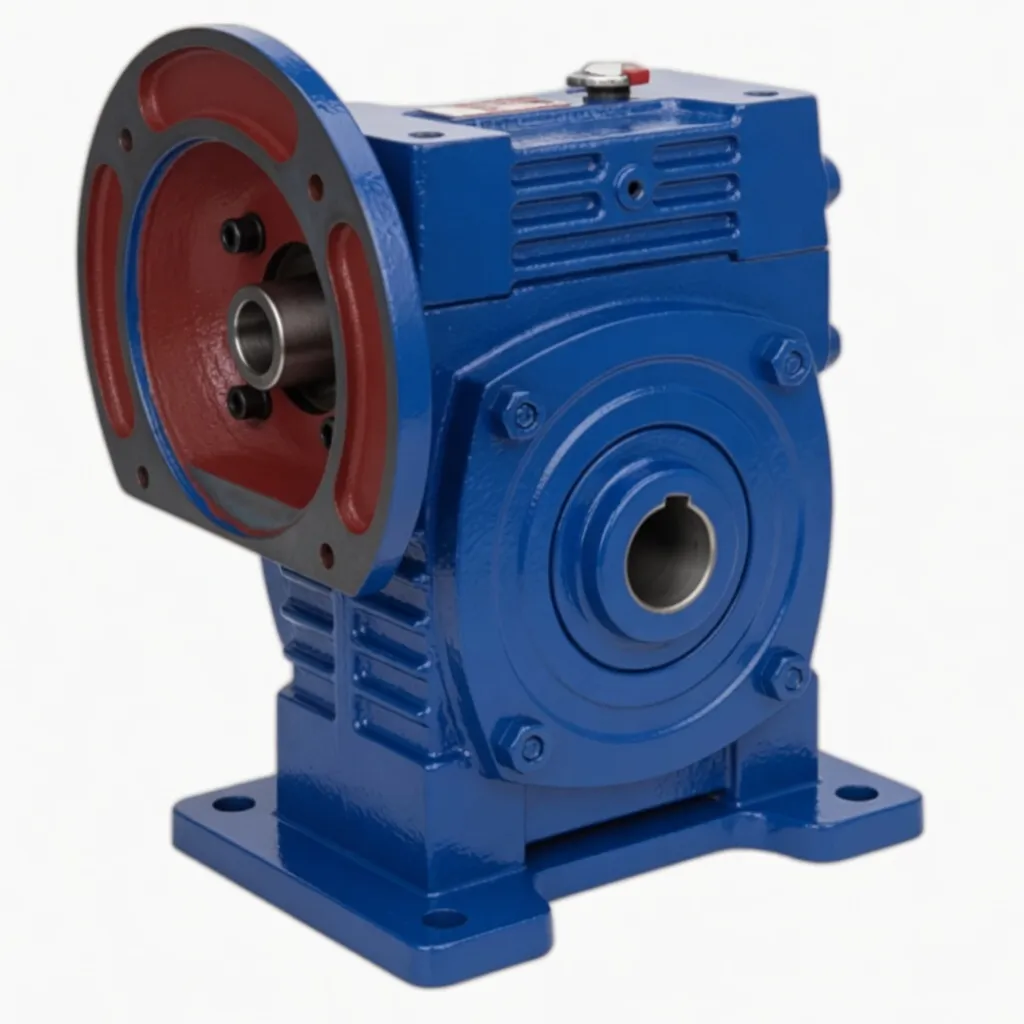
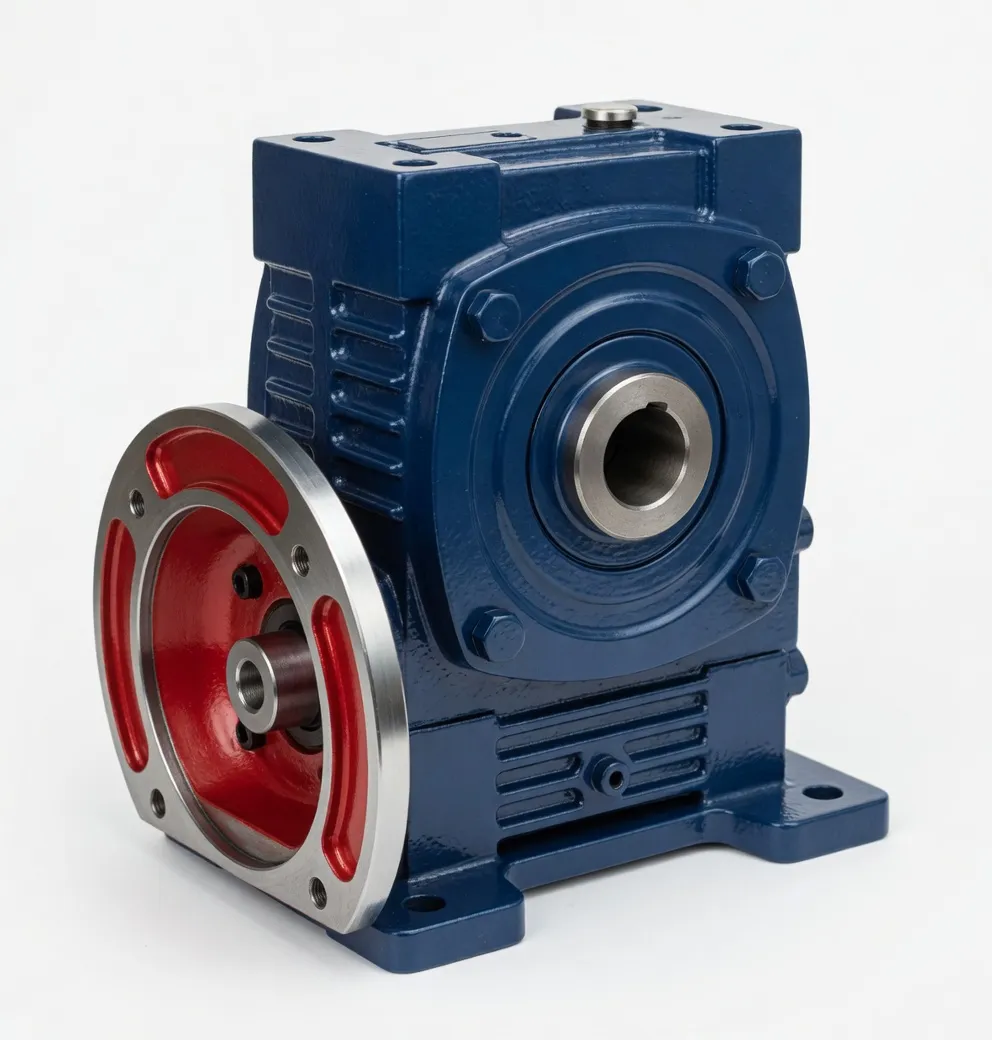
WDKA and WDKS — Bore Depth and IEC Flange Detail
| Feature | WDK | WDKA | WDKS |
|---|---|---|---|
| Input | IEC B5 flange | IEC B5 flange | IEC B5 flange |
| Bore depth class | WK-standard | WA-class deeper | WS-class deepest |
| HL at size 100 | 80 mm | 150 mm (+88%) | 190 mm (+138%) |
| Output bearing (80+) | Ball bearing | Ball bearing | Tapered roller |
| Service factor | SF ≤ 1.25 | SF 1.25–1.5 | SF 1.5–2.0 |
| Size range | 50–155 | 40–175 | 40–175 |
The WDKA and WDKS are both IEC flange input units built on the W series housing convention — the key differentiator from the WDK is bore engagement depth. The WDKA’s WA-class bore depth is appropriate for moderately shock-loaded applications (SF 1.25–1.5); the WDKS’s WS-class bore depth with tapered roller output bearings is the specification for severe shock (SF 1.5–2.0), sustained chain tension, and regular reversals. Size 40 is the smallest available in the entire WDK/WDKA/WDKS range — unique to these deep-bore variants — providing coverage from just 0.12 kW for compact machinery requiring IEC flange input plus deep hollow bore engagement simultaneously.
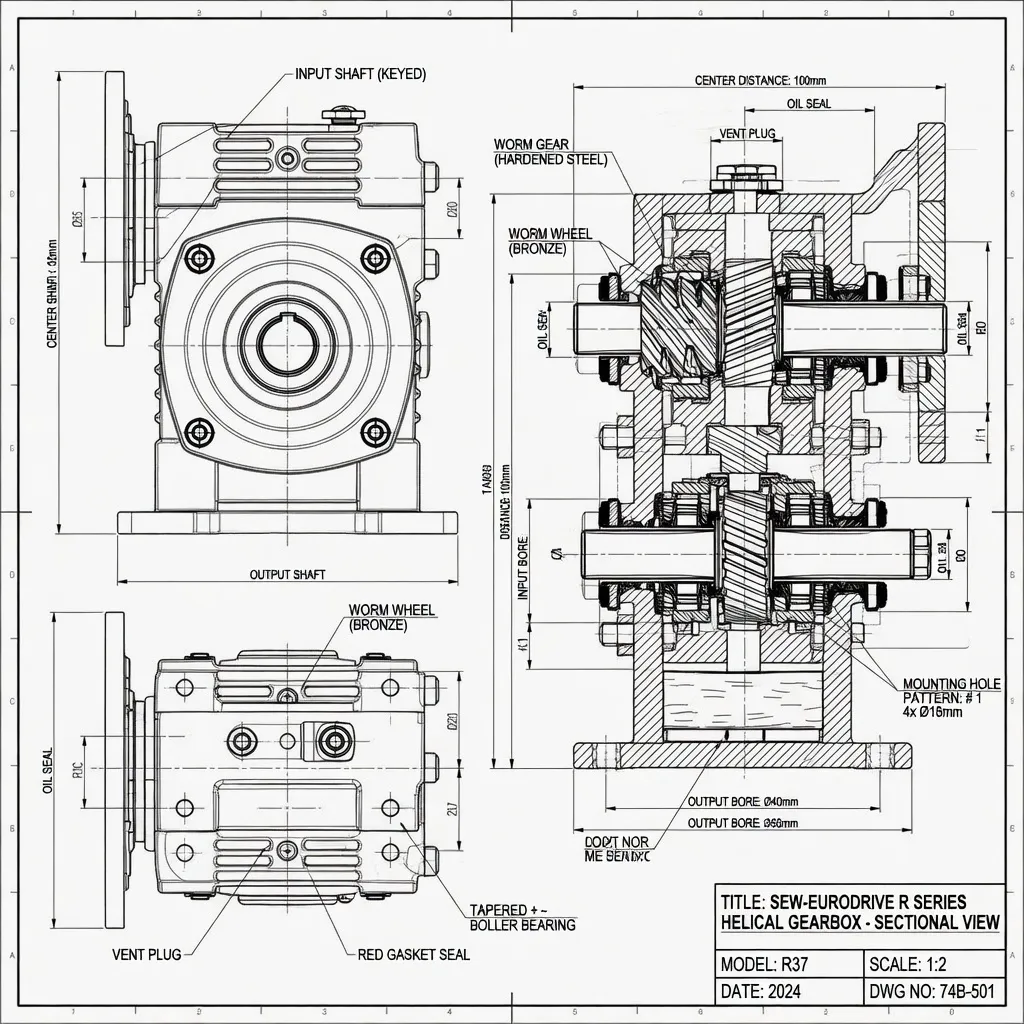
WDKA & WDKS — Complete Assembly with Motor Flanged On
Selection Guide — When to Specify WDKA vs WDKS
Specify WDKA when:
- Service factor is 1.25–1.5 (moderate shock, occasional reversals)
- Standard WDK bore depth has shown fretting in service — WDKA is the direct step-up
- Application is a smooth conveyor or mixer drive where the IEC motor must flange directly and a deeper bore is desirable for shaft engagement length reasons
- Size 40 (0.12 kW) is required — the smallest IEC flange + hollow bore unit in the W family
Specify WDKS when:
- Service factor is ≥ 1.5 (heavy shock, stone strikes, belt jams, regular reversals)
- Input power is ≥ 0.75 kW at sizes 80+ where tapered roller bearings provide measurably better bearing life under combined radial and axial torque arm reaction loading
- Application is grain auger, mining feeder, vibrating screen, or agricultural implement drive where bore fretting is the documented primary failure mode
- IEC motor flanges directly to the reducer AND the output shaft is chain or belt loaded simultaneously
Applications in Australian Heavy Industry
- Grain and fertiliser auger drives (QLD, NSW, SA, WA): WDKS 80–135 where IEC motor must mount directly in confined grain shed spaces, and the WS-class deep bore handles stone-strike shock at harvest. The size 40 WDKA covers small-frame seed metering drives from just 0.12 kW.
- Mining screen and feeder shaft drives (WA, QLD): WDKS 120–175 on vibrating screen head shafts in Pilbara iron ore and Queensland coal operations — tapered roller output bearings at size 120+ sustain the combined shock and torque arm reaction loads that fail ball-bearing-equipped units within months.
- Agricultural implement PTO drives (QLD, NSW, VIC): WDKA 60–100 on seeder metering shafts and crop residue spreader drives where the IEC motor must mount compactly and the driven shaft requires deeper bore engagement than the WDK provides for reliable non-fretting service across an entire growing season.
- Food processing shock-start drives (Sydney, Adelaide, Melbourne): WDKA 60–100 on mixing vessel shaft drives with DOL motor starts, where the deeper WDKA bore prevents bore fretting during the start torque spike that standard WDK units cannot absorb without surface damage.
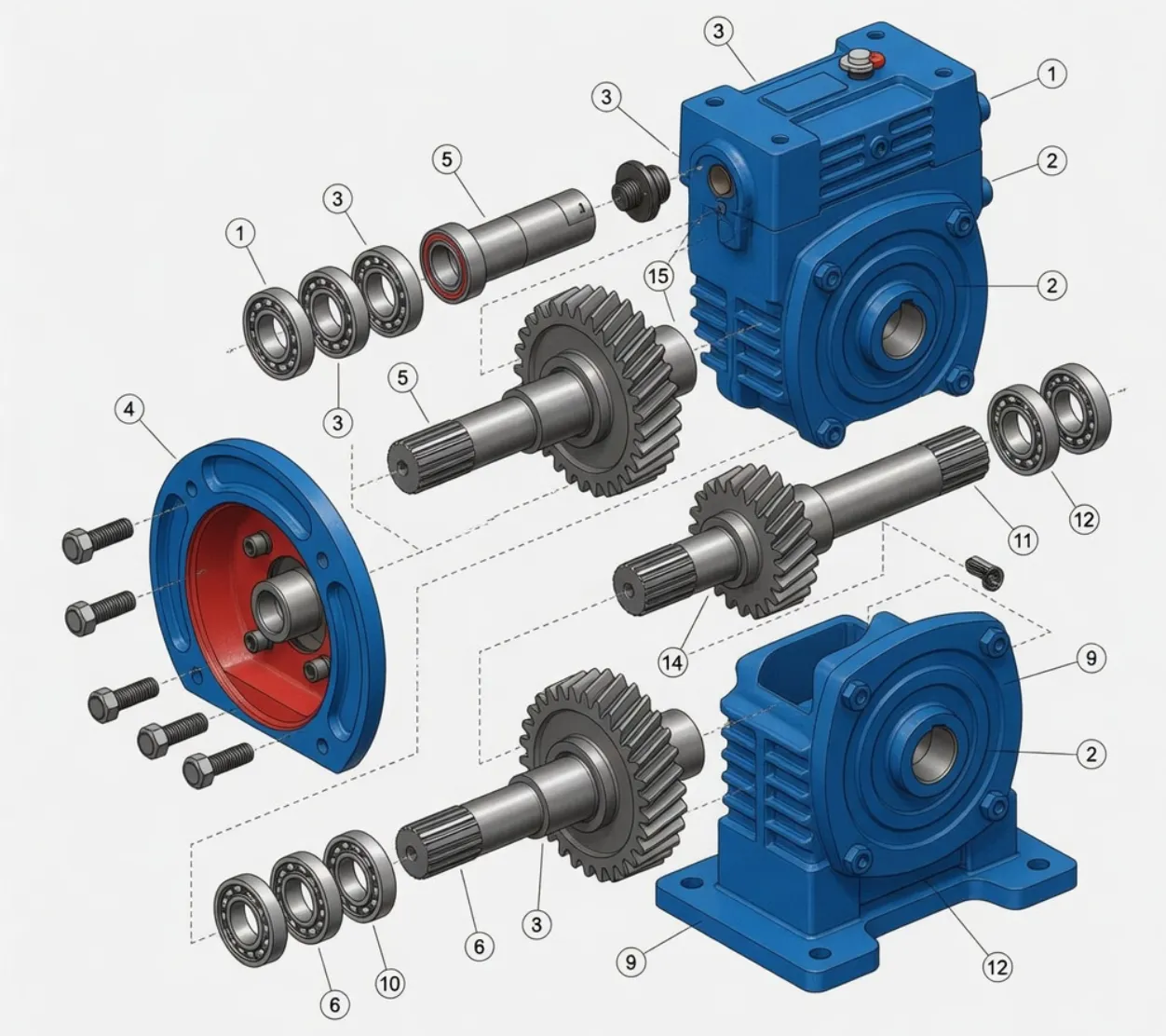
WDKA & WDKS — Australian Heavy Industrial Applications
What Australian Customers Say
“WDKS 120 on our SA grain auger drive — 3.0 kW 112B5 motor flanges directly, WS-class bore handles stone-strike loads that destroyed two WDK units in 14 months. 20 months without bore damage. The tapered rollers at size 120 make the difference under our reversing loads.”
— Lisa B., Agricultural Engineer, Yorke Peninsula SA
“WDKS 155 on our Pilbara vibrating screen — the combination of IEC motor direct mount, 280 mm deep bore, and tapered rollers handles our continuous ore shock loading. 16 months of two-shift operation without a single bearing or bore failure. The IEC flange eliminates the coupling in the dusty drive bay.”
— Craig L., Site Engineer, Pilbara WA
“WDKA 60 on our Melbourne DOL-start mixing vessel shaft drives. The deeper WA bore handles the start torque spike without the fretting marks we got on WDK units. 18 months without issues. One star less because the size 40 (0.12 kW) we needed for a small seeder drive required a 2-week lead time.”
— Rachel B., Process Engineer, Melbourne VIC
“WDKS 100 on our Brisbane chain conveyor head shaft — IEC 90B5 motor flanges on, 190 mm deep bore holds the shaft engagement without fretting under our chain tension loads. The tapered roller bearings at size 100 are why this works where the ball-bearing WDK failed.”
— Brett M., Conveyor Engineer, Brisbane QLD
Why Choose Ever-Power for WDKA & WDKS in Australia?
Ever-Power Worm Gear Reducer Co., Ltd. (Australia) at 27 Harley Crescent, Condell Park NSW 2200 stocks WDKA and WDKS units across common frame sizes for 5–10 business day dispatch. Our engineering team provides free WDK vs WDKA vs WDKS bore depth analysis and IEC flange compatibility confirmation in one written recommendation within one business day. Visit About Us and technical reference at worm-gearbox.top.
Frequently Asked Questions — WDKA & WDKS Series
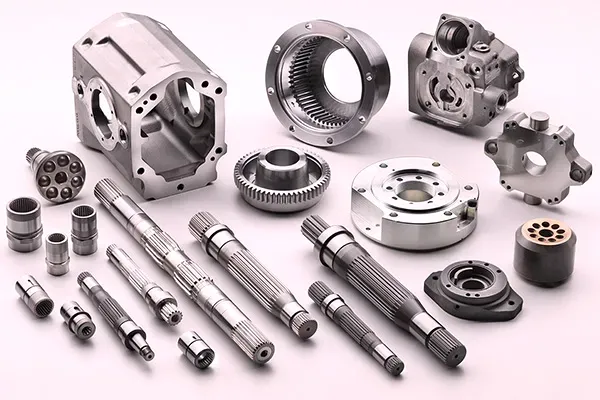
WDKA & WDKS — Full Range, Ever-Power Australia